











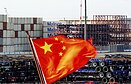




The government has taken steps to bar China's state-controlled Nuctech from installing X-ray baggage scanning equipment at Lithuanian airports over national security concerns.
A governmental commission vetting contracts by strategic enterprises has concluded that the deal runs counter to national security interests.
"The commission will submit the conclusion to the government," Rasa Jakilaitienė, spokeswoman for Prime Minister Ingrida Šimonytė, told BNS on Friday.
The commission based its decision on "confidential information provided by the authorities".
Lietuvos Oro Uostai (Lithuanian Airports), the state-owned operator of Lithuania's three international airports, confirmed to BNS last month that Nuctech had bid for a contract to install baggage scanners.
Lithuanian Airports and Laurynas Kasčiūnas, chairman of the parliamentary Committee on National Security and Defence, asked the governmental commission to look at whether the Chinese investment was in line with Lithuania's national security interests.
Read more: Lithuania rejects Chinese 5G tech over ‘values’ clash – report

Kasčiūnas then warned that Nuctech's screening equipment at airports can collect data on passengers and baggage, which would be available to Chinese intelligence and security services under Chinese law.
The operator of the international airports in Vilnius, Kaunas and Palanga is listed in the top tier of companies crucial to ensuring national security.
The Wall Street Journal reported last June that US agencies had launched a campaign agent Nuctech's operations in Europe.
"A campaign led by the National Security Council and a handful of US. agencies is trying to rally European governments to uproot Nuctech Co, a well-connected Chinese state-controlled company whose screening systems for cargo, luggage and passengers are becoming a fixture at ports, border crossings and airports across Europe," the newspaper wrote.
Critics say that Nuctech's "extreme low-level pricing strategy" suggests that its motives are not commercial but rather "an interest to control strategic EU infrastructure and data driven knowledge", according to the article.
Lithuania's intelligence agencies warned in a report last year that "China’s pursuit of technological advantage and its penetrating investment activities increase the vulnerability of other states and pose the risk of losing control over the critical infrastructure".
Kasčiūnas welcomed the governmental commission's decision on Friday.
Read more: Chinese data firms tracks people in Baltics who may be 'friendly to Beijing'

Newsletter
Every Friday morning.