











A nationwide lockdown came into effect on Wednesday, December 16.
The restrictions on movement will last until January 3, all other measures are in place until January 31 (scroll down for a full set of rules). The government previously said it may shorten the lockdown if the coronavirus situation in the country improves.
Latest updates:
Vilnius hospital finds 10 percent of its staff have asymptomatic coronavirus
After testing nearly its entire staff, a Vilnius hospital found that 10 percent have the coronavirus without displaying any symptoms.
Vilnius University Hospital in Lazdynai tested some 1,300 of its workers, none of whom had any symptoms of Covid-19, and 129 of the tests came back positive, the hospital said in a statement on Friday.
Read more here.
Lithuania should start vaccination on December 27 – president
Lithuania should stick to the European Commission's suggestion to begin vaccination from the coronavirus on December 27, Lithuanian President Gitanas Nausėda said on Thrusday.
The office of the European Commission President Ursula von der Leyen notified that the vaccines should be delivered to Lithuania and other EU member states by December 26, according to Nausėda.

Healthcare system close to collapse, excess deaths, and possible curfew
Lithuania's health system may collapse within several weeks under the strain of the coronavirus, unless people follow lockdown rules, Health Minister Arūnas Dulkys warned on Monday.
On Tuesday, Prime Minister Ingrida Šimonyte said that a curfew would be imposed if people do not follow the rules.
Meanwhile, excess mortality among Lithuanians aged over 50 has been increasing for nine weeks and is at “an unprecedented level”, according to the country's statistics office.

Hotel reservation not a reason to enter resort town
Palanga Municipality, a resort on Lithuania's Baltic Sea coast, set up roadblocks on Wednesday to bar holidaymakers from entering the town during lockdown.
The municipality called on hotels and accommodation providers to cancel reservations, saying that entry to the resort for holidays is prohibited.
Although the government did not order for hotels and accommodation providers to close, Mayor of Palanga Šarūnas Vaitkus called on people to spend the “holidays safely at home”.
Read more: Lithuanian resort sets up roadblocks, bars holidaymakers during lockdown

Police set up roadblocks around Vilnius
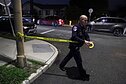
On Wednesday morning, Lithuanian Police set up mobile checkpoints on roads leading to Vilnius.
“It may be so that a post will stay for a few hours in one place, before being moved elsewhere,” Julija Somorovskaja from Vilnius Police told LRT.lt. “On Friday, posts will be set up [for the duration of the weekend] in pre-arranged locations.”
Read more: Police set up mobile checkpoints around Vilnius to enforce lockdown
Lithuania worst affected country in the world – NYT
Lithuania is the worst affected country in the world, according to seven-day coronavirus infection rate published by the New York Times. Over the last seven days, the country reported on average 97.4 new daily cases per 100,000 people.
Read more here.
Restrictions may be tightened
If residents fail to comply with the lockdown that has come into effect on Wednesday, the restrictions could be tightened, Prime Minister Ingrida Simonyte told LRT TV on Tuesday evening.
As supermarkets remain open and sell non-food items as well, “I would like to hope that [...] it will not become a reason for our people to have fun in there”, according to Šimonytė.
Separation of essential and non-essential goods, as well as restrictions on hotels, might be considered, she added.
"We will monitor the situation very closely. If we need additional decisions, let's say, on non-food goods or accommodation services during the festive period, these decisions will be made," said Šimonytė.
Read more: Lithuania may need to ask other countries for medical help – PM

Earlier this week, the government confirmed that it is not considering declaring a state of emergency in the country, and said that the enforcement of rules will largely depend on the people themselves.
“We don’t have that many police officers to control every person,” Prime Minister Ingrida Šimonytė told reporters on Monday. “We are all making an assumption that people have enough awareness.”
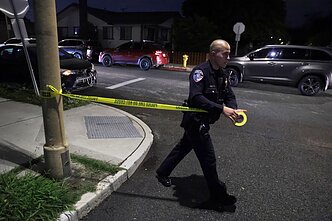
As part of the measures, there will be restrictions on movement between municipalities. Some 250 checkpoints will only be set up during weekends and on holidays, and mobile units will patrol the streets on all other days, Interior Minister Agnė Bilotaitė said on Tuesday. More information here.
However, the government has also prepared a stricter plan, but will not use it unless the coronavirus situation in the country worsens, according Bilotaitė. She did not disclose any further information.
People travelling between municipalities should have their IDs or other means to identify themselves and back their reason for travel. A digital copy is enough. The police have pledged to use common sense and look at every situation on a case-by-case basis.
For more information, please contact the police on +370 700 60 0000 between 07:00 and 20:00 on workdays, and 08:00 and 17:00 on weekends and holidays.

List of restrictions:
Movement and activities
– It is forbidden to leave the territory of your municipality, unless attending a funeral, for work purposes, healthcare, or when your workplace or property is located in another municipality.
– People will also be able to leave their municipality to take care of the sick or other people in need.
– Non-essential travel within your municipality is forbidden. People are allowed to leave their homes to go for shopping, to work, to attend a funeral, or to seek healthcare.
– Exceptions also apply to students who need to travel for work, such as internships, or exams.
– Professional sports games and trainings are allowed to continue under previous rules.
– Contacts between more than one household are forbidden. Events involving more than one household are also banned.
– Up to two people can meet outdoors, or more if from the same household.
It’s forbidden to:
– take children to relatives, even if they live in the same municipality. Parents are allowed to bring their children home from other municipalities.
– take food or other items to another municipality, unless providing care for people who are ill or are in need.

International and domestic travel
Although travel between municipalities for non-essential reasons is banned, people are allowed to:
– head for a land border
– go to the airport, seaport, or a bus or train station
– pick up or drop off people at the airport, seaport, or a bus or train station
There are no further restrictions on international travel and the country is not considering closing its borders.
Public and intercity transport will continue to operate, but likely on a reduced schedule. So check before you travel – online for the trains here, and for the bus connections here.
People returning to Lithuania are also free to make their way to their friends, family, or rented accommodation where they will be staying. The police have urged travellers to have as much supporting evidence as possible if stopped at a checkpoint.
Read more: Travelling to or from Lithuania: what you need to know

Retail and services
– All non-food shops will have to close or move trading online.
– Veterinary and food shops, pharmacies, optical and orthopedic shops will remain open. Food markets will also be allowed to stay open. Exceptions apply to Christmas tree vendors, who can continue to operate outdoors.
– Services that involve physical contact for more than 15 minutes are prohibited, including hairdressers and other beauty services.
– Exceptions apply to psychotherapy, emotional, and other health services, as well as professional legal and financial services that cannot be provided remotely.
– Hotels and housing services are allowed to stay open, as long as only people from the same household share the accommodation.
– Ride-hailing and taxi services are allowed to continue.
Education
– All classes will have to move online, except for children with special needs and students whose parents cannot work from home. However, the exact procedure has not been clarified. Meanwhile, kindergartens will be allowed to remain open. Primary school classes will move online on January 4 as the children are currently on holidays.
– Students are not allowed to travel to the municipality where they are studying, unless they live there and have supporting documents, such as a housing contract, to prove it.

Newsletter
Every Friday morning.