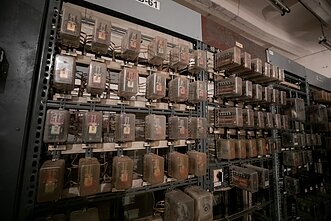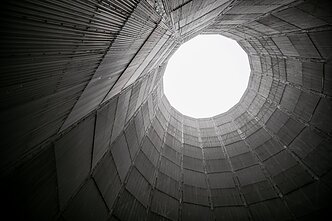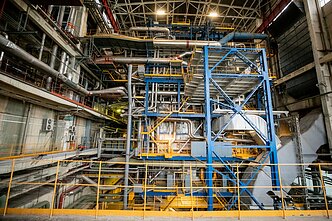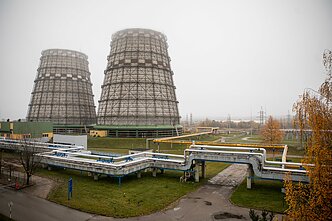
















A sprawling power plant on the outskirts of Vilnius has been restarted for a test run after five years of slumber. What are the reasons behind the move?
Lithuania and the Baltic states are gearing up to switch from the Russian-controlled power grid by 2025 to synchronise its networks with Europe. In the meantime, the three countries are eyeing options to secure their power supplies once they unplug from Russia.
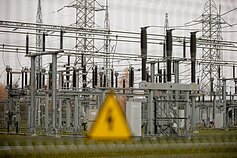
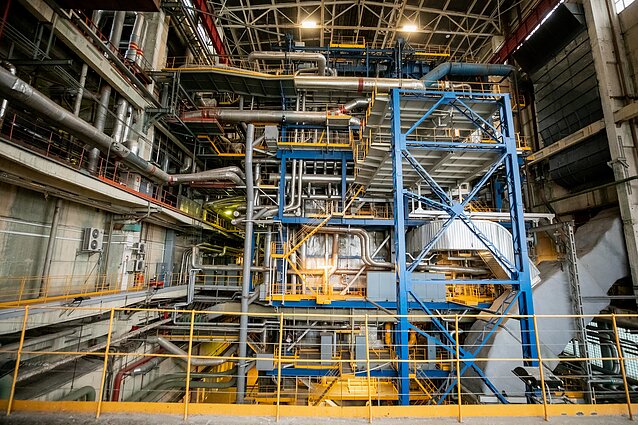
One such option could be the Third Thermal Power Plant (TE-3) in Vilnius.
Opened in 1983, the third most-powerful power plant in Lithuania has a heat capacity of 603 MW and an electrical capacity of 360 MW.
In 2002, Vilniaus Energija managing the capital’s heating systems rented the plant. In 2016, the company closed TE-3 due to high pollution, electricity generation costs, as well as the abolition of Public Service Obligations’ (PSO) quotas.
According to the then Energy Minister Rokas Masiulis, the government abolished quotas because Lithuania’s electricity system connected to Western networks via Sweden and Poland, allowing for cheaper electricity imports.
“If we continued to produce more expensive electricity in thermal power plants despite a lower electricity price on the market, it would be a waste of consumers’ money,” Masiulis said in 2015.

Read more: Lithuania's feud with Baltic states over energy trade – explainer
The minister added that TE-3 was not needed to produce electricity for Vilnius, as the energy could be produced in other more efficient power plants.
Finally, TE-3 closed on January 1, 2016. In October 2017, Ignitis Group (formerly Lithuanian Energy) paid 9.9 million euros to buy the power plant from Vilnius Heating Networks. In April 2018, Ignitis Group transferred TE-3 to its subsidiary company Ignitis Production.
“We have specialists and maintenance know-how. Our current goal is to figure out what we can do with this power plant and what benefits it can bring to the country,” Rimgaudas Kalvaitis, head of Ignitis Production, told LRT.lt earlier in November.
Active power reserve
According to Kalvaitis, Ignitis Production has been planning to test TE-3 since 2019. Last year, it assessed the condition of some of the equipment, but the full relaunch only took place last week.
The timing of the test run is important, as there are only a few years left until the completion of the synchronisation of Lithuania’s electricity networks with continental Europe. As Ignitis Production aims to identify additional energy sources, it tests whether TE-3 could be used – at least in theory.
“Synchronisation is a major breakthrough, as we move from one network to another. Until then, we feel obliged to offer additional power, as we have an electricity generating facility,” Kalvaitis said.
He added that the function of TE-3 in the synchronisation process is not yet clear. The power plant is not suitable for commercial electricity generation, but it could potentially be used for power reserve.
Read more: Brussels approves ‘unprecedented’ funding for Baltic energy security
“We suggest options of our operation modes so that ministries and transmission system operator could make decisions on how to keep the entire energy system safe in the period before synchronisation,” the head of Ignitis Production explained.
The fate of TE-3 after the completion of synchronisation in 2025 also remains uncertain. At best, the plant could operate as a power reserve if it met the new security requirements, Kalvaitis explained.
Full capacity
Despite having been inactive for the past five years, TE-3 employs nine people that supervise the plant and its territory. If the power plant operated at its full capacity, its maintenance would require 50–80 employees.
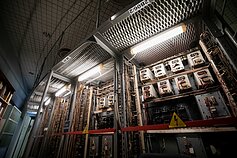
TE-3 consists of two blocks, but currently, only one of them is being tested. The test run aims to identify the maximum capacity at which the plant could operate without exceeding pollution requirements.
Power plants that provide tertiary energy reserves in Lithuanian must become fully functional within 12 hours. Currently, it is impossible to turn on TE-3 that quickly, but this could be a possibility in the future.
“The power plant is not a source of the tertiary reserve, but our evaluations show that it could be turned on within 12 hours in the future,” said Kalvaitis.
The first tests at TE-3 have demonstrated that its main systems work fine even after five years of inactivity. According to the plant operator, only minor drawbacks had to be eliminated.
“We have not found anything that could prevent us from launching the power plant. This test has shown that all the main units are fully assembled and functional,” Kalvaitis said.
Read more: Lithuania to build one of world's largest battery parks to ward off Moscow influence

Newsletter
Every Friday morning.