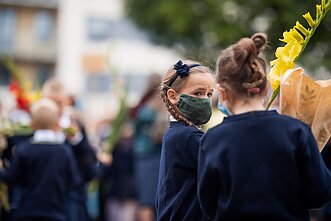













Since 2013, all students including those that attend minority schools sit the same Lithuanian language exam that is necessary to graduate high school. But students whose native language is not Lithuanian consistently underperform.
“The results do not change from one year to another. Many minority students do not pass exams. The Lithuanian language exam is the worst, as most of them score 30-40 percent,” Vida Montvydaitė, head of the Lithuanian Department of National Minorities, told LRT RADIO.
In 2020, 19.7 percent of minority students failed the Lithuania language and literature exam, according to the National Agency for Education,
Among Lithuanian students, the rate of failure was 9.2 percent. The gap has closed somewhat from a year before when 24.5 and 6.8 percent of minority and native students respectively failed the language exam.
“The situation is the same in Klaipėda, Vilnius, and Visaginas regions”, with the latter having a high number of non-Lithuanian speakers, said Montvydaitė. “We need to talk about this with specialists. After all, adults who prepare school programmes and not children are to blame for such results."
Most Polish students in Lithuania are multilingual, as they understand Polish, Russian, Lithuanian, and English, but they have difficulty switching between languages, according to Irena Masoit, an associate professor at Vytautas Magnus University (VDU) in Kaunas.
Read more: Two mother tongues and post-Soviet transition: Lithuania's ethnic minorities 30 years later
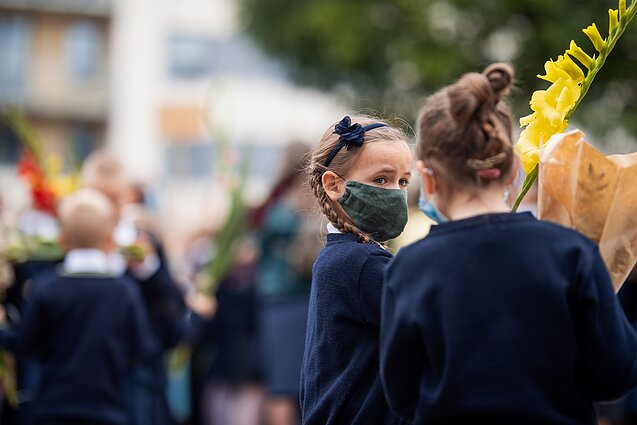
“I conducted research with year 11 students. It is difficult for them to switch from one language to another. They try to memorise certain information in the language in which they then must present it. [...] This can explain their worse Lithuanian language exam results,” the professor explained.
According to Montvydaitė, the state could tackle discrepancies in exam performances if it provided proper training to teachers that work with students whose native language is not Lithuanian.
“There used to be a pedagogical institute that trained teachers for national minority schools. But it does not exist anymore, and young teachers are not prepared to meet students’ needs,” she explained.
Lithuanian parliament is considering increasing Lithuanian language teaching to preschool minority groups from four hours to five per week.
According to Montvydaitė, however, an additional hour will not change much for students from such towns as Šalčininkai and Visaginas, where the majority speaks Polish and Russian respectively, and where Lithuanian is akin to a foreign language.

Newsletter
Every Friday morning.