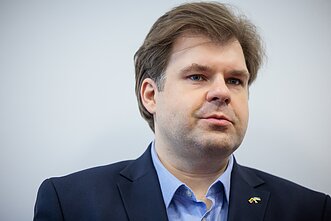


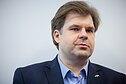


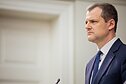


Eighty years after Soviet troops marched into Lithuania, it’s time to admit that a third of Lithuanians in 1940 naively supported the occupation, according to a senior historian from the state-funded Institute of History, Algimantas Kasparavičius.
After occupying Lithuania in 1940, the Soviet Union officially incorporated the country into the USSR.
Although armed resistance continued into the 1950s, the occupation of 1940 is remembered by many as a historical mistake. It is manipulated by Russian propaganda today, which claims Lithuania joined the USSR and was not annexed.
In summer 1940, so-called people’s councils were being formed in Estonia, Latvia, and Lithuania, largely made up of people loyal to the Soviets.
Read more: The day when Soviets occupied Lithuania, all eyes were on Nazis in Paris
A number of well-known politicians and cultural figures were drawn into the process, according to Kasparavičius.
“A significant part of the Lithuanian society [...] took part in this political farce,” he said, adding it wasn't only “the common, poor and deprived parts of the society”.
“But also a significant part of the interwar Lithuanian political elite [took part], which I think is a painful and critical point that requires critical analysis,” he said.
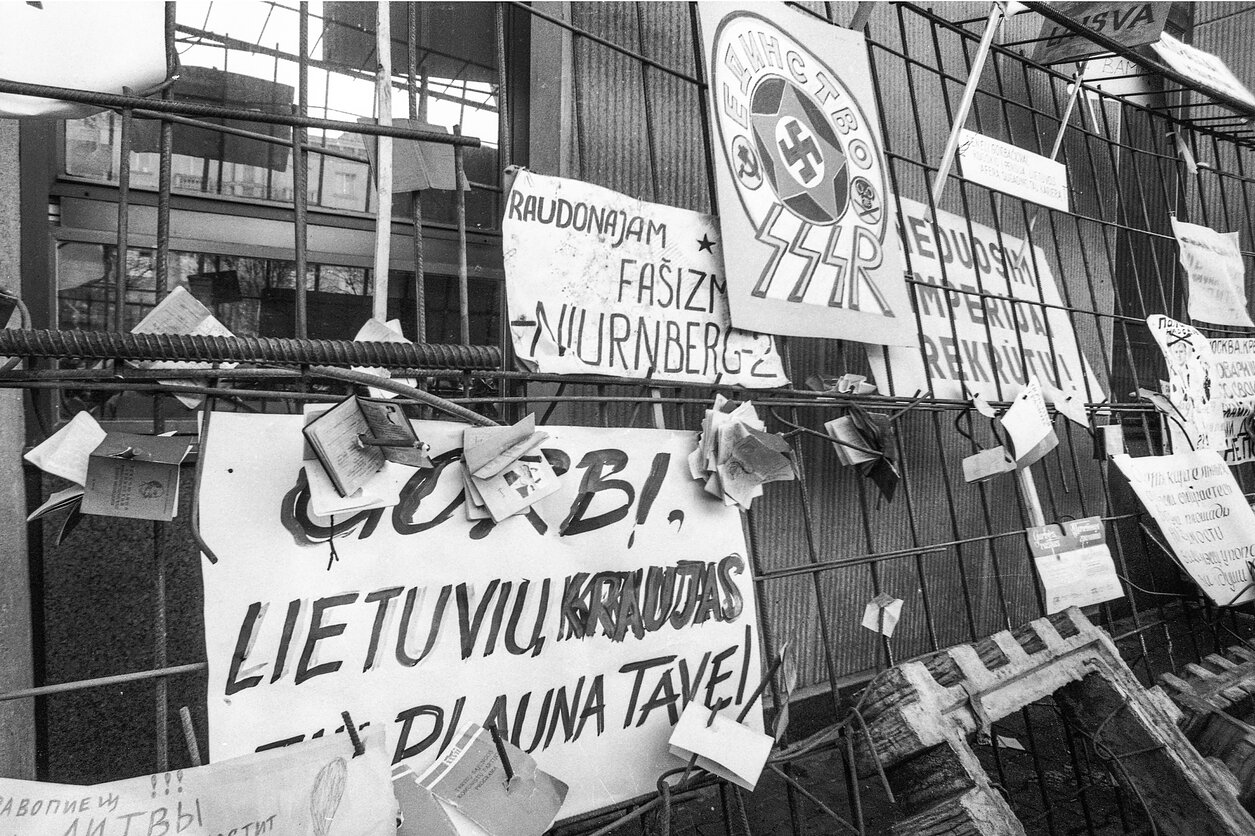
Workers were recruited to agitate in the streets, which created an image of independent political processes.

“A mass of revolutionised, poor people, [...] spent entire days out of work transporting placards that were given to them by Bolshevik agents,” according to Kasparavičius.
“The society in [...] Lithuania was relatively poor, had demanded social change, and [called for] those revolutionary, radical social processes that were streaming out of communist Russia.”
“We need to understand that Lithuania and the other Baltic states had reestablished themselves after a long [century] of being part of the Russian Empire,” he said.
“That society was revolutionised and [...] demoralised,” he added.
“The political farce", according to Kasparavičius, concluded on August 3, 1940, when a Lithuanian delegation in Moscow requested to join the Soviet Union.

“Of course this farce was successful,” he added, and Lithuania was then officially incorporated into the Soviet Union.
In the face of armed resistance early on, the facade of legitimacy sought by the Soviet Union would have fractured.
“If a war had taken place in June 1940, even a short one [...], it would have disciplined the society, showing what it means to collaborate, or to betray,” he said. “Unfortunately, it didn’t happen.”

Newsletter
Every Friday morning.