











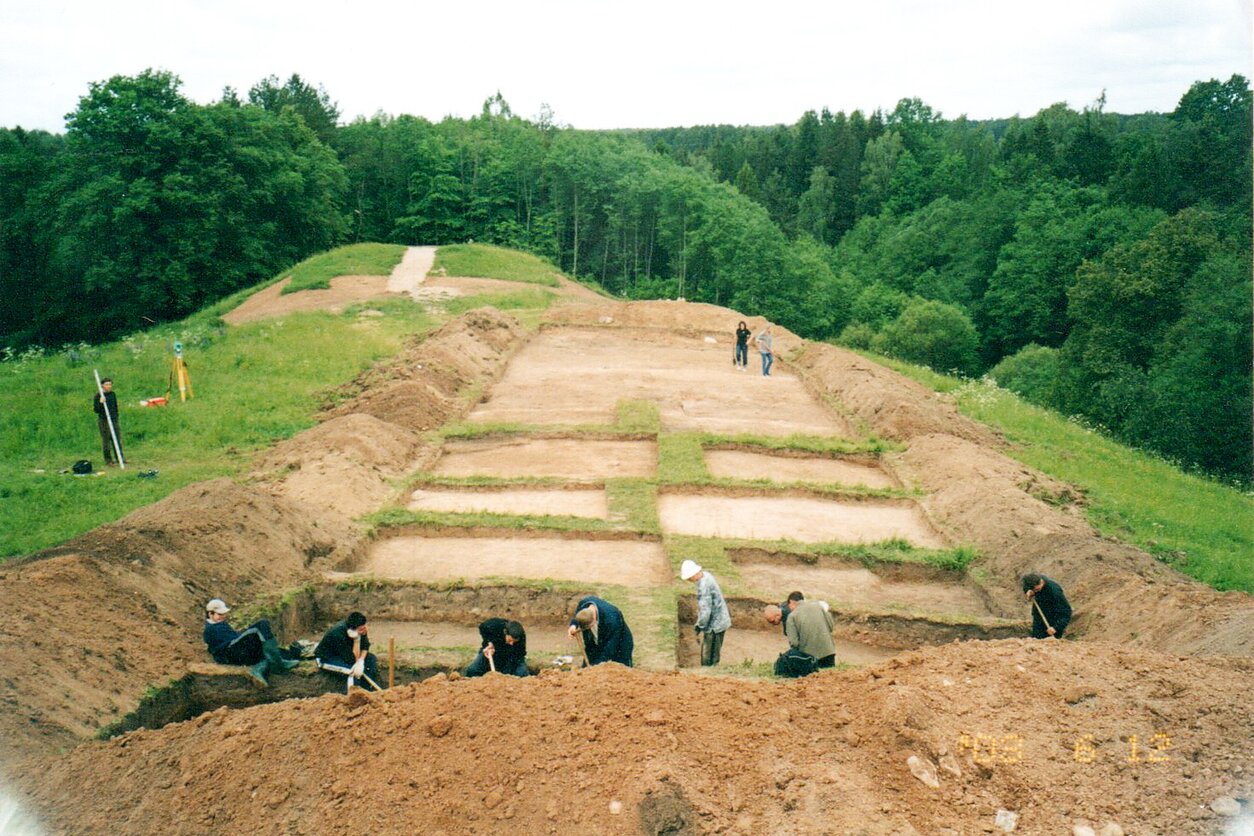
Cutting into a fallen log on a quiet hillside in northern Lithuania, archaeologist Gintautas Zabiela was hit by a smell that stopped him in his tracks: fresh pine resin, as sharp and clear as if the tree had been felled that morning, though the timber had lain buried for 700 years. For Zabiela, it was one of many small, startling moments in a project spanning 16 years – one that he believes has finally solved a mystery that has puzzled Lithuanian historians for almost a century: the location of Voruta, the lost castle where a decisive battle helped pave the way for the country's first, and only, king.
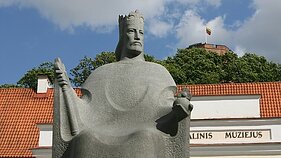
Mindaugas became King of Lithuania in 1253, after uniting the Baltic country's warring principalities and forging an alliance with the Livonian Order, a Catholic military order active in the region. His rise to power is central to Lithuania's national story, but much about his life and reign remains murky, pieced together from a handful of surviving medieval chronicles and archaeological digs rather than detailed written records.

One of the most tantalising unresolved questions is the location of Voruta, a castle mentioned in the 13th-century Hypatian Chronicle as the site of a decisive siege in 1251, during a period of internal warfare between Mindaugas and his rival nephews, Tautvilas and Gedvydas.
According to the chronicle, Mindaugas had been on the back foot before the siege; afterwards, bolstered by allied German knights of the Livonian Order, he went on the offensive – a turning point that paved the way to his coronation two years later.
But where Voruta actually stood has never been confirmed. Numerous locations across Lithuania have been proposed over the past century, and no consensus has ever been reached.
A theory dating back to the 1930s
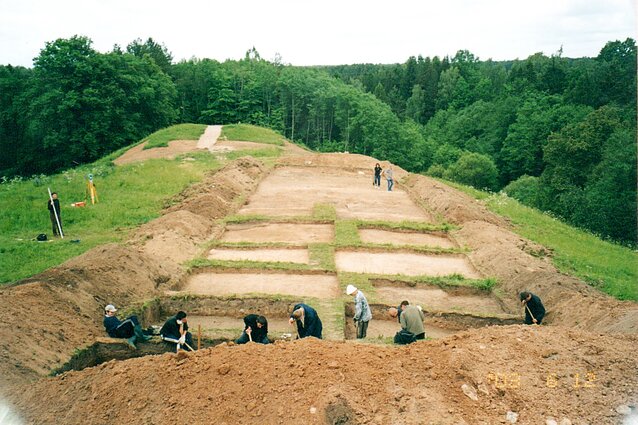
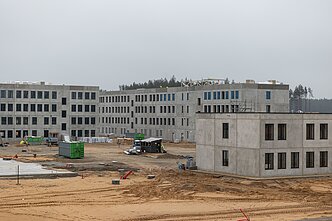
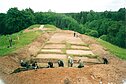
One leading candidate is the Šeimyniškėliai hill fort, on the outskirts of the town of Anykščiai in north-eastern Lithuania. The idea that this modest, little-known mound might be the lost Voruta first emerged during the interwar period, after a local writer, Antanas Žukauskas-Vienuolis, drew the attention of archaeologist Eduard Volter to local legends about the site.
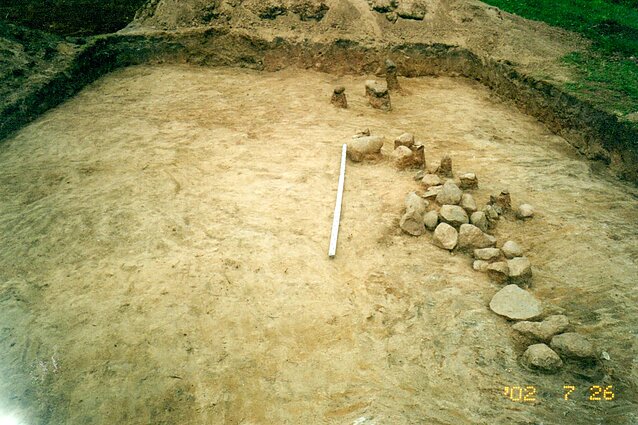
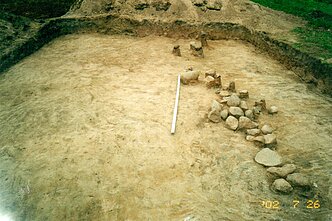
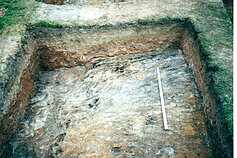
Zabiela, a professor at Klaipėda University, first excavated the hill fort in 1990 and went on to study it for 16 years, making it one of the most thoroughly investigated archaeological sites in Lithuania.
He told LRT.lt that, while a lack of surviving written sources makes definitive proof almost impossible, the circumstantial evidence – historical, archaeological and linguistic – has held up well over decades of scrutiny, with no serious counter-arguments emerging.
One clue lies in place names. Lithuanian castles were traditionally named after nearby rivers or streams – the capital, Vilnius, for instance, takes its name from the Vilnelė river. Two small streams, the Vorelis and the Volupis, run past the Šeimyniškėliai hill fort, and Zabiela believes the name 'Vorelis' may preserve an echo of 'Voruta' itself.
Geography offers further support: the chronicle's account of Mindaugas's German allies suggests the castle stood near a border, since allied troops of the period were rarely sent deep into unfamiliar territory. Šeimyniškėliai sits close to what was then the territory of Selonia, another Baltic tribal region under the control of the Livonian Order at the time – fitting the pattern.
Pinpointing a date
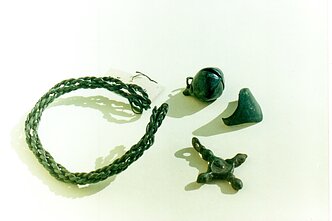
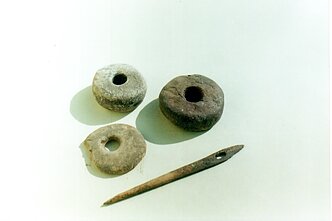
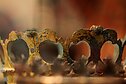
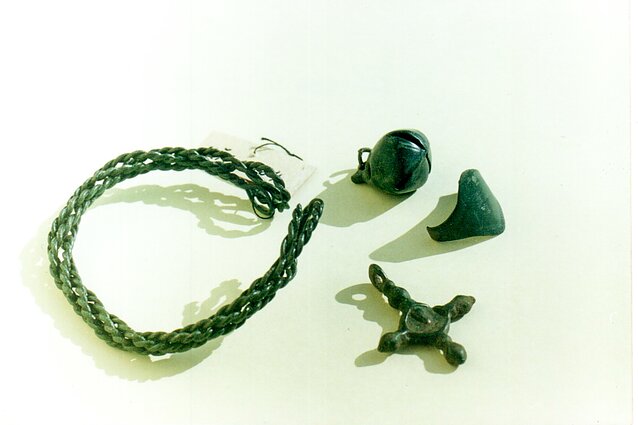
Using dendrochronology – tree-ring dating – Zabiela's team was able to date preserved timber from the hill fort's rampart to 1232, close to, though slightly earlier than, the 1251 siege date proposed by the historian Edvardas Gudavičius. Excavations also turned up pottery, farming tools, jewellery, coins and crossbow bolt tips typical of the 13th century, along with evidence the site continued in use into the 14th century.
Life at a 13th-century castle
Zabiela is keen to dispel a few common misconceptions about the site. Far from a grand, ornate stronghold, he says any castle at Voruta would have been a modest, functional structure built from timber and earth, ringed by a wooden defensive wall, with only a few simple buildings to house soldiers.
Nor was it likely to have served as anything resembling a fixed capital. "At that time, the capital was wherever the ruler happened to be," Zabiela said, noting that rulers in emerging medieval states typically moved between strongholds rather than governing from one permanent seat.
Most people in the area – probably no more than around 100 – lived not at the fort itself but in a nearby settlement, farming, hunting and fishing to survive. A small burial ground close by was later discovered by Jonas Basanavičius, a pioneering Lithuanian scholar and political figure.
Despite the years of painstaking work, Zabiela says an archaeologist is only as good as their imagination – noting that fieldwork often turns up something entirely unexpected rather than what was originally being sought.
"Every season brought a surprise. We stumbled, quite by accident, on an explanation for how legends about hidden underground tunnels come about.
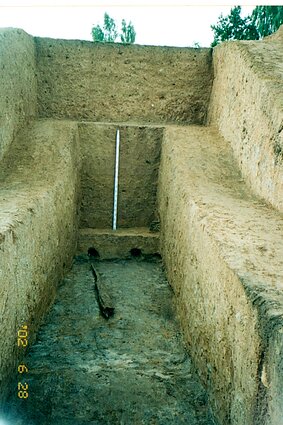
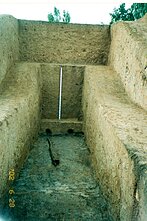
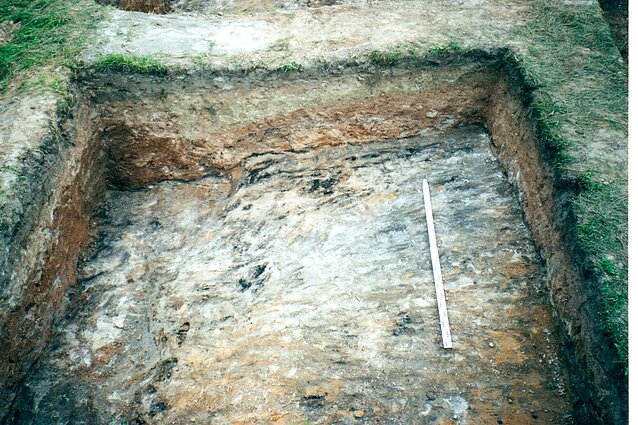
While digging into the rampart, we noticed empty cavities. It turned out that logs had once been placed there to reinforce the rampart. Over the centuries the wood rotted away, but the holes – in places up to six metres long – remained. When people accidentally come across cavities like that, stories start to spring up.
In one spot, we found the remains of a log that hadn't rotted at all. What a surprise it was, when cutting into a log that had lain there for 700 years, to have such a clear scent of pine resin fill the air. It's a scent from the distant past – how could that not amaze you?" he said.

Newsletter
Every Friday morning.