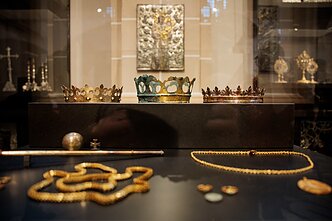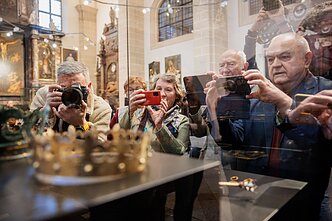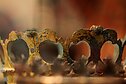













A new exhibition at the Museum of Church Heritage in Vilnius showcases royal regalia discovered in the underground vaults of Vilnius Cathedral in late 2024, including burial items belonging to Lithuanian and Polish rulers Alexander Jagiellon, Elisabeth of Austria and Barbara Radziwill.
The exhibition, titled Hidden Within (Slėpti savyje), explores the history of the Vilnius Cathedral Treasury, including the discovery, concealment and preservation of its treasures. The newly displayed artifacts expand the cathedral treasury collection, which has been open to the public for more than two decades.
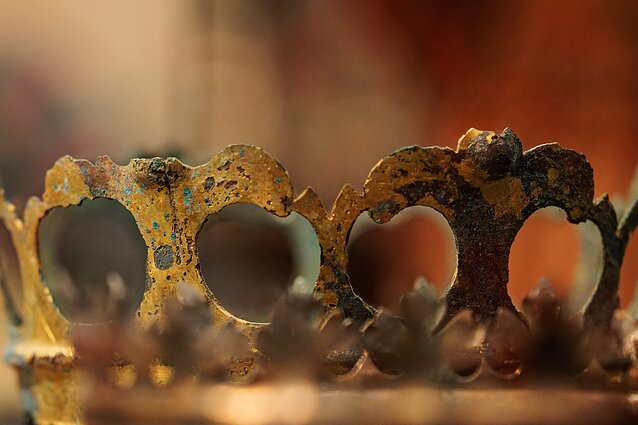
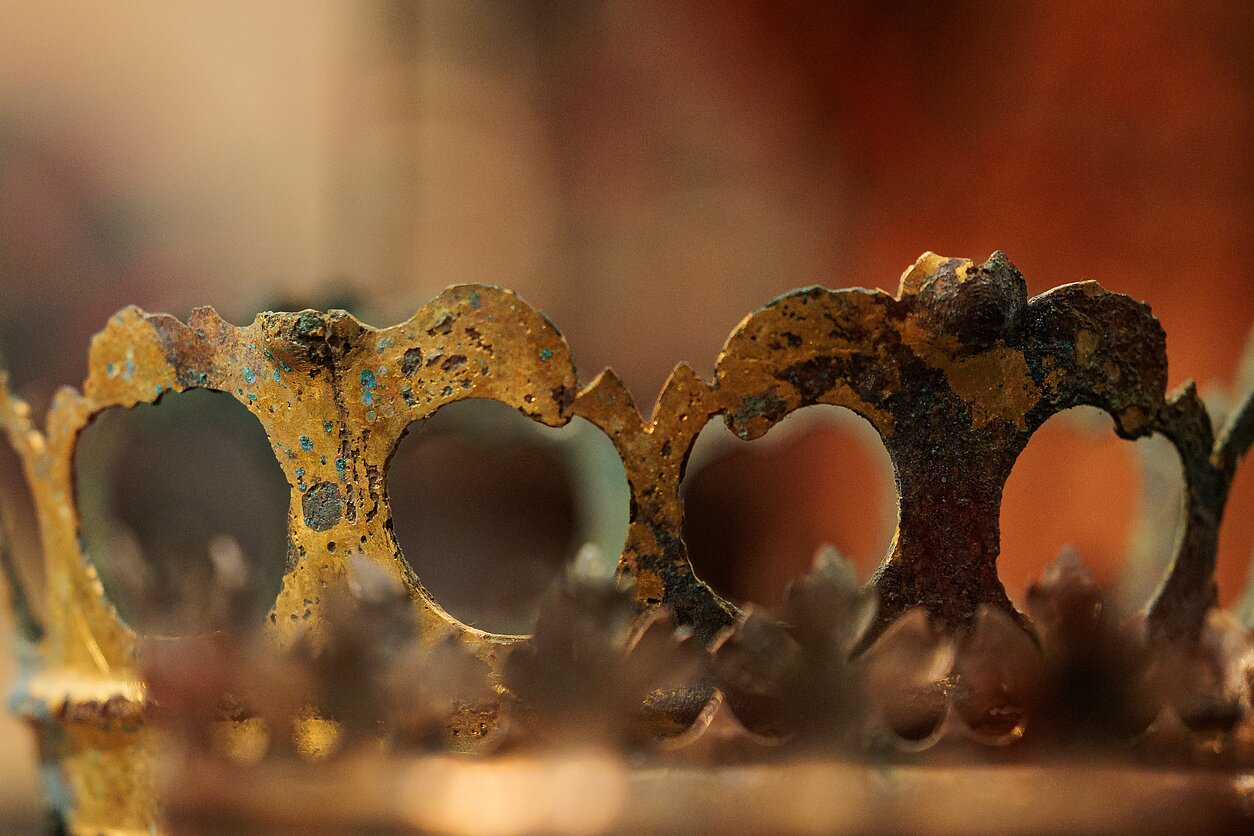
The recovered items include crowns, a sceptre and an orb – symbols of royal authority discovered in 1931 and hidden in 1939 at the start of World War II to protect them from destruction or loss.
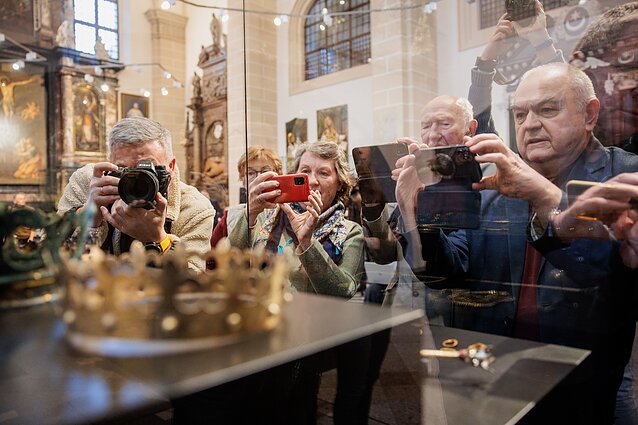
“These are objects that embody the state, not just power. They are rare symbols of our historical statehood. Given the very complex history of our state, recovering them is extremely important. It allows us to once again place ourselves among Europe’s monarchies,” exhibition curator Giedrė Mickūnaitė said.
Some of the artifacts have undergone conservation work to restore their appearance, while others have been preserved in the condition in which they were found.
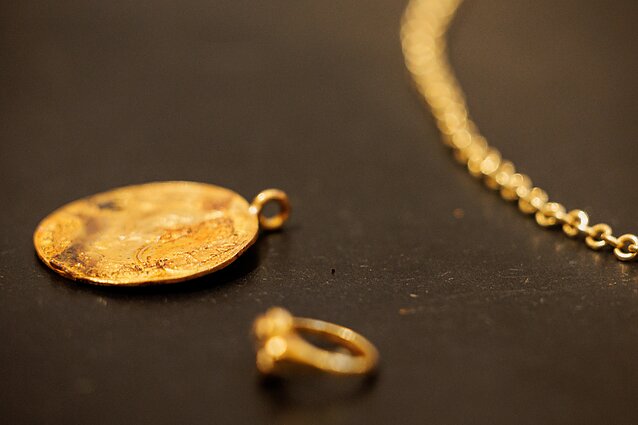
“Part of the valuables has been fully conserved, their shine restored, and we can see what they looked like when they were worn by kings. But some items have been left as they were when they were recovered,” curator Laura Petrauskaitė said.
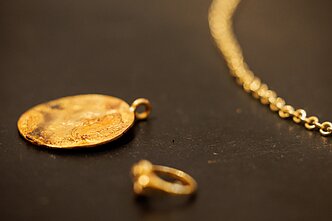
The exhibition features jewellery found in the cathedral’s hidden vault, including royal rings decorated with exceptional gemstones that reflect the craftsmanship of Renaissance goldsmiths. It also presents a unique medallion belonging to Queen Elisabeth, made from a 1533 gold 10 ducat coin bearing portraits of Sigismund I the Old and Sigismund II Augustus.
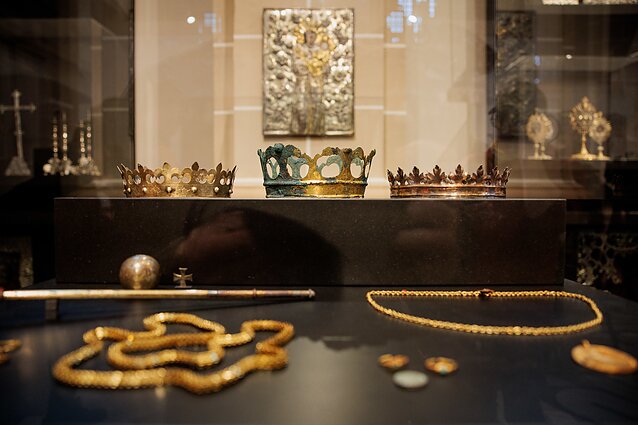
The exhibition’s title refers to the centuries-long tradition of hiding the cathedral treasury during periods of uncertainty. Curators said the cathedral itself became the safest place to protect the valuables when they could not be evacuated.
“This was not the first time the treasury was hidden. The items were concealed for centuries, beginning in 1655, and especially during the 20th century – in 1939, at the outbreak of war, and again in 1991 during the January events, when they were kept in a secret location at the City Hall,” Petrauskaitė said.
The exhibition will run through the end of January next year.

Newsletter
Every Friday morning.