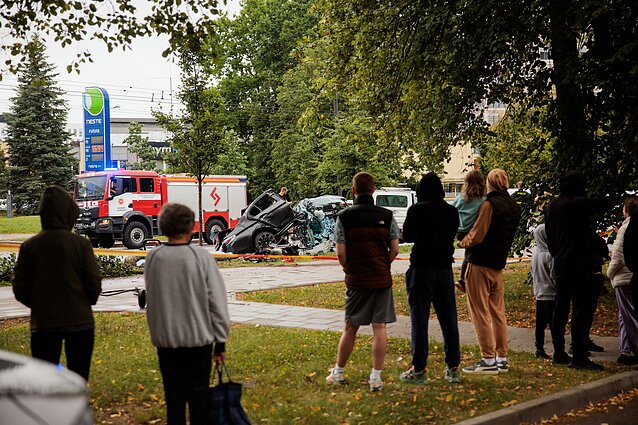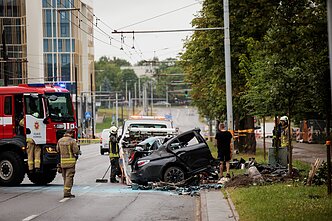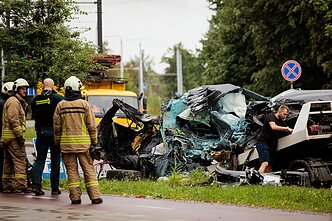













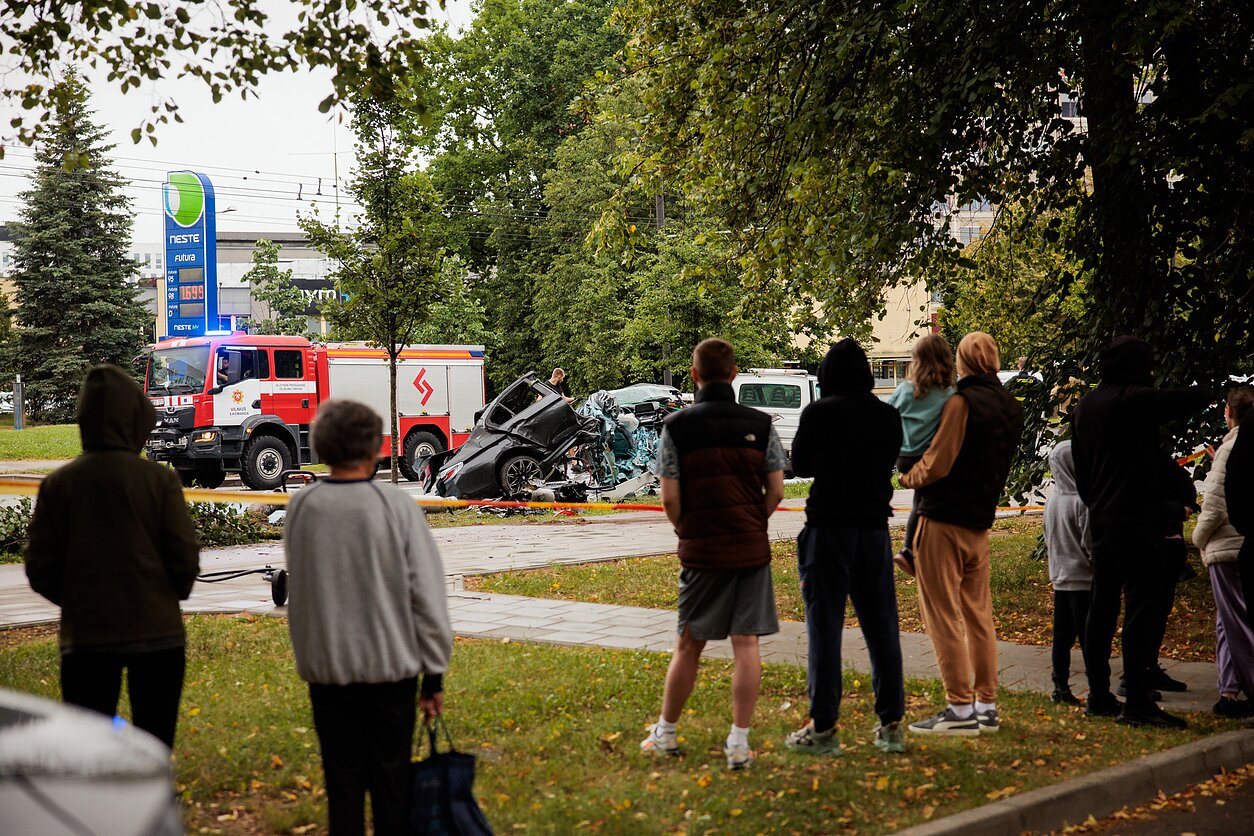
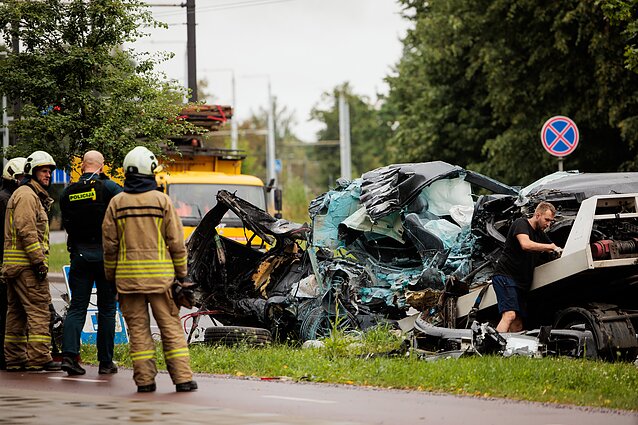
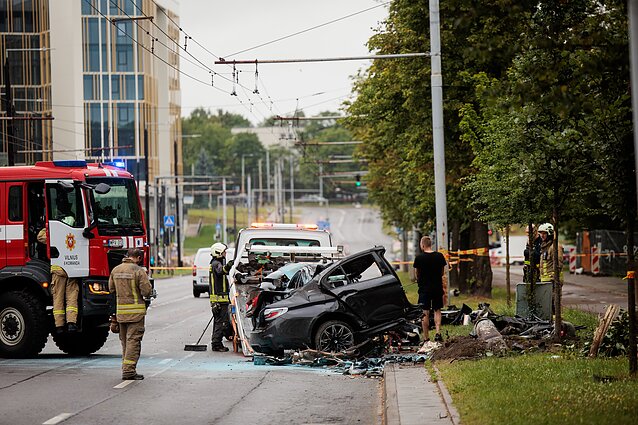
Lithuanian police are investigating the circumstances of a fatal car crash in Vilnius over the weekend, in which a BMW struck a lamp post, killing two young people – a 21-year-old man and a 19-year-old woman. It is suspected the crash occurred while the car was street racing against another vehicle.
Residents of the capital say they have also noticed a rise in illegal night-time racing involving not only cars but motorbikes.
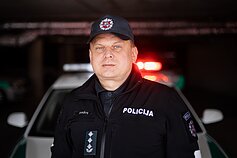
Vytautas Grašys, head of the Lithuanian police's Public Order Bureau, said street racing was not a frequent occurrence, but that police did receive and log reports of such incidents and responded to them.
"We monitor statements from the organisers of these races and try to act pre-emptively, informing [people] about the dangers and negative consequences of racing. But there simply aren't police officers on every city street at night, so the racing that does occur from time to time still goes ahead," he told LRT Radio.

He said people of all ages took part in street racing, but that those caught by police were often young.
Grašys noted that this year alone, police had recorded 7,200 cases of people driving without a licence, 19,000 violations for using mobile phones while driving, and 9,000 cases of people not wearing seatbelts.
"Why don't we condemn influencers who film themselves holding phones while driving and not wearing seatbelts? We tolerate it, we say it's cool and fun, even though it's a genuine danger and irresponsible behaviour that society tolerates. Of course, institutions are responsible for traffic enforcement, but society itself needs to stop tolerating this kind of behaviour. We shouldn't have to wait for such tragic accidents, because they could happen any day," he said.
Who is responsible?
Daiva Šukytė, head of the Institute of Social and Emotional Education and a doctor of social sciences, said that while parents were usually blamed in such situations, responsibility for raising and educating a child lay with all the adults around them.
"There's a lot of blame on social media, and questions about whether parents are at fault. But as someone who works with schools and understands that a child isn't raised by parents alone. As the saying goes – it takes a village. I'd say all of us adults are responsible for these situations, because we're the ones teaching children to make decisions and weigh up consequences," she said.
She said the crash in the Žirmūnai district of Vilnius appeared to be the result of an adrenaline rush, a lack of skill, and an inability to properly assess the situation.
"For this young woman [the BMW driver that struck the lamp post] – and not only her, but also her friend and the sportsman involved, who, as a professional athlete aware of risk, might have been expected to have more understanding and skill – it seems a youthful urge for adrenaline or risk-taking took over," Šukytė said of the tragedy.
Gintautas Sakalauskas, a criminologist and associate professor at Vilnius University's Faculty of Law, stressed that in such situations, it was more important to show solidarity and sensitivity towards the families affected than to rush to assign blame.
"My first instinct is solidarity – with the families of these young people, and with their friends. This is still a huge tragedy and a terrible loss. It's always easy to talk after the fact, but people have been deeply affected by this tragedy, and for that young woman [who is accused of causing the crash – LRT], it is a tragedy too," Sakalauskas said.
Why young people take risks
Sakalauskas said criminological research showed risk-taking behaviour was fairly common among young people, and typically fades with age.
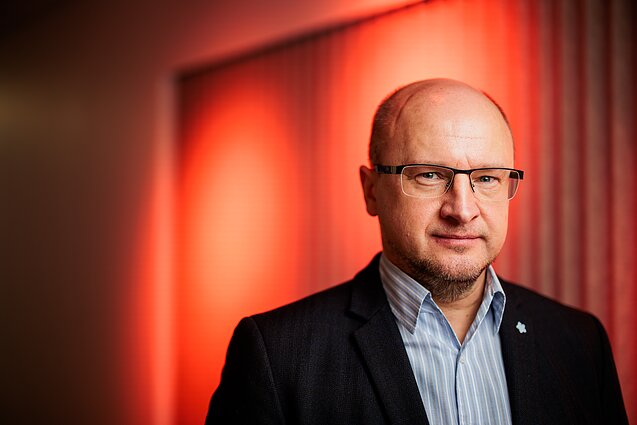
He pointed out that this was not a problem unique to Lithuania – it was one faced across the world – and that punitive measures alone tended not to work.
"In Germany, criminal liability for illegal street racing was introduced 10 years ago. But the Germans have found that cases haven't decreased, even though the penalties are severe. This is the challenge with people of this age: general deterrence, scare tactics and threats simply don't work," Sakalauskas said.
What can be done
Both experts agreed that better road safety education, rather than tougher penalties alone, offered the most realistic way forward.
Sakalauskas said: "Thinking we can reach everyone through a single programme or broadcast like this simply isn't realistic. We need to focus on what can genuinely be done. [...] Including encouraging safe driving and perhaps showing the consequences of what could happen otherwise."
Šukytė agreed, noting that road safety education tended to be treated too lightly, despite Lithuania already having a life skills programme covering the topic.

She added that Lithuanian schools put considerable effort into teaching preventive skills and educating young people, which made it all the more puzzling that reckless driving remained such a persistent problem.
"It raises the question of what kind of school someone attended and what kind of programmes were on offer, because the state invests heavily in this area. There's significant attention from the police, from the Ministry of Education, Science and Sport, and from local councils, but we're seeing painful results, which raises the question of where things are going wrong," Šukytė said.
"This particular case is a very good example to reflect on with young people. [...] Families, too, could use this as an opportunity to talk to their children about what the consequences of such behaviour can be," she added.

Newsletter
Every Friday morning.