











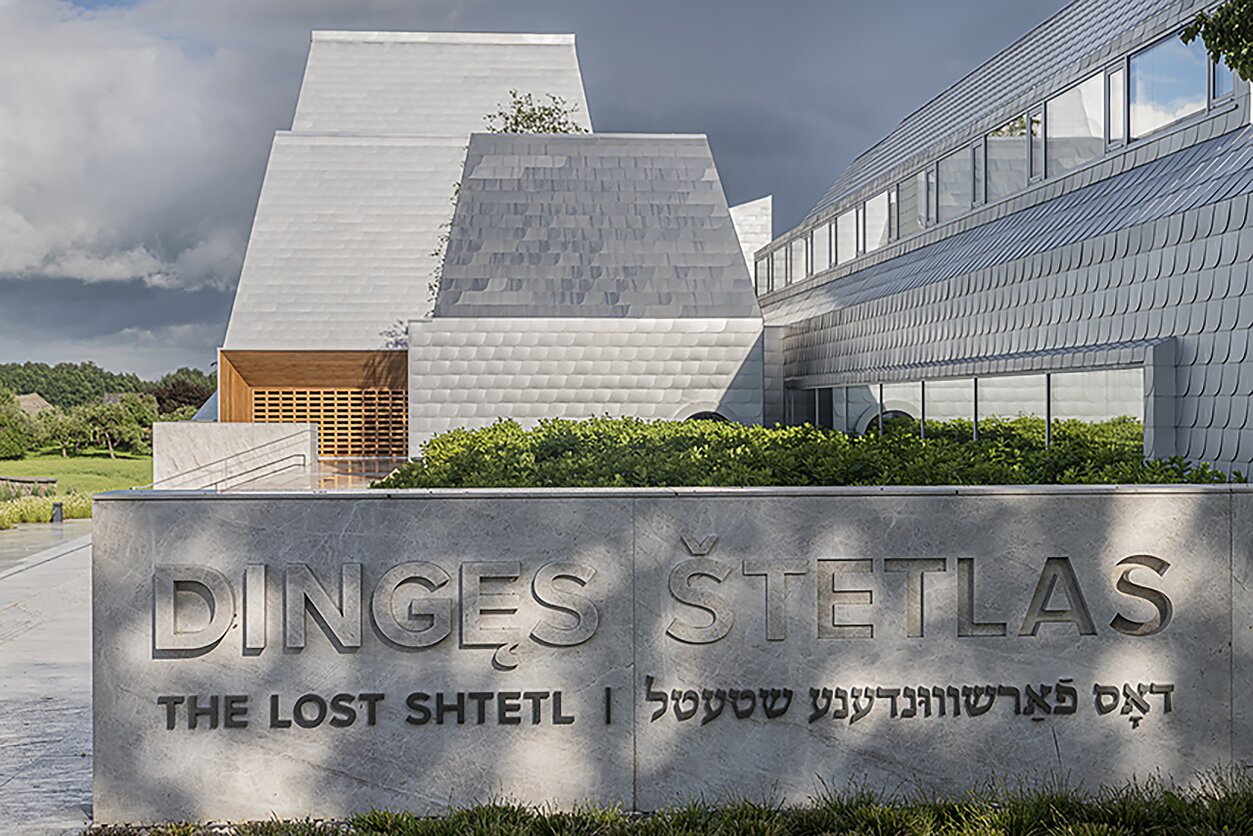
A world-class museum pays a poignant tribute to Lithuania’s erstwhile Jewish community. Ludo Segers shares his impressions.
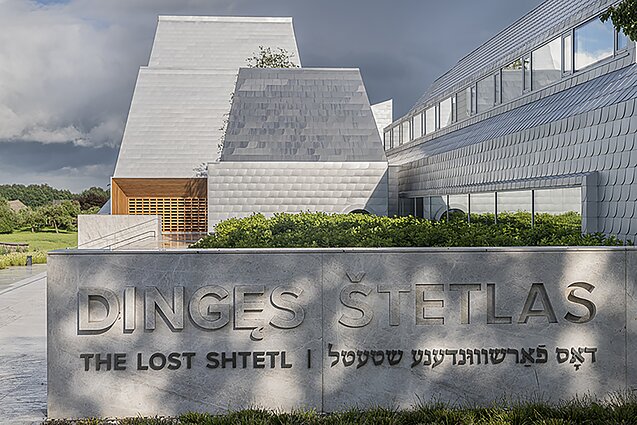
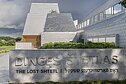
Driving through the quiet, agricultural landscape of northern Lithuania, where rolling fields are dotted with small farms and sleepy communities, one does not immediately expect to encounter a monument of world-class architectural and cultural significance. Yet, upon arriving in the small town of Šeduva, a striking structure emerges from the landscape, standing directly across from a meticulously restored Jewish cemetery. The building looks almost otherworldly. This is The Lost Shtetl Museum.
Among the first impressions upon arrival are the profound sense of scale and complete sensitivity. It is a museum that is in class of its own and rivals the best anywhere in the world. And it was built entirely through private philanthropy via the Switzerland-based YouthAid Foundation, spearheaded by an anonymous descendant of those who mostly vanished. This institution is an extraordinary gift to international cultural preservation.
The project does not merely document a historical footnote; it seeks to honour, preserve, and revive the historical and cultural memory of Šeduva’s Jews under a single roof. In doing so, it serves as a gateway to a rich tapestry of a vanished Jewish civilization that once thrived across the territory of the Grand Duchy of Lithuania, shaping the country’s cultural, economic, and political life.
The museum complex is an organic, conceptual interpretation of the historical shtetl – the Yiddish term for “small town” where Jewish populations lived alongside other groups for centuries. In interwar Lithuania, there were more than 200 shtetls, with Jewish communities regularly making between 20% and 70% of the local population.
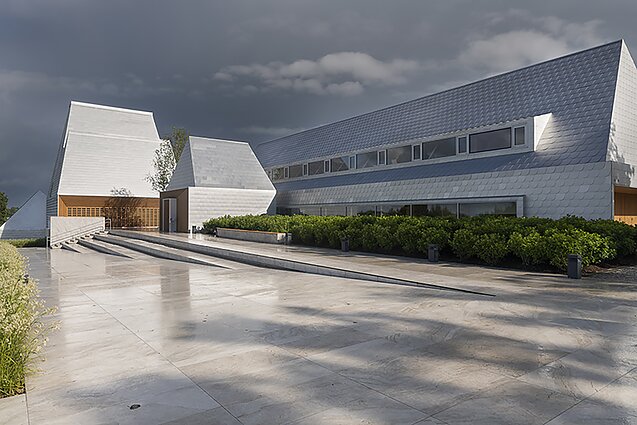
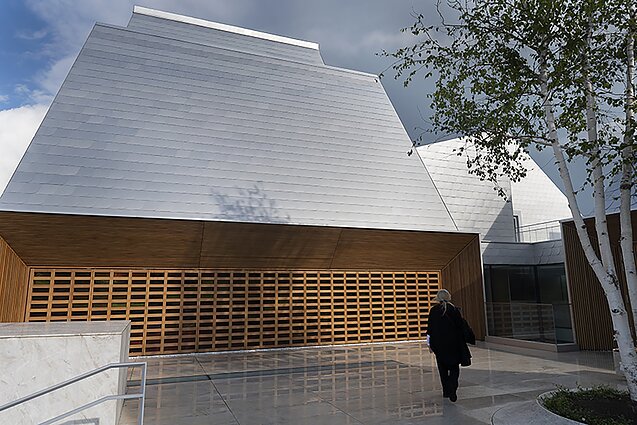
Designed by the acclaimed Finnish studio Lahdelma & Mahlamäki Architects, led by Rainer Mahlamäki, the museum’s exterior is an artistic triumph. The building is structured as a minimalist cluster of gabled volumes that reflect shtetl-style homes and the historic townscape where the synagogue roof traditionally rose tallest.
Clad in a textured façade that catches the shifting Lithuanian sky, it looked particularly dramatic on a rainy summer day when all of a sudden the sun appeared against the threatening dark clouds.
It was perhaps the right setting for metaphorical shades of a dark past. Crucially, the entire international design concept integrates beautifully into the surrounding countryside while ensuring full accessibility for individuals with disabilities.
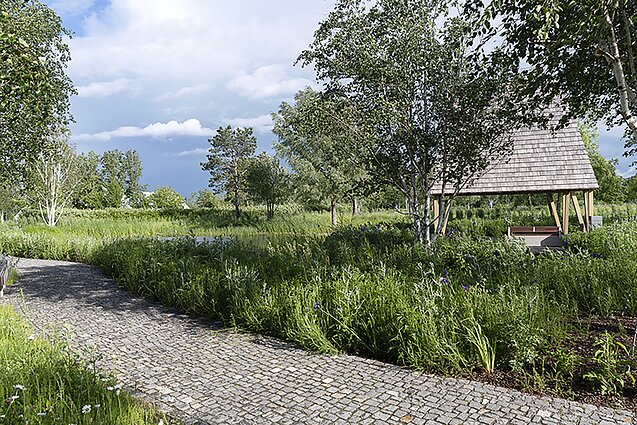
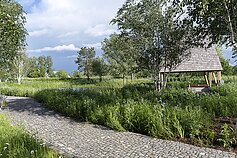
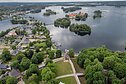
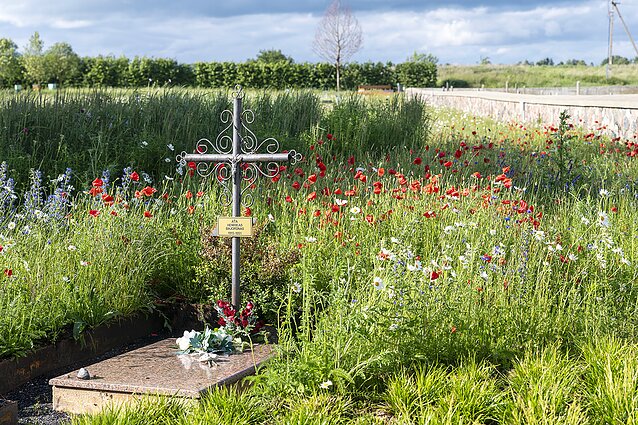
Surrounding this architectural masterpiece is the Lost Shtetl Memorial Park, designed by Enea Landscape Architecture. This “Living Landscape of Memory” draws its emotional narrative from “The Last Journey” – the harrowing path taken in August 1941 when the Jewish community was transported to the Liaudiškiai Forest to be executed. Over 200 native trees, curated wetlands, meadows, and apple orchards evoke the exact sequence of rural landscapes the victims would have witnessed along the way.
Furthermore, a large area of the site is planted with daffodils as part of the international Daffodil Project. Each flower honours the memory of the 1.5 million children who perished in the Holocaust while standing in solidarity with children affected by humanitarian crises worldwide.
Once inside the museum, the experience is defined by an uncompromising adherence to historical truth. The staff purposefully eschew emotional embellishment, presenting only the unvarnished, scholarly facts. Talking to people on the tour, it becomes instantly clear how deeply moving this factual approach is to visitors; the reality requires no theatrical amplification.
Across nine galleries, the exhibition carefully traces centuries of history. Developed by a Lithuanian curatorial team in collaboration with Jewish culture and history experts from Germany, Israel, Poland, and the United States, the display relies strictly on academic research, original artefacts, and authentic testimonies shared by descendants now scattered across the globe.
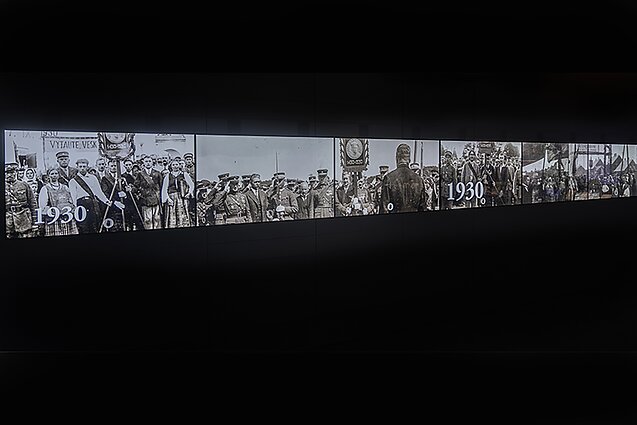
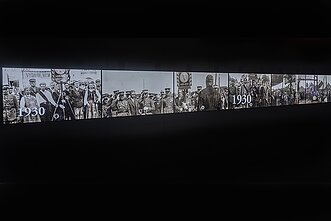
Rather than framing the narrative solely around the tragedy of the Holocaust, the displays beautifully humanise the people behind the town’s daily economy using historic photographs, writings, and personal testimonies. While Jewish residents formed the backbone of commerce as tailors, shoemakers, and shopkeepers, they also established both religious and secular schools, prayed in two synagogues, and introduced modern civic innovations – including owning and operating the town’s power station.
The Lithuanians, meanwhile, anchored the vital agricultural sector, creating an interconnected system of daily trade and mutual reliance where shtetl Jews fundamentally shaped the country’s economic and cultural life.
One of the most brilliant and devastating narrative threads in the exhibition utilises the historical evolution of cinema to trace the town’s descent from vibrant light into absolute darkness. Through the clever lens of three distinct movie theatres, the exhibition charts the shifting social fabric of the interwar period, juxtaposing the arrival of a whimsical “make-believe” movie world with a creeping geopolitical nightmare.
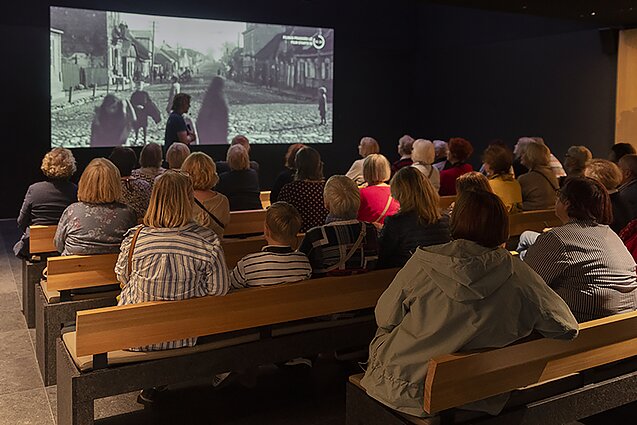
To convey the human gravity of this fracturing, the museum features three highly sophisticated theatres showing original docudrama films by the director Roberta Grossman. In the first theatre, a 15-minute film based on strict historical records depicts the peaceful coexistence of the early interwar days, focusing on one local family with a baby.
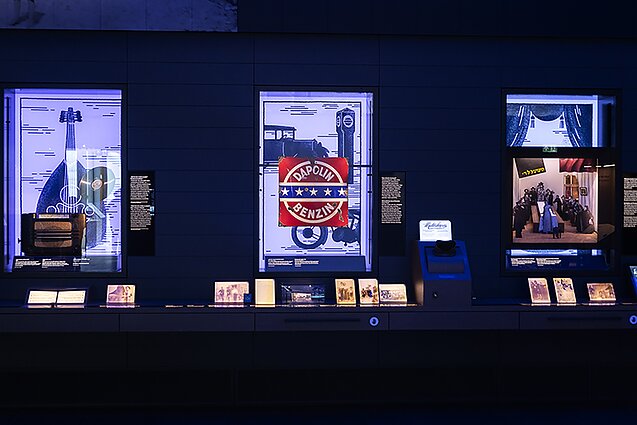
In the second theatre, the atmosphere shifts as the onset of World War II and the 1940 occupations begin. The light-hearted “make-believe” world was systematically co-opted into totalitarian propaganda tools designed to exploit pre-conceived notions, revive ancient myths, and sow ugly divisiveness that spread quickly from the temporary capital of Kaunas to the rural areas.
In the third theatre, the illusion is permanently shattered. Visitors trace the exact same actors from the first film, but they are now families running for their lives as Nazi occupiers and local collaborators transport the community to the Liaudiškiai Forest for execution.
Yet, the exhibition refuses to let systemic hatred have the final word. The narrative highlights a few brilliant stars that pierced the darkness, honouring the Righteous Among the Nations, those few courageous ordinary people who stepped up to risk everything to hide and protect Jewish families. Although absent from the physical displays of this specific regional museum, these local acts of heroism inherently connect to a broader, historic diplomatic resistance operating simultaneously in Kaunas. There, the Dutch businessman and acting consul Jan Zwartendijk, alongside Japanese diplomat Chiune Sugihara, worked feverishly against time to issue thousands of lifesaving “visas to freedom”. This wider context reminds us that individual moral courage remains an unquenchable light.
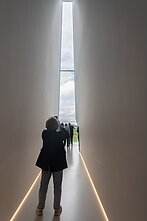
At the end of the visit there is a compressed, dim, and narrow canyon-like space that details the history of the Holocaust. This flows into the second space, the Canyon of Hope, which features soaring high ceilings and a full-height glazed window opening that frames the surrounding Lithuanian countryside and the open sky. It is designed as a moment of emotional and spatial release, letting in natural light to encourage quiet reflection at the end of a very heavy historical journey.
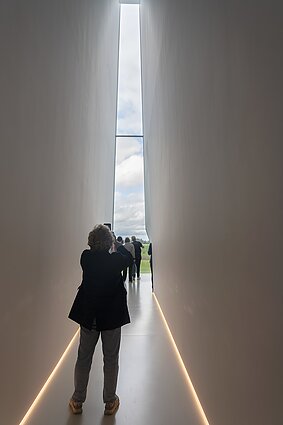
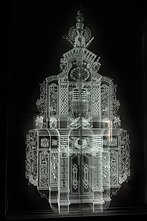
The interior environment, developed by the renowned firm Ralph Appelbaum Associates, avoids the heavy pathos typical of many memorials. The designers drew direct inspiration from the work of Litvak writer Grigory Kanovich, particularly the poetic, mournful lament in his novel Shtetl Love Song. His evocative language guided an aesthetic approach that captures both the rich presence of what was, and the profound, layered void left behind.
This duality is most palpable in the final galleries, Dreams and Realities and People of the Book, where the exhibition concludes with a dedicated space for reflection and a memorial wall bearing the names of vanished Lithuanian shtetls. In the final gallery, Faces from the Past, visitors are invited to bid a quiet farewell to the lost community of Šeduva as the historic faces that once filled the town’s busy streets slowly fade into the projected surrounding landscapes, leaving a permanent home in the viewer’s memory.
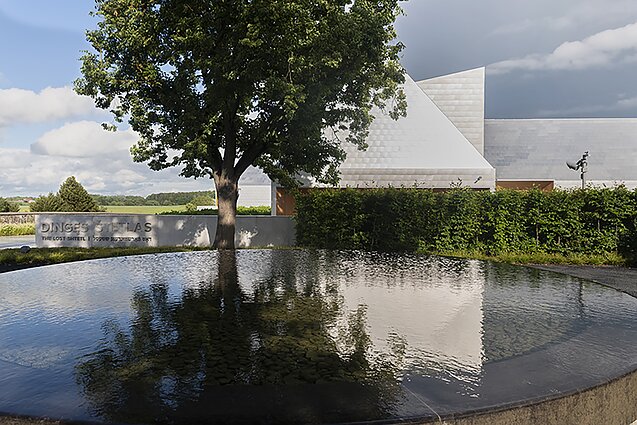
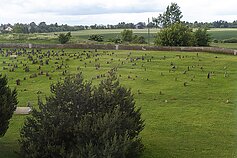
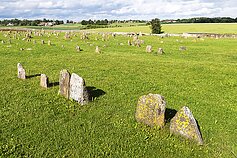
Beyond the impressive buildings, the historical trajectory connects directly to a broader topography of remembrance throughout Šeduva. Directly across from the museum lies the town’s historic burial ground, spanning 1.3 hectares and holding roughly 1,300 gravestones, with the oldest dating back to 1782. A major 2013 restoration led by architect Algimantas Kančas restored 800 headstones and identified 400 graves, and today the perimeter wall features an interactive audio tour detailing its history.
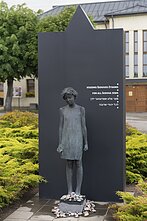
This is mirrored by a dozen audio stations in the town itself, alongside a monument titled The Girl by Lithuanian sculptor Romualdas Kvintas and a memorial at the site of the two synagogues by Marijonas Šlektavičius.
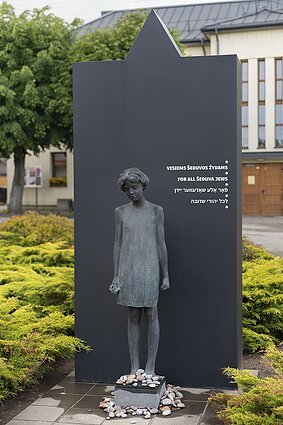
Deep in the nearby forests of Pakuteniai and Liaudiškiai, Kvintas’ poignant memorials titled The Door, The Beam Star, and The Dwelling of Light’s Star mark the actual mass graves where the town’s victims lie buried, standing as a permanent reminder of the nearly 200,000 Lithuanian Jews killed during this horrific period in history.
Through this monumental synthesis of architecture, landscape, and uncompromised history, The Lost Shtetl Museum ensures that the people who once walked the streets of Šeduva are remembered not merely for how they died, but for how they lived.

Newsletter
Every Friday morning.