




The stories of Vilnius’ saints and blesseds stretch from the splendour of Renaissance royal courts to the frozen wilderness of Siberia, bound together by a common thread: unwavering faith in the face of extraordinary hardship.
Their lives were marked by illness, political upheaval, imprisonment, exile and martyrdom. Yet, according to Catholic tradition, none abandoned their beliefs despite the trials they endured.
The lives of Lithuania’s best-known holy figures were explored during a guided tour organised as part of the World Apostolic Congress on Mercy. The tour was led by Vilija Vareikienė, project coordinator at the Vilnius Pilgrim Centre and author of the recently published book Reaching Heaven: Lithuania’s Saints and Blesseds.
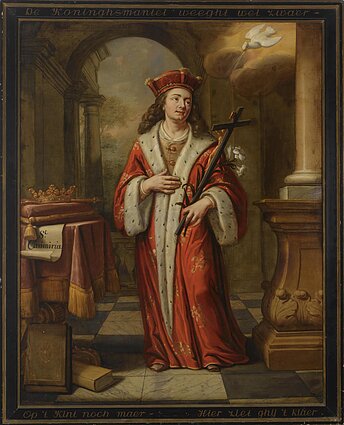
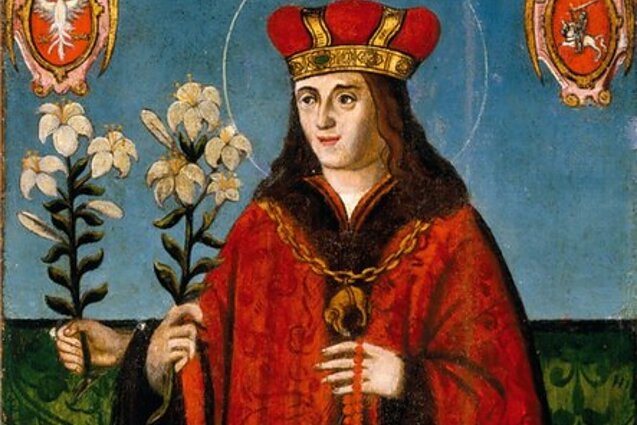
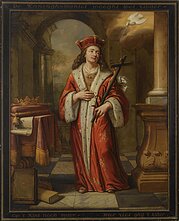
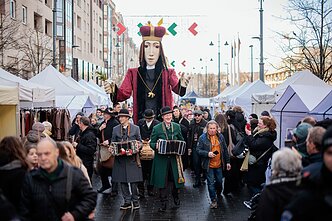
St Casimir: a prince who defied the spirit of his age
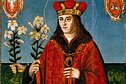
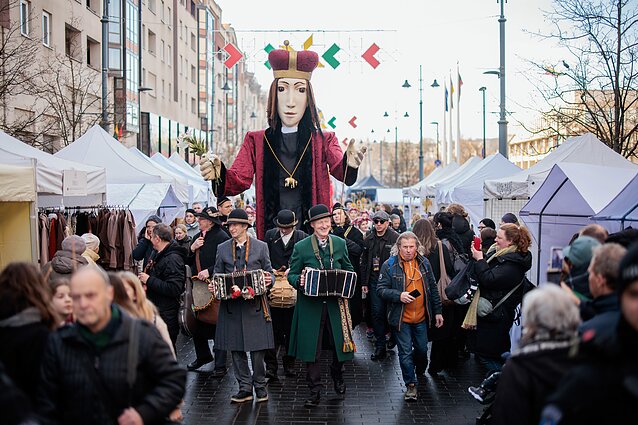
Among Lithuania’s saints, St Casimir occupies a unique place. The son of King Casimir IV Jagiellon of Poland and Grand Duke of Lithuania, he remains the country’s only canonised saint and is regarded as the patron saint of Lithuania and Lithuanian youth worldwide.
Born in 1458 into one of Europe’s most powerful royal families, Casimir was expected to embrace the privileges of fifteenth-century court life. Instead, he became known for his devotion, modesty and concern for the poor.
“Renaissance rulers demonstrated their power through luxury and extravagance,” Vareikienė said. “Casimir lived in that environment, but he chose to go against the current.”
According to historical accounts, he committed himself to lifelong chastity despite pressure from those around him. Even members of his family reportedly encouraged him to sleep with a woman because people at the time believed it could cure tuberculosis, the illness that eventually claimed his life in 1484.
His remains are enshrined in Vilnius Cathedral, one of Lithuania’s most important pilgrimage sites.
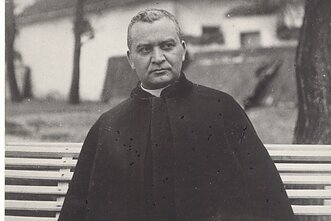
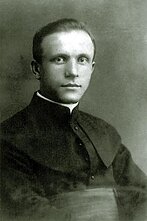
Blessed Jurgis Matulaitis: a life shaped by suffering
Jurgis Matulaitis, born in 1871 in southern Lithuania, experienced hardship from an early age.
Orphaned as a child and diagnosed with bone tuberculosis during adolescence, he lived with chronic illness throughout his life. Despite those challenges, he pursued studies for the priesthood and later earned advanced theological degrees in St Petersburg and Fribourg, Switzerland.
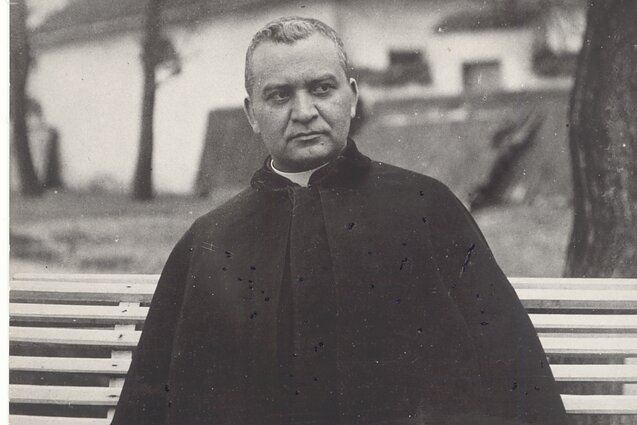
Matulaitis became one of the first advocates of modern Catholic social teaching in Lithuania and Poland. During the Russian Empire’s campaign against Catholic religious orders, he secretly revived the Marian Fathers, adapting their way of life by replacing traditional religious habits with ordinary clothing and establishing a hidden novitiate abroad.
After World War One, he reluctantly accepted appointment as bishop of Vilnius.
“Pope Pius XI regarded him as a holy man,” Vareikienė said. “Later, he entrusted him with helping organise relations between the newly independent Lithuanian state and the Vatican.”
Matulaitis died in 1927 from appendicitis after years of enduring recurring illness.
“The theme of suffering accompanied him throughout his entire life,” she said.
Blessed Michał Sopoćko: apostle of Divine Mercy
Blessed Michał Sopoćko, a Polish priest born in 1888, arrived in Vilnius as a young man with little money but great determination.
According to Vareikienė, he first stopped to pray before the icon of the Virgin Mary at the Gate of Dawn. Shortly afterward, he unexpectedly found employment teaching German at an underground Catholic boarding school operating during the Russian Empire’s restrictions on non-Russian education. The position enabled him to save enough money to enter the seminary.
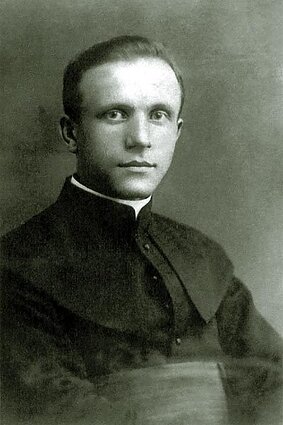
Ordained in 1914, Sopoćko served as a parish priest, military chaplain and educator before returning to Vilnius in the 1920s.
His greatest legacy began in 1933, when he became the spiritual director of Sister Faustina Kowalska.
Initially sceptical of her reported visions of Jesus, Sopoćko asked her to undergo psychiatric evaluation before accepting their authenticity. Doctors concluded she was mentally healthy.
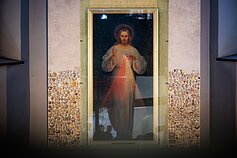
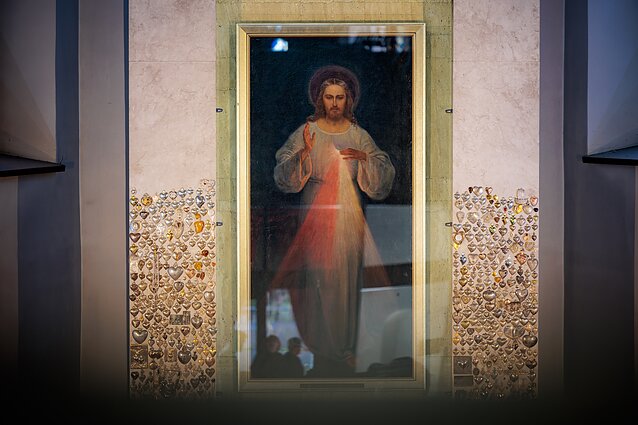
Working together with Faustina and artist Eugeniusz Kazimirowski, Sopoćko helped oversee the painting of the first image of the Divine Mercy in 1934.
He spent the remainder of his life promoting the Divine Mercy devotion, which later spread throughout the Catholic Church.
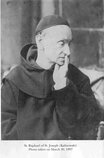
St Raphael Kalinowski: faith forged in Siberia
St Raphael Kalinowski, born in Vilnius in 1835, is the city’s only native-born canonised saint.
After graduating from the Imperial Military Engineering Academy in St Petersburg, he served as an engineer before joining the 1863 January Uprising against Russian rule.
Captured by imperial authorities, he was sentenced to 10 years of exile in Siberia.
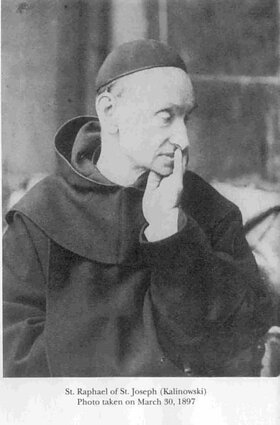
Before his imprisonment, however, he returned to confession after a long absence from the sacraments.
“That confession became a turning point,” Vareikienė said. “Without returning to the Church, he might have experienced prison and exile very differently.”
Despite receiving supplies from his aristocratic family while in exile, Kalinowski shared much of what he received with fellow prisoners.
After returning from Siberia, he entered the Discalced Carmelite order and later founded a monastery in Wadowice, Poland, where future Pope John Paul II was born. The pope later canonised him in 1991.
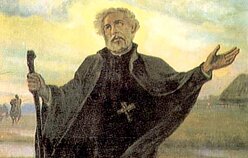
St Andrew Bobola: martyr of the Polish-Lithuanian Commonwealth
Jesuit missionary St Andrew Bobola spent much of his ministry in Vilnius, serving at St Casimir Church.
Born into the Polish nobility in 1591, he became known for his energetic preaching and missionary work throughout the Polish-Lithuanian Commonwealth.
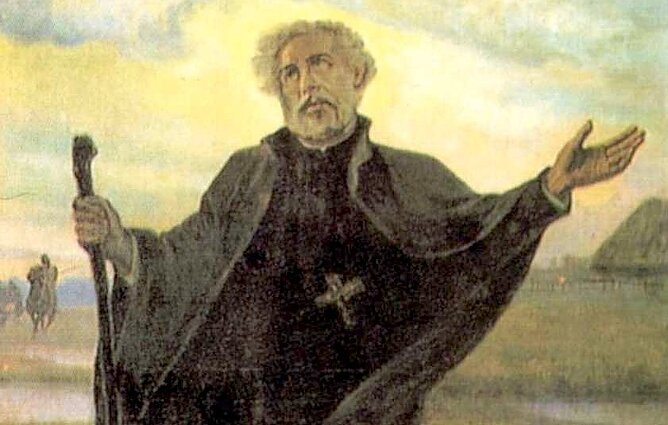
“He had a passionate temperament,” Vareikienė said. “Sometimes he could be impulsive, but he constantly tried to master himself.”
During the mid-17th century wars between the Polish-Lithuanian Commonwealth and Russia, Bobola was captured by Cossacks.
Refusing to renounce his Catholic faith, he was brutally tortured and killed in 1657.
Although largely forgotten for decades after his death, devotion to Bobola gradually spread. Today he is recognised as one of Poland’s patron saints, while relics associated with him remain in the crypt of S. Casimir Church in Vilnius.
St Josaphat: a martyr for Christian unity
St Josaphat Kuntsevych arrived in Vilnius as a young Orthodox merchant’s apprentice before embracing Catholicism.
Inspired by the Jesuits and by celebrations surrounding the canonisation of St Casimir, he joined the Basilian Order and devoted his life to promoting unity between Eastern and Western Christianity following the Union of Brest.
Known for his austere lifestyle and remarkable ability to persuade others, he became so effective that Orthodox opponents reportedly nicknamed him “the catcher of souls”.
Eventually appointed archbishop of Polotsk, Josaphat encountered fierce resistance from opponents of church union.
In 1623, an angry mob in Vitebsk beat him to death and threw his body into a river.
After centuries of movement across Europe, his remains now rest beneath St Peter’s Basilica in Vatican City, making him one of the few Eastern European saints buried at the heart of the Roman Catholic Church.

Newsletter
Every Friday morning.