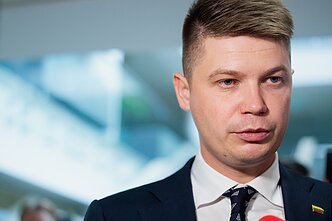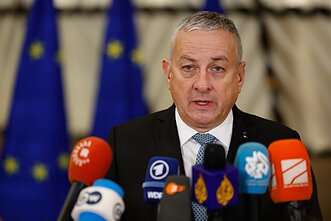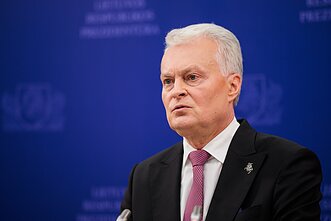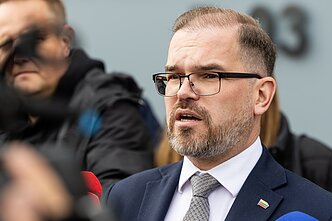
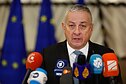
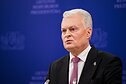









Prime Minister-designate Mindaugas Sinkevičius on Friday submitted his proposed cabinet to President Gitanas Nausėda for approval, pledging to lead a government prepared to act “decisively, energetically and purposefully”. It includes the current foreign minister, Kęstutis Budrys, despite earlier doubts about his future.
“Today I formed the government and submitted it to the president for approval,” Sinkevičius wrote on Facebook. “I believe I have assembled exactly the kind of team that is ready to act decisively, energetically and with clear direction.”
Several ministers from the previous government led by Inga Ruginienė would remain in office under the proposed cabinet, including Foreign Minister Kęstutis Budrys.

Sinkevičius nominated Taurimas Valys as finance minister and Martynas Katelynas as interior minister. Former Prime Minister Inga Ruginienė has been proposed to return as minister of social security and labour, while Ieva Andriulaitytė was nominated to serve as environment minister.
The prime minister-designate also included candidates put forward by the Democratic Union “For Lithuania” political party. Linas Kukuraitis was nominated for health minister, Kęstutis Mažeika for agriculture minister and Lukas Savickas for energy minister.
Social Democrat Lukas Alsys is to replace Vaida Aleknavičienė as culture minister in the new cabinet, while Juras Taminskas remains transport minister, Raminta Popovienė stays on as minister for education, science and sport, while Rita Tamašunienė is to continue as justice minister.
Economy minister Edvinas Grikšas and defence minister Robertas Kaunas have also retained their positions.
Prime Minister-designate Sinkevičius said he expects “courage, initiative and the ability to change what is not working” from his ministers, and called for solidarity, responsibility and a greater focus on defence from the government.
The prime minister said the cabinet was formed based on principles of competence and transparency, as well as coalition agreements.
Sinkevičius added that the government will seek to maintain financial stability while ensuring that regional development, social services, education and infrastructure move beyond mere promises.
Under Lithuania’s Constitution, the president appoints ministers on the recommendation of the prime minister. The new cabinet can begin work after receiving presidential approval and taking the oath of office.

Newsletter
Every Friday morning.