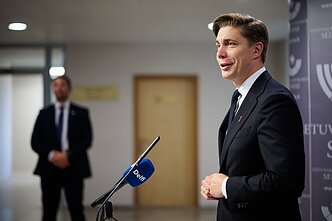








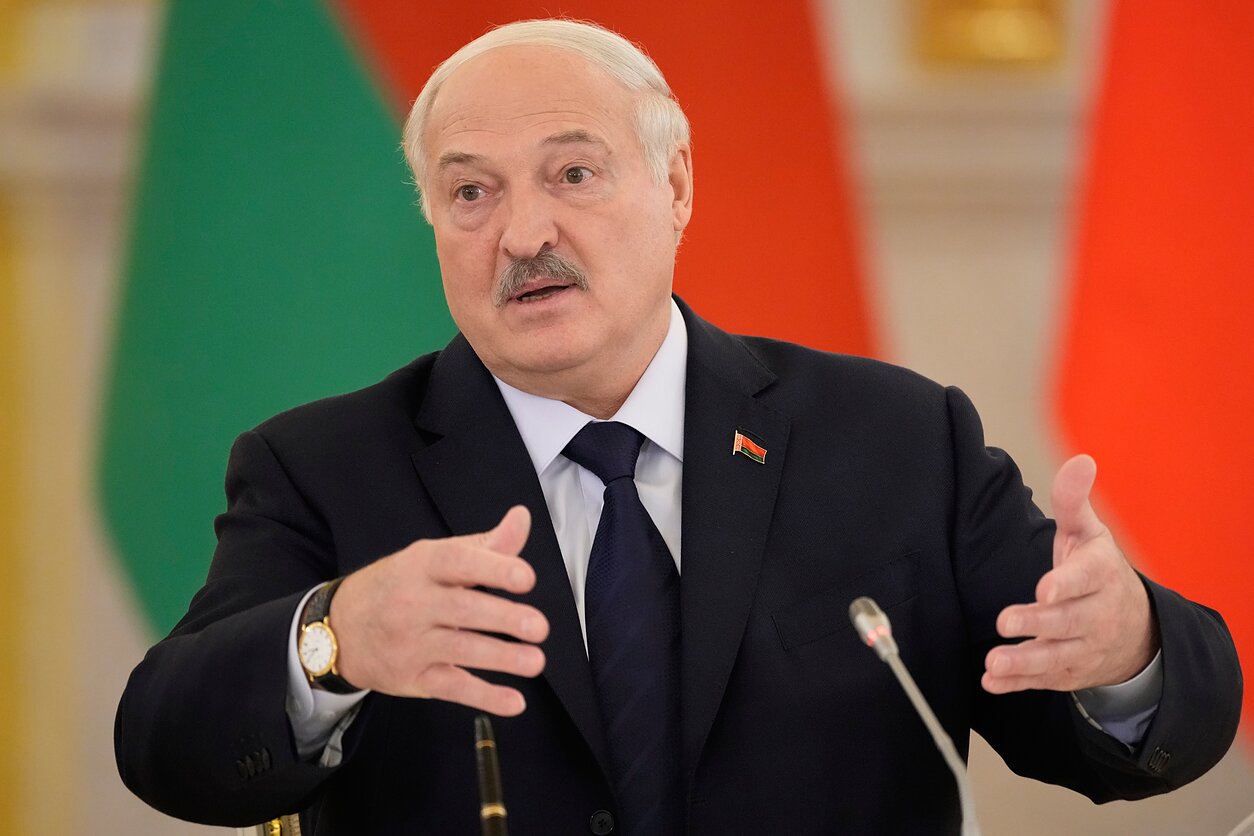
Lithuania’s incoming government has softened its language on Belarus in its newly published program, dropping a blanket commitment to maintain Minsk’s international isolation while linking future pressure on its actions.
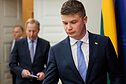
The program of Prime Minister-designate Mindaugas Sinkevičius’ government, registered in parliament on Friday, pledges to take “active steps to maintain the international isolation of Russia”.
That differs from the program of the outgoing government led by Inga Ruginienė, which committed to taking “active steps to maintain the international isolation of Russia and Belarus”.
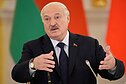
Instead of calling for Belarus’s continued isolation as a general policy, the new program says Lithuania will strengthen “isolation and pressure” on Belarus if it continues supporting Russia’s war against Ukraine or carries out hybrid attacks against the European Union or Ukraine.
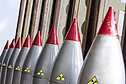
The incoming government’s program also adopts a different approach to Belarus’ Astravyets nuclear power plant.
Rather than calling for the facility’s closure, the document says Lithuania will continue raising safety concerns about the plant in international forums and seek Belarus’ compliance with the highest international nuclear safety, environmental and other obligations.
The outgoing government’s program described the Astravyets plant as a constant threat and pledged to keep the issue on the European Union’s political agenda while advocating for the plant to be shut down until all environmental and nuclear safety concerns had been resolved.
Most other policy provisions concerning Belarus remain unchanged.
The incoming government also says it will seek to normalise relations with China by restoring diplomatic representation to a level comparable with that of other European Union member states.
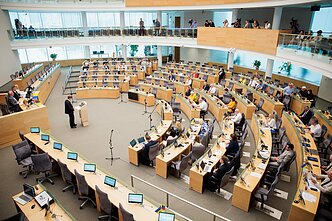
Sinkevičius’ government is being formed after a reshuffle of Lithuania’s governing coalition led by the Social Democrats. The government’s program must still be approved by the 141-member Seimas before the new cabinet can take office.

Newsletter
Every Friday morning.