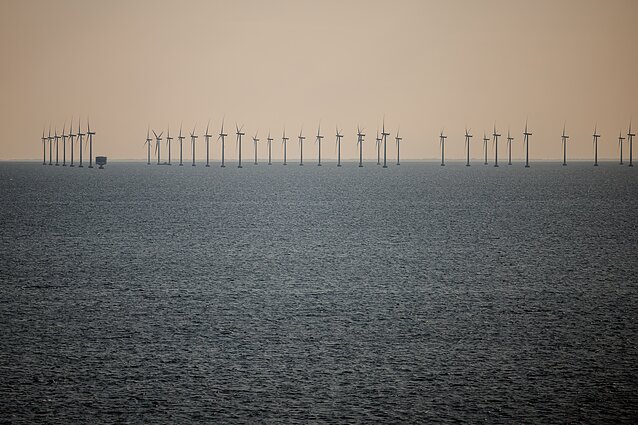















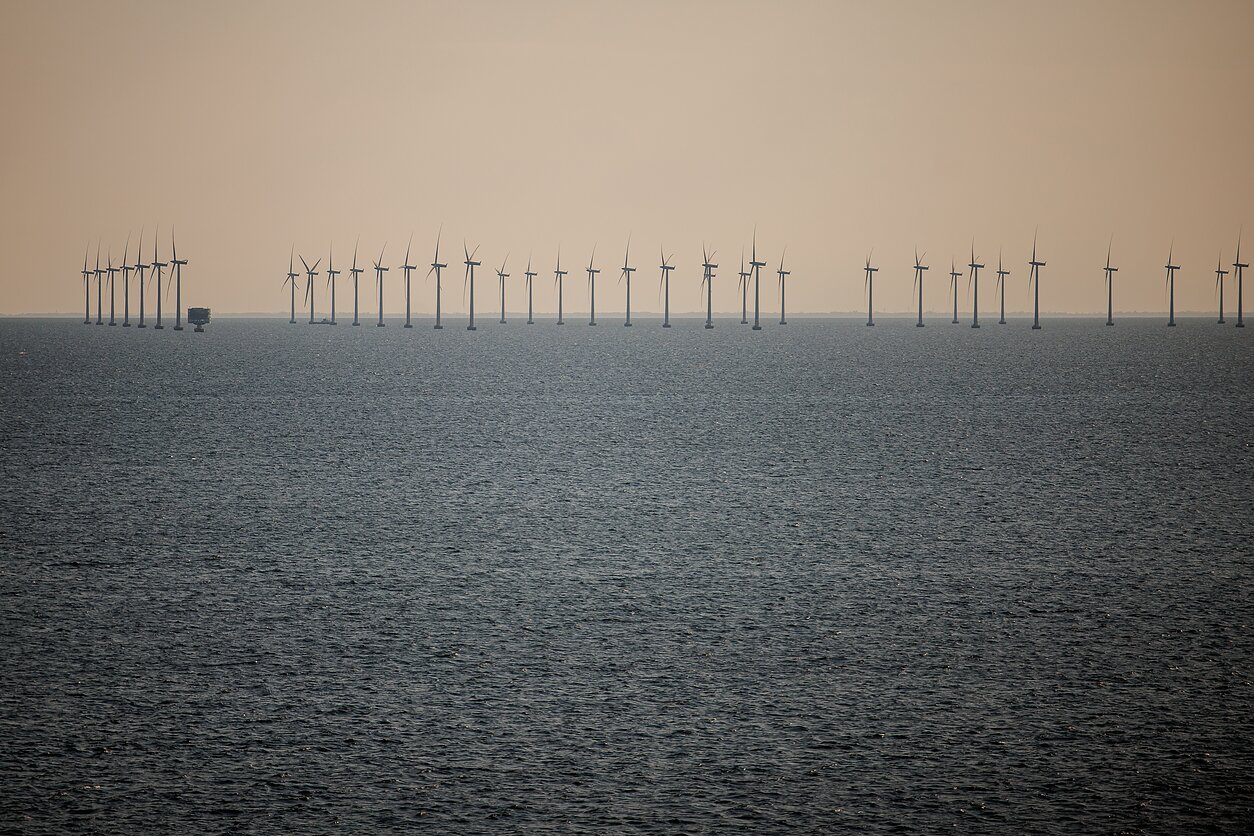
Lithuania’s first commercial offshore wind farm project cannot be implemented under current market conditions, Energy Minister Žygimantas Vaičiūnas said Wednesday, urging state-owned energy group Ignitis Group to immediately publish its cost-benefit analysis of the development.
The comments came after Ignitis Group submitted an analysis of the planned 700-megawatt Curonian Nord offshore wind project to the Energy and Finance ministries at the end of June. The project is estimated to be worth about 3 billion euros.
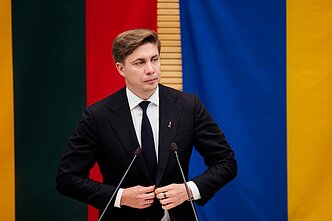
“The first offshore wind project, Curonian Nord, is not feasible on commercial terms at the moment,” Vaičiūnas told the parliamentary Audit Committee. “It would probably be appropriate for the company to say this, but I have a responsibility to state it, taking into account the overall global situation.”
The minister declined to discuss details of the analysis but said Ignitis should disclose it without delay rather than waiting several weeks, as previously indicated by the company’s management.
“I would invite Ignitis to do this immediately, in line with the procedures applicable to a listed company,” Vaičiūnas said. “This is not really a question of confidentiality. It is a matter of transparency.”

The Audit Committee requested the analysis following recommendations by Lithuania’s National Audit Office in its review of the country’s first offshore wind farm project.
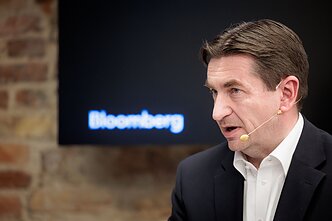
Ignitis Group CEO Darius Maikštėnas said the analysis would be published only after the government had fully reviewed it and prepared its position.
He said the document must first be released through the stock exchange so that all shareholders receive the information simultaneously.
“If essential details were disclosed publicly beforehand, it would violate the Market Abuse Regulation,” Maikštėnas told lawmakers. “Therefore, officials who have access to this information, including myself, the finance minister and the energy minister, cannot disclose its key details.”
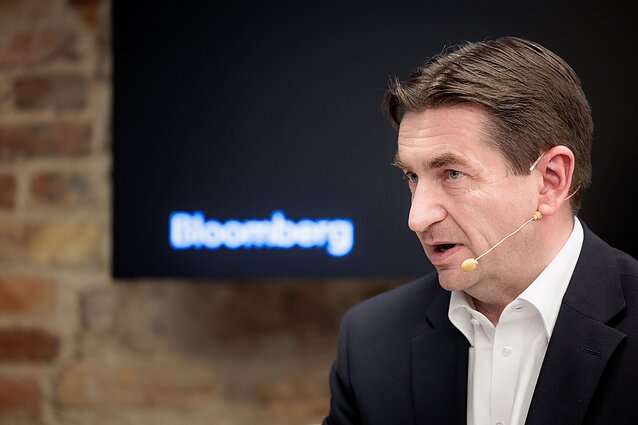
Responding to questions from opposition lawmaker Jurgis Razma, Maikštėnas confirmed that the Finance Ministry, the company’s largest shareholder, had asked Ignitis to postpone publication of the analysis.
“We received a letter from our main shareholder asking us to give the government reasonable time to review it and not to publish it yet,” he said.
Finance Ministry adviser Vaida Dumčiūtė said the ministry received the analysis on June 29 and that officials from both the Finance and Energy ministries, together with the government, needed time to coordinate a common position.
She said such a complex assessment could not be completed in a single day.
Two possible paths forward
Vaičiūnas outlined two potential options for advancing offshore wind development.
The first would involve launching a new tender for at least one offshore wind farm supported by state aid. He noted that the previous state aid framework expired in 2025.
“That is one option, and it has both advantages and disadvantages,” he said.
The second option would be to seek European Commission approval for state aid specifically for the existing Curonian Nord project, despite its lack of commercial viability under current conditions.
“Although the project could not be developed, or would be very difficult to develop, under current commercial conditions, it is possible to initiate state aid approval procedures for this specific project,” the minister said.
Vaičiūnas said he had already discussed the possibility with the European Commission and suggested the project could receive support from European Union structural funds.
He described the approach as an exceptional measure rather than a standard procedure and said it could be pursued by Lithuania’s next government following a public consultation.
According to the minister, the mechanism could reduce the burden on consumers under the project’s contract-for-difference support scheme. He noted that Poland had followed a similar approach and said the EU’s next multiannual budget for 2028-2034 would provide an opportunity to finance such projects.
Vaičiūnas also argued that Lithuania had once been ahead of Poland in offshore wind development but had lost its lead.
He said that if Lithuania had continued implementing its original plans from 2017 and 2018 without interruption, the country’s first offshore wind farm would already be operating about 33 kilometres off the coast near Palanga.
“That lesson should have been learned,” he said. “My advice to future governments is to seek optimal solutions and avoid improvising with strategic national projects.”

Newsletter
Every Friday morning.