















Lithuania’s political leadership wants to normalise relations with China within the next six months, setting an ambitious goal for Foreign Minister Kęstutis Budrys. But experts say that, judging by how other countries have repaired damaged ties with Beijing, the timeline may prove unrealistic.
Examples from Norway, South Korea, Australia and Canada suggest that restoring relations with China after a diplomatic crisis is usually a lengthy process that often requires political concessions. Yet analysts argue that Lithuania’s dispute with Beijing is in a category of its own because it centres on Taiwan, an issue China considers its most sensitive national interest.
“Our case is unique because it concerns Taiwan, which is China’s biggest red line,” said Tomas Janeliūnas, a professor at Vilnius University’s Institute of International Relations and Political Science. “China was prepared to go as far as possible, including imposing secondary sanctions. They viewed Lithuania’s decision as far more significant than the disputes they had with Canada, Australia, Norway or South Korea.”
Taiwan at the centre of the dispute
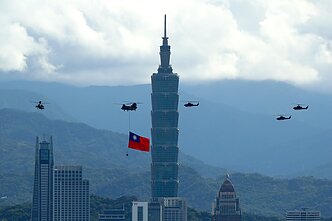
Relations between Vilnius and Beijing collapsed in 2021 after Lithuania allowed Taiwan to open a representative office under the name “Taiwanese Representative Office in Lithuania”. Unlike similar offices elsewhere in Europe and North America, which typically use the name “Taipei”, the Lithuanian office’s title was widely interpreted by Beijing as implying greater recognition of Taiwan’s separate political identity.
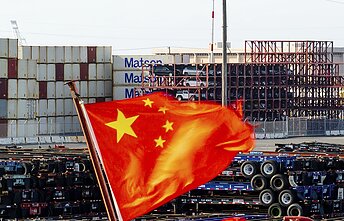
China, which considers Taiwan part of its territory, responded by downgrading diplomatic relations and imposing extensive economic restrictions on Lithuania while pressuring multinational companies to cut Lithuanian supply chains.
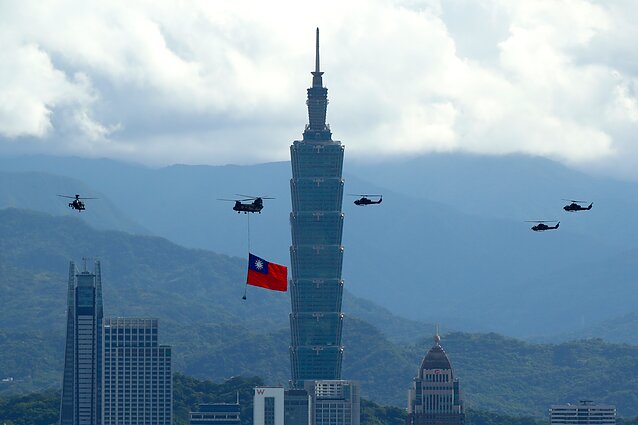
“The significance of Taiwan for China is far greater than issues such as Tibet, Xinjiang or human rights,” said Vida Mačikėnaitė-Ambutavičienė, an associate professor at the International University of Japan. “Taiwan has enormous strategic importance because it sits on the first island chain, giving China potential access to the Pacific Ocean. That is why Beijing reacts so strongly.”
Few easy options
Experts say Lithuania has limited options if it wants to improve relations with Beijing.
One possibility would be reaching an agreement with Taiwan to rename the representative office, satisfying one of China’s main demands.
If Taipei refused, Lithuania could theoretically revoke the office’s status unilaterally, although analysts say such a move would create an unprecedented diplomatic controversy and damage Lithuania’s international reputation.
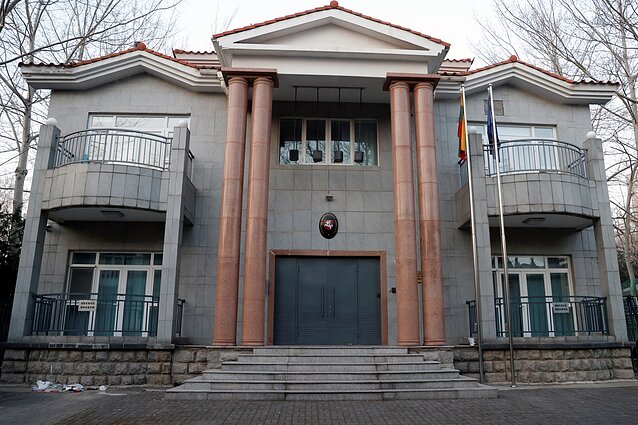
“That would amount to expelling the office without any mutual agreement,” Janeliūnas said. “I find it difficult to imagine the Lithuanian government taking such a step.”
Lessons from Norway
Norway’s experience illustrates how difficult repairing relations with China can be.
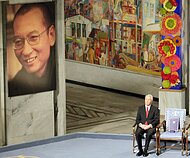
Diplomatic ties deteriorated after the Nobel Peace Prize was awarded in 2010 to imprisoned Chinese dissident Liu Xiaobo. It took six years before relations were fully restored.
As part of the normalisation process, Oslo reaffirmed its commitment to the “One China” policy, emphasised respect for China’s core interests and stated that it would not support actions undermining those interests. During the same period, Norwegian officials avoided meetings with the Dalai Lama, and a Norwegian museum returned historical artifacts to China. The diplomat Thorbjorn Jagland, who chaired the Nobel Peace Prize Committee, was demoted.
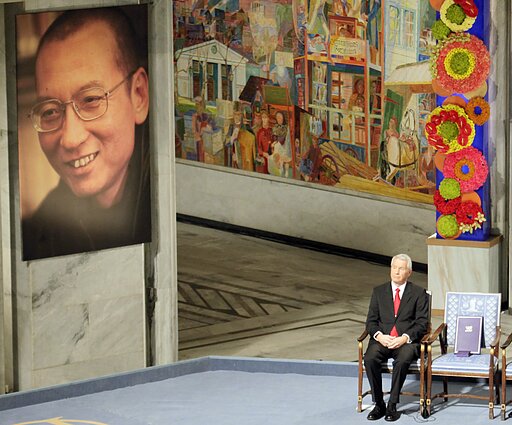
“China always seeks recognition of its core interests,” Mačikėnaitė-Ambutavičienė said. “In Norway’s case, Beijing portrayed the Nobel Prize as interference in China’s internal affairs, even though the Norwegian government does not award the Nobel Peace Prize.”
Janeliūnas said Norway’s eventual agreement was widely criticised domestically because it appeared to compromise the country’s commitment to defending human rights.
“If it took Norway six years to normalise relations after the Nobel Peace Prize, Lithuania’s process over Taiwan could take even longer,” Mačikėnaitė-Ambutavičienė said. “This is unlikely to be resolved during a single government term.”

South Korea’s concessions
South Korea also faced severe Chinese economic retaliation after agreeing in 2016 to deploy the US Terminal High Altitude Area Defense, or THAAD, missile defence system.
China restricted tourism, targeted South Korean exports, curtailed cultural exchanges and imposed heavy economic pressure on companies such as Lotte.
Within a year, Seoul announced its so-called “Three No’s” policy, pledging not to deploy additional THAAD batteries, not to participate in a broader regional missile defence network and not to establish a trilateral military alliance with the United States and Japan.
The measures helped stabilise relations, although strategic disagreements remained.

Resistance from Australia and Canada
Australia and Canada took a different approach.
Relations between Australia and China deteriorated after Canberra blocked Huawei from participating in its 5G network, introduced foreign interference legislation and called for an independent investigation into the origins of the Covid-19 pandemic.
China responded with tariffs, import restrictions and an extensive campaign of political and economic pressure. Nevertheless, Australia maintained its security policies, kept Huawei excluded from 5G infrastructure and proceeded with the AUKUS security partnership with the United States and the United Kingdom.
Diplomatic relations gradually improved after Australia’s Labor government took office in 2022, largely because both countries shared strong economic interests.
Canada’s dispute with China began after the 2018 arrest of Huawei executive Meng Wanzhou at the request of US authorities. Beijing detained two Canadian citizens and imposed economic measures in retaliation.
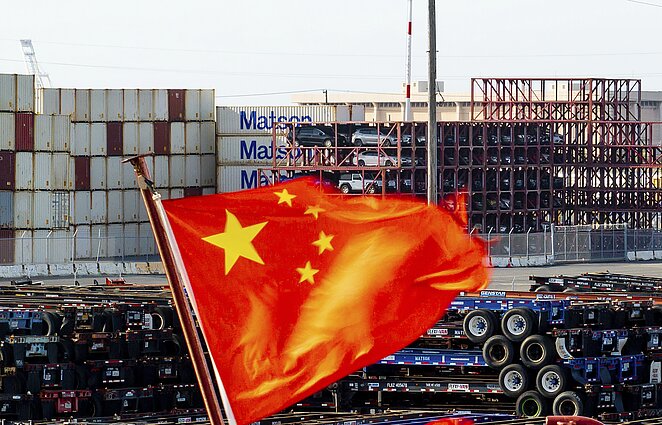
Although Meng was released in 2021, relations remained strained for years. Dialogue has recently improved under Prime Minister Mark Carney, partly because of growing trade tensions with the United States under President Donald Trump.
China’s leverage matters
Analysts say China’s response often depends on the balance of power.
Countries heavily dependent on China economically, such as Mongolia, have generally moved quickly to accommodate Beijing’s demands. Mongolia apologised after hosting the Dalai Lama in 2016 and pledged not to invite him again.
Countries with greater strategic or economic importance to China have enjoyed more room to defend their own positions.
“China normalised relations with Australia, Canada and Norway partly because additional pressure was no longer producing results,” Janeliūnas said. “At the same time, Beijing also needed something from those countries.”
Australia, he noted, never apologised for advocating an investigation into the origins of Covid-19, and Canada likewise maintained many of its positions.
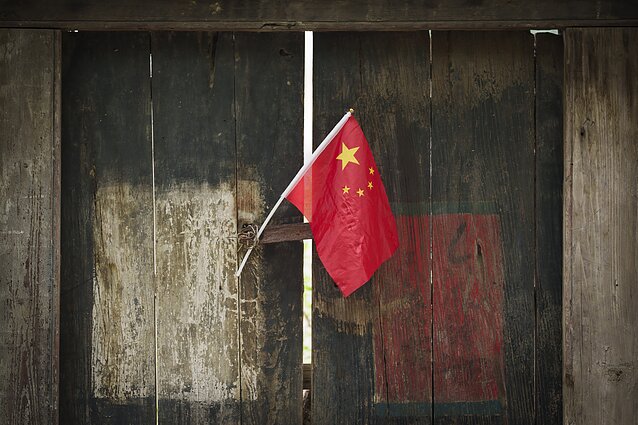
Lithuania’s situation differs because the Taiwan office remains a continuing source of disagreement.
“We cannot simply wait for this conflict to fade away while the Taiwanese Representative Office continues to operate under its current name,” Janeliūnas said. “For Beijing, it remains a constant reminder of what it considers an unacceptable precedent.”
No expectation of economic rewards
The principle hope of Lithuanian politicians is that improved relations could generate economic benefits. Janeliūnas, however, remains sceptical.
“Expecting economic gains from normalisation is rather naive,” he said. “China showed little interest in expanding economic ties with Lithuania even before the Taiwan office opened. I do not believe Beijing intends to reward Lithuania.”
Lithuania’s relatively limited economic dependence on China has also reduced Beijing’s ability to exert additional pressure, he added.
A difficult road ahead
Some analysts believe Lithuania’s desire to restore working relations with China is driven less by economic considerations than by diplomatic pragmatism, particularly as Lithuania prepares to assume the rotating presidency of the Council of the European Union next year.
Without functioning diplomatic channels, experts warn, Lithuania could face complications in managing EU-China relations during its presidency.
From Beijing’s perspective, however, simply restoring dialogue may not be enough.

Mačikėnaitė-Ambutavičienė said China would likely prefer Lithuania to rename the Taiwanese Representative Office and issue some form of public acknowledgment that would discourage other countries from following Vilnius’ example.
“I don’t think Beijing will let Lithuania off easily,” she said. “Either China will seek to make this a highly visible example for others, or the normalisation process will be long.”
Janeliūnas also questioned whether Taiwan would agree to any name change.
“I do not believe Taiwan would accept changing the office’s name,” he said. For Taiwan, having the only office in Europe using the name “Taiwanese” rather than “Taipei” carries significant symbolic value.

Newsletter
Every Friday morning.