














Some Russian-speaking residents in Lithuania are seeking new ways to take driving license exams after the country banned Russian-language examinations at the start of 2026, with candidates increasingly opting for interpreters in Ukrainian or Polish instead.
For some applicants, the change has meant restarting or adapting a process they began before the new rules took effect.
Darya, a Belarusian national who has lived in Lithuania for four years and asked that only her first name be used, said she rushed to complete the theory exam in Russian in 2025 after learning the language would no longer be available.
“I immediately went to take the exam. I managed to pass the theory test in Russian in April,” she told LRT.lt.
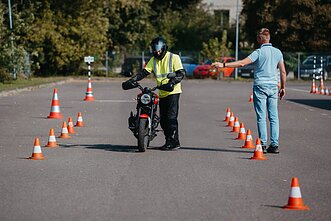
She then spent nearly a month looking for a driving school offering instruction in Russian before beginning the practical driving test in the summer of 2025 with the help of an interpreter.
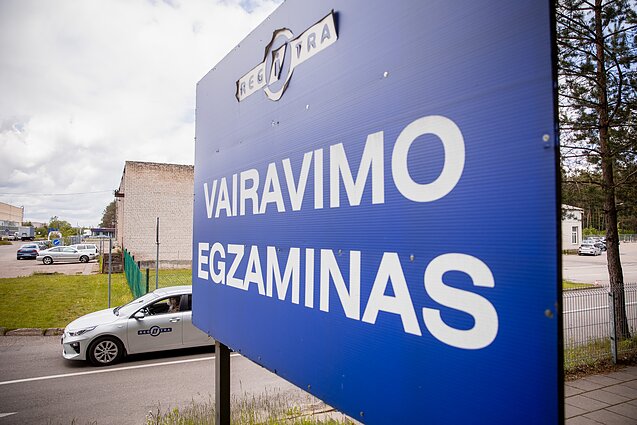
“I took all my practical exams with an interpreter translating from Lithuanian into Russian,” she said.
According to Darya, examiners differed in their approach. Some insisted that every instruction be translated, while others spoke Russian directly.
Despite five attempts, she failed to pass the practical exam before the rules changed.
“When the new year came, the possibility of taking the exam with Russian interpretation disappeared completely,” she said.
Earlier this year, she signed a petition addressed to Lithuania’s interior minister asking authorities to allow candidates who had already passed the theory exam in Russian to complete the licensing process under the previous rules.
“We received no response,” she said.
Later, Darya began hearing that some candidates were taking exams with Ukrainian-language interpretation.
“At first, they said it was only for Ukrainian citizens,” she said. “Then stories started appearing in Russian-language Telegram groups about Belarusians successfully taking the exam in Ukrainian.”
She is now considering that option herself.
“I know Ukrainian better than Lithuanian or English. It’s easier for me to communicate in Ukrainian, but the question is whether everyone can take the exam in that language or whether there are citizenship restrictions,” she said.
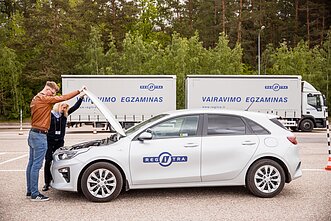
Darya said the biggest challenge is not following driving instructions but answering technical questions before the practical test, such as explaining how to check engine oil or other vehicle fluids.
“Those are difficult to learn even in English or Lithuanian,” she said, adding that Ukrainian’s similarity to Russian and Belarusian makes the terminology easier to understand.
She also said demand for interpreters has shifted since the rule change.
“I noticed that many interpreters quickly switched to offering Ukrainian,” Darya said.
Russian-speaking Telegram groups dedicated to driving exams have become a forum where migrants exchange advice on language options after the Russian-language ban.
Participants discuss taking exams in Ukrainian, Polish or even a mixture of Polish, Belarusian, Ukrainian and Russian, while noting that much depends on the examiner overseeing the test.
Some users said examiners warned candidates that deviating from the declared examination language could result in the test being stopped. Others described examiners as more accommodating, repeating questions slowly to help candidates understand them.
One interpreter advertising Polish-language services in Russian-language online groups told LRT.lt that the service costs 50 euros and includes pre-exam consultation, assistance with paperwork and obtaining a driver’s license, as well as advance preparation of questions that may be asked during the examination. The interpreter said payment is collected only after the exam.
According to Lithuania’s state-owned company Regitra which administers driving licensing, the country conducted 157,836 theory examinations and 154,440 practical driving tests in 2025, increases of 15% and 7%, respectively, from the previous year.
Practical exams involving interpreters were held 16,623 times in 2025 and 4,550 times so far this year.
Regitra spokeswoman Karolina Judeikė said Russian had previously been among the most common interpretation languages but was removed from theory exams on January 1, 2026, following a decision by Lithuania’s Interior Ministry.
The company expanded the list of available languages to include English, Spanish, French, German, Polish and Ukrainian.
Regitra said the change was first approved in 2024 as part of efforts to “strengthen national security and reduce external influence”.
The company reported that English remains one of the most popular interpretation languages, with 93 theory exams taken in English so far this year. Interest in Polish has also increased sharply, rising from a single exam in 2025 to 81 this year. Ukrainian appeared in the statistics for the first time, with 63 candidates choosing the language.
Regitra stressed there are no restrictions on who may choose Ukrainian.
“People decide themselves which language will allow them to best demonstrate their knowledge and understand the tasks,” the company said.
The company also said it has tightened oversight of interpreters.
Regitra received 18 reports of alleged misconduct by interpreters during driving examinations last year, placing 12 people on its list of unreliable interpreters. This year, it has received seven additional complaints, with three more interpreters added to the blacklist and investigations continuing into two others.
Under Regitra’s rules, interpreters may not use dictionaries, mobile phones or other communication devices during examinations, provide hints, discuss answers with candidates outside of translation or otherwise influence examination results.
If an examiner suspects a violation, the case is reviewed by a commission, which may place the interpreter on the unreliable interpreters list. Those included on the list are barred from participating in Regitra examinations for one year before being automatically removed.

Newsletter
Every Friday morning.