













Could the Kremlin launch a drone and ballistic missile barrage against the Baltic countries? Konstantin Eggert writes for Euractiv, partners of LRT English.
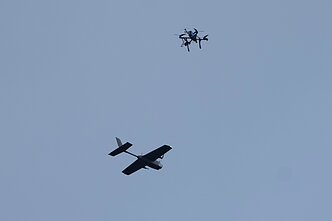
Last week this author, like everyone else in Vilnius, received a civil defence authority text message: “This is an air raid alert, seek shelter”. The reason: an unidentified drone appeared in Lithuanian airspace.
“Air raid alert” is now just another phrase, which – along with “drone” and “hacker attack” – tells of the tense situation that is a recurring topic in social media and news broadcasts.
On May 25, Vladimir Putin signed a law that grants him the right to use the army to “protect Russian citizens” abroad. Simultaneously, Moscow appealed to the United Nations Court of Justice to demand that the Baltic states, particularly Latvia, be held accountable for “infringing on the rights of Russians”.
A massive cyberattack against the Lithuanian state registration agency – ostensibly by Russian hackers – led to a huge leak of citizens’ and residents’ personal data. This included exiles from Russia and Belarus. For Vilnius, Riga, and Tallinn, such attacks are all part of Moscow’s psychological pressure on NATO’s eastern flank.
But what for? Putin is facing what looks increasingly like a failure on the Ukrainian front. The common wisdom is that he lacks the resources to do anything militarily meaningful elsewhere. This isn’t entirely true. Putin’s political gearbox notoriously lacks reverse mode. He never admits mistakes, and his KGB training follows a modus operandi that when something goes wrong, the answer is to create a new crisis elsewhere to distract attention, then demand concessions to resolve it. At worst, this buys the Kremlin time; at best, it might win some concessions.

A full-scale invasion of the Baltic states seems unlikely. Even if Russia thinks it won’t trigger a NATO Article 5 collective response (a huge gamble), it couldn’t muster sufficient forces for such an offensive. And besides, it would be impossible to hide preparations. On top of which, even the NATO-sceptic Trump administration could well decide to warn the Kremlin about the catastrophic consequences of such a step.
A blitz cross-border Russian spetznaz incursion designed to expose NATO’s weakness and disunity is a scenario frequently floated. But while this is possible in theory, it would meet fierce pushback.
“To my knowledge, Lithuanian, Latvian and Estonian intelligence services see and hear in great detail what’s happening deep inside Russian territory,” Keir Giles, research director at the Centre for Conflict Studies in London, told me. “They will be ready. In my view, the Baltic states won’t even need allied help to defeat such a raid.”
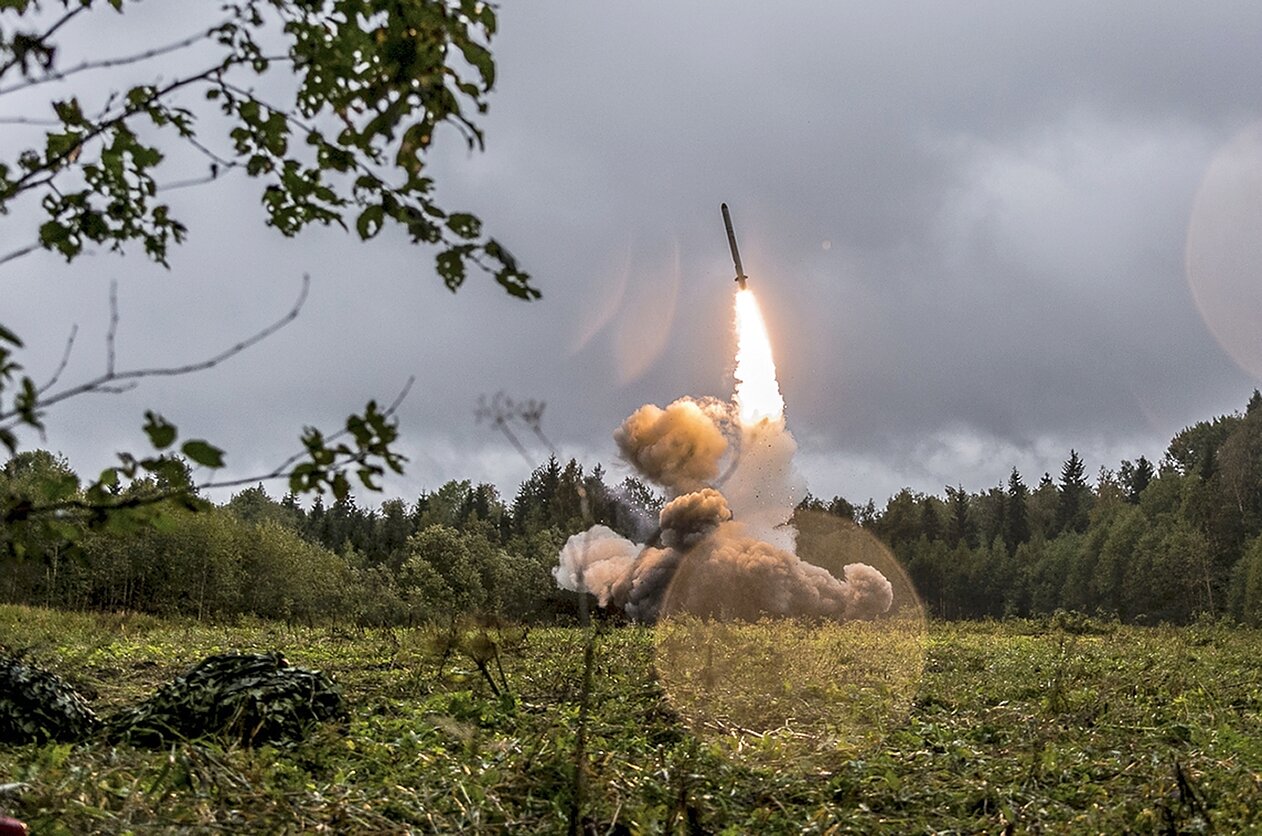
Instead of doing something on the ground, could the Kremlin launch a drone and ballistic missile barrage against one of (or maybe all) Baltic countries? It’s something no one could have foreseen just three years ago. Such strikes would aim to provoke civilian panic, which in turn would complicate the military response. And while public alarm would be the primary goal of such an attack, it would also test NATO’s resolve and internal coherence.
As with the two other scenarios, this would be very risky. NATO forward presence battalions are deployed in all three Baltic countries. Such a strike would directly threaten allied military personnel and constitute no less – if not more – an act of war than any cross-border raid. NATO will have to impose military costs on Russia, and its heavily militarised exclave of Kaliningrad would become a prime target for an allied blockade.
If Putin wants to launch an all-out war with the alliance, this is one of the surest ways to go about it. But as a quarter of a century of Putin-watching shows, if he really wants a conflict, he will find or simply invent a pretext. So far he has avoided a real confrontation in the Baltics because of a massive risk of losing it.
So why is the Kremlin ratcheting up regional tensions if it is not preparing for a military operation? Maybe Edward Lucas, director of a newly-created Baltic International Security Centre, is right in his assessment: “This PR offensive, just like the drone incursions, is the goal in itself. It aims to undermine allied military resolve, sow doubts and fear among the [local] population and help the pro-Russian political forces in Europe to call for concessions to the regime”.
If so, this warfare will go on as long as the current regime rules Russia. But how to respond to this threat is a question that remains largely unanswered.

Newsletter
Every Friday morning.