














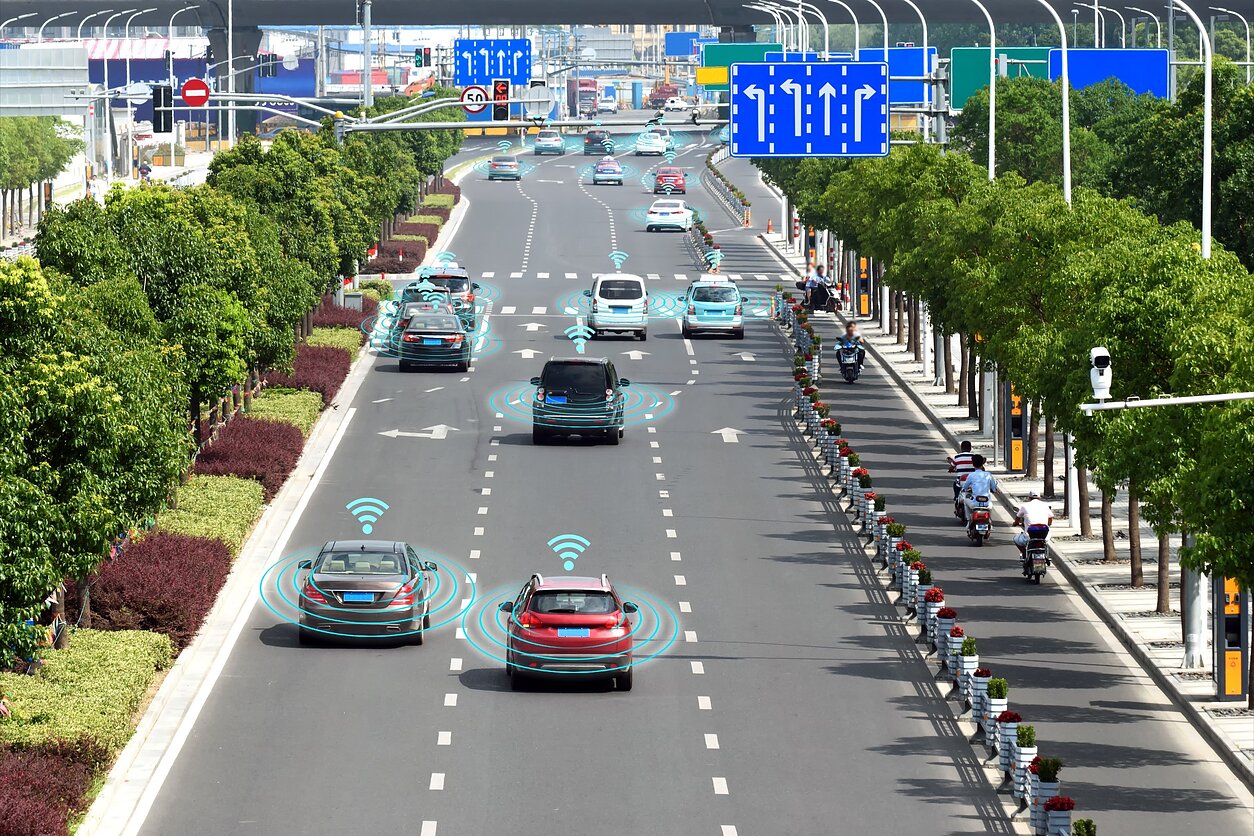
Lithuania was among the first countries in Europe to establish a legal framework for testing autonomous vehicles on public roads, back in 2018. It signalled the country's ambitions as an innovator in transport technology. Yet hopes of a rapid breakthrough failed to materialise – major manufacturers showed little interest in Lithuania, and significant investment never arrived. Juras Žymančius, a senior lawyer at the law firm COBALT, says that after a prolonged pause, Lithuania is returning to the subject of autonomous transport – this time under different circumstances.
In 2026, the Transport Ministry and the Lithuanian Transport Safety Administration decided to recognise a temporary EU type-approval for Tesla's FSD (Full Self-Driving Supervised) system, issued by the Dutch vehicle oversight authority. The decision was taken under European Union rules permitting member states to recognise type-approvals for new technologies granted by other countries.
The system's name, however, may create a misleading impression. "Despite the 'Full Self-Driving' branding, this is not legally a fully autonomous system," Žymančius notes. "In practice, it is better understood as an advanced driver-assistance technology. The driver retains responsibility, must continuously monitor the traffic situation, and must be prepared to take control of the vehicle at any moment."

Lithuania has been here before
Although discussions about autonomous transport may feel fresh, Lithuania's first experiments followed swiftly after the legal framework was put in place.
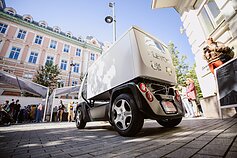
In 2022, the retail chain IKI tested autonomous delivery vehicles on the streets of Vilnius in collaboration with the Estonian company Clevon. The vehicles operated on public roads and fulfilled real customer orders.
Over 136 days of the pilot project, the autonomous vehicles covered more than 5,000 kilometres in dense urban traffic.
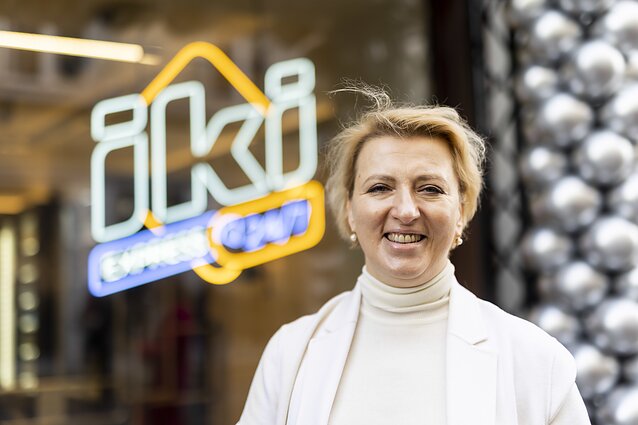
"Vilnius became the first city in Europe to operate a fleet of autonomous delivery vehicles on public roads," says Nijolė Kvietkauskaitė, chief executive of IKI Lithuania.
In 2024, an autonomous bus was also trialled in Vilnius. Loreta Levulytė-Staškevičienė, head of the municipal company JUDU, which organised the public transport project, says the experience was a success – the target of completing at least 90% of the route in fully autonomous mode was achieved.
The trial assessed how autonomous transport would perform in real urban traffic conditions whilst also introducing the technology to the general public. JUDU positioned the bus within the existing public transport network as a "last mile" solution, complementing existing routes and making it easier for passengers to reach key destinations from stops and to combine journeys with other sustainable modes of transport.
"The results confirmed that autonomous buses could operate on Vilnius streets even in challenging, high-traffic conditions. The technology also received a positive reception from residents. Following the trials, 80% of those surveyed said they would use such transport, with Vilnius residents rating it as reliable and appealing," Levulytė-Staškevičienė recalls.

Not all autonomous vehicles are truly autonomous
The most significant outcome of the 2018 decision was not any specific project, Žymančius argues, but rather the signal it sent to the international market.
"Lithuania wanted to demonstrate that it is a flexible, responsive country, open to innovation. At the time, there was something of a race among European countries to be the first to establish a legal framework for such technologies," he explains.
The autonomous vehicle sector frequently causes confusion, he adds, because different systems have vastly different capabilities. Automated driving is classified on a scale from zero to five. Level zero means full human control; levels one and two cover various driver-assistance functions – cruise control, lane-keeping, and automatic braking. The Tesla FSD Supervised system, for example, falls into level two.
Level three permits the driver to briefly divert their attention from driving in certain circumstances. Level four vehicles can operate entirely independently within defined areas or along set routes – the principle on which autonomous taxis such as Waymo already operate in the United States.

"Level five would mean a vehicle capable of driving autonomously in any conditions whatsoever – urban, rural, in rain or snow. In theory, such a car would require neither a steering wheel nor pedals. No legally operated system of this kind exists anywhere in the world at right noew," Žymančius explains.
Europe takes a far more cautious approach than the United States
One of the fundamental differences between the United States and Europe lies in regulatory philosophy.
In the US, a manufacturer may self-certify that its system meets requirements, with regulatory checks carried out after the product reaches the market. Europe operates on the opposite principle – a technology may not be used on public roads until official approval has been granted.
"The European Union places a premium on prevention and safety. As a result, the Tesla system available in Europe is not identical to the one used in the United States. The Dutch authority that issued the approval is explicit: the driver must be ready to take control of the vehicle immediately," Žymančius points out.
As a result, driver behaviour must be monitored as well – systems check whether the driver's gaze is directed at the road and whether they remain attentive.

Who is responsible if the car causes an accident?
Perhaps the most frequently asked question in debates about autonomous vehicles is who bears responsibility if something goes wrong. Under the Lithuanian Civil Code, a motor vehicle is classified as a source of heightened danger, meaning its operator is subject to strict liability.
"In practice, this means that if a car with the FSD Supervised system engaged were to collide with another vehicle, liability would fall primarily on the driver. In the case of level two systems, this is entirely logical – the human is still considered an active participant in the driving process," Žymančius explains.
The picture could change, however, as higher-level autonomous vehicles begin to appear on the roads.
"If a system were in the future to make decisions genuinely independently, questions might arise regarding the liability of manufacturers or software developers. In such cases, the vehicle's data would play a crucial role – the so-called black box would show whether the vehicle was being controlled by a human or by the system at the time of the accident," the lawyer says.

Technology in vehicles is advancing rapidly, but the law remains more cautious than the promises of marketing. For now, at least, autonomous vehicles are returning to Lithuania's roads not as driverless transport, but as yet another assistance tool for the driver behind the wheel.

Newsletter
Every Friday morning.