











Lithuania has embraced France's offer of shelter beneath a French "nuclear umbrella", and discussions are now under way about allowing ships carrying weapons of mass destruction to enter Lithuanian ports. These moves are a response to Russian and Belarusian actions. But do nuclear weapons actually deter?
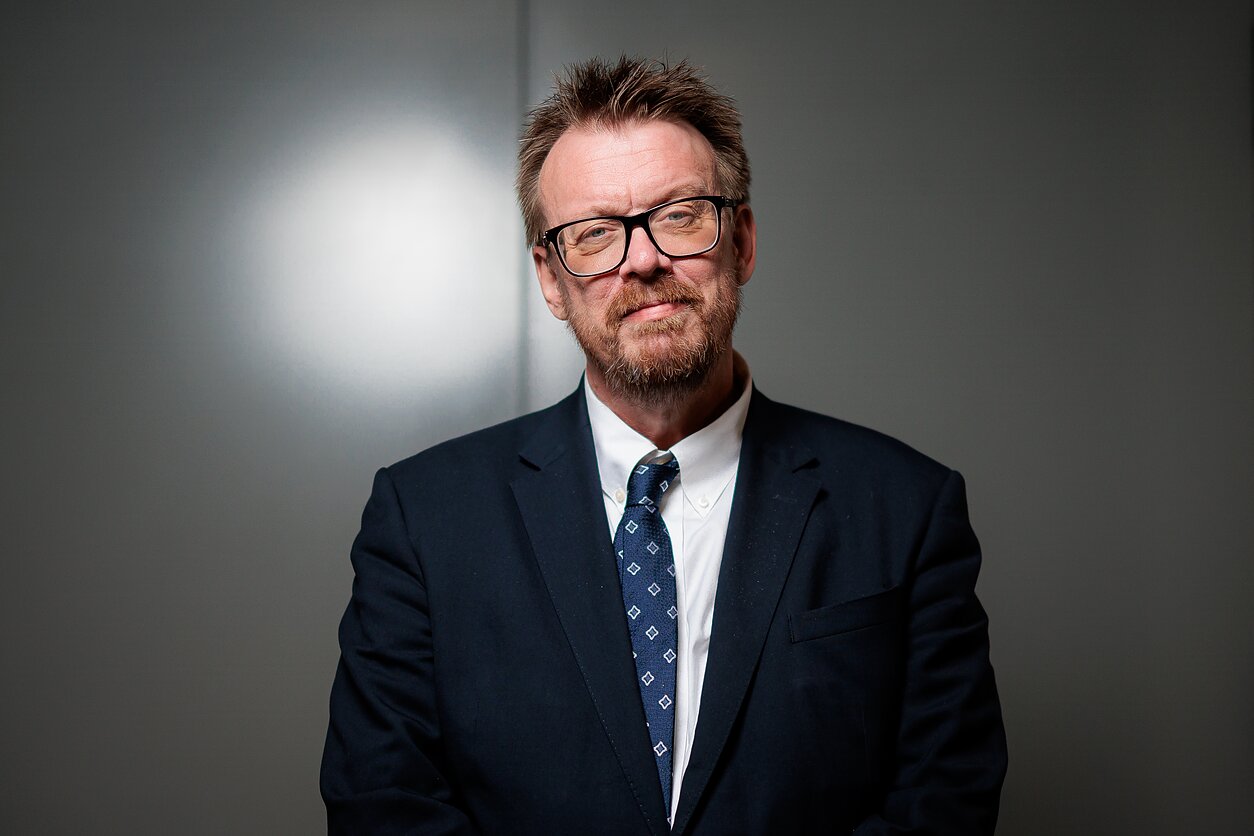
"The theory whether or not nuclear weapons deter and prevent wars is almost theological, You know – it becomes an article of faith. You believe in it, or you don't, but there's no evidence base," Andreas Persbo, director of the Open Nuclear Network programme at the non-governmental organisation Pax Sapiens, told LRT.lt in an exclusive interview.
Humanity will inevitably abandon such weapons, Persbo believes – though that is a question of decades, perhaps even centuries.
“I don't think they deter. I think a world war is bound to happen at some point in human history. In the Baltic states, many seem to think it's coming faster than I think it is, but it's bound to happen at some point. And then we're going to have to fight that war with nuclear weapons being present. And I think that increases risks dramatically. Does it mean they're going to be used? I don't know,” the expert argues.
Persbo has accumulated several decades of experience working in nuclear weapons monitoring and non-proliferation. He was speaking in Vilnius, where he participated in the Andrei Sakharov Conference at Vytautas Magnus University.
Many conflicts are underway around the world, and some argue that as a result, more and more states wish to acquire their own nuclear weapons, or shelter beneath an ally's. Has the era of nuclear non-proliferation ended?
No, I don't think so. In the 1960s, Kennedy said something along the lines of, ‘If we don't control proliferation, we'll have 30 states with nuclear weapons before the end of the century.’ At the moment we have nine – five states that are the victors of the Second World War, who just happen to be the permanent members of the UN Security Council. And four more states – India, Pakistan, Israel, which is presumed to have weapons, though they never confirmed it, and North Korea.
It's only really North Korea that has developed nuclear weapons lately. So we have just one proliferation case in the last 50 years, which is a pretty good track record.
People think Iran has an intent to hold nuclear weapons. We know Syrians were looking into nuclear weapons, but the nuclear reactor they built in the desert was bombed. We know that Gaddafi was looking at nuclear weapons in the 1990s and early 2000s. And of course, we had South Africa in the 1980s.
But other than that, it's a pretty good track record. And I think that is because the majority of states that have signed the Nuclear Non-Proliferation Treaty subscribe to this idea that the more nuclear weapon states you have, the more complicated deterrence relationships and military balances become. The realisation that more, in this case, is not necessarily better is what holds that regime together.
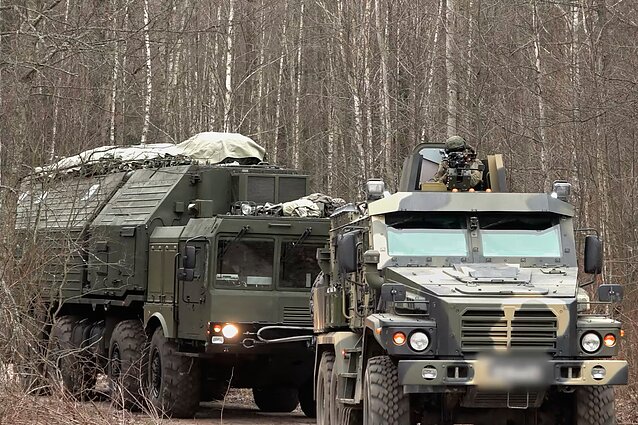
That said, is this regime under pressure? Yes, undeniably. We’re seeing that with the open discussions that took place here in Lithuania a few days ago, about basing, not acquiring the weapons themselves, but basing weapons, which is a totally understandable reaction to Belarus’ actions. We're seeing similar debates in Sweden, Germany – debates on whether Europe needs its own nuclear arselan should the United States withdraw interest from Europe. Such conversations are also becoming more load in South Korea and Japan.
But at the moment it's mostly talk, caused by this enormous pressure that we're presently under. So, I'm not too worried now. Ask me again, in a decade, if I'm still around – I might be more worried. But not not so much right now.
Can nuclear weapons genuinely make a country safer? If allies were to deploy nuclear weapons in Lithuania or Sweden, for instance, would we be more secure?
I think the problem is that this idea of nuclear deterrence hasn't really been proven: does it work, does it not work? What we know is that possessing nuclear weapons hasn't deterred the Indians or the Pakistanis from attacking each other. It has not deterred Israel's adversaries from attacking it.
A theory I have is that nuclear weapons possession is just a tool that powerful countries can use to steamroll smaller ones. Like in the case of Russia invading Ukraine – no one does anything meaningful because they all fear Russia’s nuclear weapons. Yet Ukraine has been fighting for five years, and does not appear to have been deterred by Russian nuclear weapons.
Something is missing in this debate. I sometimes say is that the theory of nuclear deterrence is almost theological – it becomes an article of faith. You believe in it, or you don't, but there's no evidence base.
I’m leaning towards thinking that they don’t deter. I think, a world war is bound to happen at some point in human history here in the Baltic states Many seem to think it's coming faster than I think it is, but it's bound to happen at some point. And then we're going to have to fight that war With nuclear weapons being present. and I think that increases risks dramatically. Does it mean they're going to be used, I don't know, but it increases the risk, Absolutely.
I tend to think they do not deter. I think a world war is bound to happen at some point in human history. In the Baltic states, many seem to think it's coming faster than I think it is, but it's bound to happen at some point. And then we're going to have to fight that war with nuclear weapons being present. And I think that increases risks dramatically. Does it mean they're going to be used? I don't know.
From my perspective, the fewer of them we have, the better it is. And I'm very cold-hearted about this. I'm just thinking about previous world wars. Look at the Second World War. 60 million dead. The total explosive yield of every weapon used was perhaps equivalent to one, two, or three Russian nuclear warheads – far less than most people imagine. These are extremely powerful weapons. Far more powerful than most people conceive. Whatever figure you have in mind, multiply it by two or three times, and you will be closer to reality.

It took some time for Europe to rebuild, but it recovered. Any large conventional war is undesirable, obviously, but humanity was able to bounce back. If a war takes a nuclear dimension, and it doesn't stop – people start to use nuclear weapons continuosly, unable to stop it – we can't bounce back from that. That's what worries me.
It was Einstein, I think, who said, “I don't know how the Third World War will be fought, but the fourth will be fought with sticks.” That is precisely the problem.
Does the risk of escalation concern you – that countries might blindly climb the escalation ladder until nuclear weapons are actually used?
Although they have not been used, there is an awareness that nuclear weapons could be used. Though they never said it publicly, one of the concerns the United States had in the beginning of the war in Ukraine was ‘if we arm up the Ukrainians with long-distance weaponry, well, then the Russians might respond nuclear.’ And so, we're down that slippery slope.
Now, Ukraine is striking Russia deep every day, and we're still not seeing any use of nuclear weapons. And these strikes are painful for Russia, they are really taking some infrastructural damage, but the nuclear threshold has not been crossed.
In 2022, when Russian forces began to retreat in Ukraine, US intelligence assessed the probability of nuclear weapons being used at 50-50. That assessment must have been based on something, whether or not it was correct. And they were concerned about making decisions under pressure.
And that is the issue. The authorisation to use nuclear weapons rests with a hanful of people. It’s not a democratic decision.In the United States, it’s one person: the president. In Russia, it may be three: the president, the defence minister, and the chief of the general staff. But will these decision-makers, in circumstances of extreme pressure, act rationally?
I am concerned about the slippery slope of escalation in the sense that, under severe pressure, people tend to act emotionally rather than rationally. In that particular moment, using a nuclear weapon might seem logical. That is worrying. Right now, the likelihood of this happening remains extremely low. Then again, we are not living in normal times.
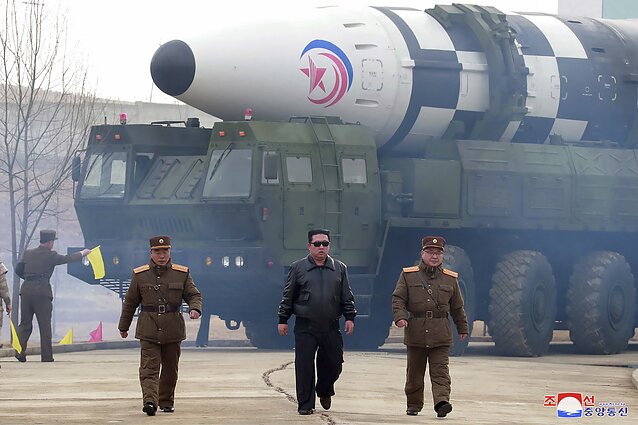
Regimes such as North Korea and Iran regard nuclear weapons as a guarantee of their survival. Is that a credible strategy?
North Korea clearly thinks so. It was not always the case – for the best part of 20 years under Kim Jong-il, they were not actively pursuing a nuclear arsenal.
It is a very poor country, ranked around 180th in the world by GDP. That also tells us something else: nuclear weapons are, in a sense, cheap. If a country like North Korea or Pakistan can get them. Literally anyone with access to natural resources and scientific know-how can get them. It's a myth that they're safeguarded in some James Bond-style facility. It is a dirty industrial process, built on well-understood science.
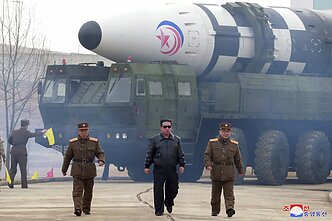
Since taking power, Kim Jong-un has invested heavily in this area. We do not know what proportion of North Korea's defence budget goes on nuclear weapons, but we know the defence budget is very large relative to their minuscule GDP. Many of the underlying principles being pursued today were already in development a decade ago. Remember, it is also a society where mistakes are not tolerated but mistakes are made constantly: they misfire missiles from time to time, rockets explode – yet no one gets fired. So he is deeply determined and clearly sees the strategic value of nuclear weapons.
Now, has the nuclear programme elevated North Korea on the world stage? One thinks of that famous image of Putin, Xi Jinping, and Kim Jong-un walking side by side as equals. Think about that image. Russia, a vast country of 140 million people, well, perhaps not the wealthiest, with its GDP being comparable to Spain's; then China, the world's second-largest economy with the largest navy in the world, a real military power; and North Korea, ranked 180th. Yet there they are, seemingly working as peers.
Is that because of nuclear weapons? I would say probably not, rather, it is because Kim is arming the Russians, and Moscow sees strategic value in that relationship.
It certainly does Kim no harm. He presumably regards it as enormously enhancing his prestige and establishing North Korea as a major player on a par with the United States.
How concerned are you about new nuclear weapons systems? Do they further destabilise the situation?
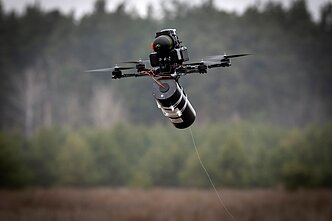
Deterrence theory rests on the assumption of mutual destruction. It presumes that the opponent is making rational choices, which, as I pointed out, you can’t be certain of in any given case, and it also assumes that you get some sort of an advanced warning. Like, the idea that if the Russians were to launch at the United States right now, the Americans would have about 30 minutes or so to decide on whether to retaliate. But if the weapon is an underwater drone with a several-megaton warhead, or a nuclear-powered cruise missile system, you don't get any warning like that. These weapons are straight out of a Bond villain's arsenal; they really are. Some kind of product of deranged scientific thinking. They unbalance the system, without question.
Ordinarily, adversaries develop counter-systems and countermeasures in response. But that simply means you then have two such systems, which destabilises things further and makes the whole arrangement more vulnerable to error.
The last remaining US-Russia arms control agreements have lapsed without renewal, and China is announcing plans to expand its nuclear arsenal. Has the appetite for arms reduction or control simply disappeared?
The question is, was there ever a lot of will to disarm? If you look at all of the strategic arms limitations agreements or reduction agreements, if you look at warhead numbers and reduction numbers, you will find that the agreement comes in at a point where the numbers are already there anyway. So states have already decided to reduce their arsenals, and then they come to an agreement saying, let's keep it at this level.
That's different from agreeing to genuinely reduce the arsenal. The largest reductions in nuclear weapons have been more or less unilateral decisions. After the fall of the Soviet Union, President George H.W. Bush got rid of a very big proportion of the American arsenal because it was no longer needed. The Soviets said they couldn't afford to maintain theirs, so the Russians agreed to get rid of them. But these decisions were not driven by a desire to disarm, it was driven by the fact that expensive weapons were no longer considered necessary by anyone.
Today, as we have discussed, people are once again seeing greater utility in nuclear weapons. So, I believe the current level is about as low as it will go. Americans argue they need several thousand warheads because of the amount of different threats they face and worry about. My usual response is that a single warhead constitutes a heavy and sufficient deterrent. Two megatons over Moscow would cause immeasurable suffering.
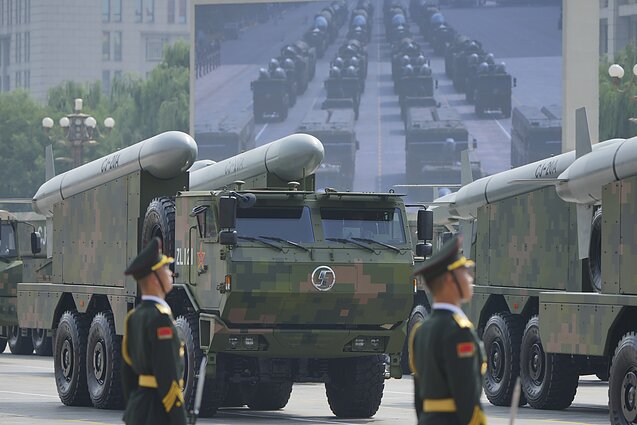
Britain and France each hold around 160 to 200 warheads – a sort of minimum viable level. Israel, Pakistan, and India also have fewer, and appear to operate on the assumption that each individual nuclear weapon is capable of inflicting so much damage that they don’t need thousands. The United States and Russia seem to be engaged in something more quantitative – and China now wants to join them.
In the near term, I see no prospect for arms control. But over the longer term, these weapons these weapons will continue to prove themselves a bit worthless. We will see big wars – hopefully fought without nuclear weapons. If they are used, we’re going to get rid of them in the aftermath. If they’re not going to be used, people will ask why we need weapons we never use – and we will rid ourselves of them.
Either way, the pressure to retain these weapons will diminish, and the pressure to get rid of them will stay there and grow over time. But I am talking about decades, not tomorrow. Consider how long it takes humanity to abandon a class of weapons. From the first use of chemical weapons in the First World War to the Chemical Weapons Convention was nearly 100 years. Biological weapons were first deployed in the medieval days; by the sixteenth century there was already a sense that something needed to be done. But the Biological Weapons Convention took roughly 300 years to arrive. Nuclear weapons were created and used in 1945 – is it even realistic to expect we’re going to get rid of them any faster? I would say no. We are talking about at least 100 years, possibly 150 or 200.

During the war in Ukraine, there were fears Russia might use tactical nuclear weapons. Are these fundamentally different, or once that threshold is crossed, is there no way back?
The Russians have various theories about this. They claim tactical weapons have battlefield utility, but I am not convinced by that. We are talking about an explosion equivalent to 150,000 tonnes of TNT, or 150 million kilograms. The largest JDAM bomb strikes in Iraq did not come close to a single tonne. These are insane numbers – literally beyond the capacity of the human brain to comprehend how big they are. They are so large that the human brain cannot grasp them. These are not weapons for engaging tanks on a battlefield. In my view, all such weapons are strategic.
Russia has its own ideas, of course. But Russians like to justify things, sorting everything into neat categories – a very Soviet way of thinking. Everything must be tidy, properly categorised and filed away in its box.

Newsletter
Every Friday morning.