












Lithuanian politicians are weighing the possibility of a cross-party agreement on demographic policy, but divisions over how to address the country’s declining birth rate could make consensus difficult.
The discussion intensified after Social Democratic Party leader Mindaugas Sinkevičius suggested political parties could sign a long-term agreement on demographic policy, similar to existing national accords on defence and education.
The proposal comes as Lithuania continues to face population decline and record-low birth rates. Last year, about 17,500 babies were born in the country, the lowest figure on record.
Parliament Speaker Juozas Olekas said this week there were early signs of improvement this year, crediting them to the current government policies.
“I can share one joyful piece of news – after all of our initiatives, during the first four months of this year, 227 more newborns were born in Lithuania than during the same period last year,” Olekas said.
Opposition politicians reacted sceptically to the claim that government policy was already producing results.
Liberal Movement faction leader Viktorija Čmilytė-Nielsen mocked recent government rhetoric about encouraging social life and family formation.

“They started talking about organising discos nine days ago, and usually it takes at least nine months,” she said jokingly.
Former Prime Minister Ingrida Šimonytė, of the conservative Homeland Union (TS-LKD) party, also cautioned against drawing quick conclusions.
“It is good news, without irony,” she said. “But it will only matter if it becomes a lasting trend, and for now it is difficult to say that.”
Social Democratic lawmaker Orinta Leiputė said all political parties should seek ways to create conditions encouraging people to have children.
“Despite the fact that 227 more newborns were born, all parties should look for solutions on how to encourage and create an environment where women would choose to have children,” she said.
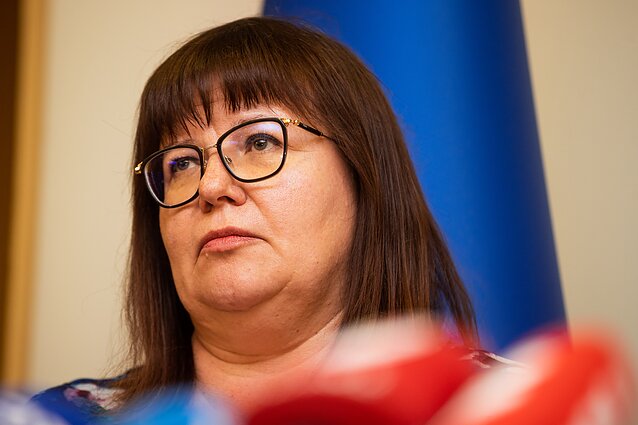
Leiputė has submitted a new family policy bill to parliament that broadens the definition of family to include single parents and unmarried couples raising children.
Coalition partners from the Lithuanian Farmers and Greens Union said a shared vision would be useful but warned previous agreements often lacked substance.
“We have had agreements before, but they usually contain very declarative statements and visions,” said lawmaker Ligita Girskienė. “As governments change, so does the understanding of solutions.”
Šimonytė said any meaningful demographic strategy would need to extend beyond a single parliamentary term.

“There are no simple solutions,” she said. “If there were, demographic trends in the post-industrial world would not look the way they have for many years.”
Although parties broadly support discussing demographic policy, their proposed solutions differ sharply.
Remigijus Žemaitaitis, leader of the populist Nemunas Dawn party, said reaching agreement with liberals would be difficult and suggested restrictions on abortion should be part of any demographic strategy, except in criminal cases.
Liberals rejected that approach, arguing instead for policies that help families balance work and childcare responsibilities.
“First of all, measures that help combine family and career,” Čmilytė-Nielsen said.
Lukas Savickas, leader of the Democrats “For Lithuania” parliamentary group, proposed expanding parental leave options, raising caps on childcare benefits and broadening free school meal programs.
A recent public survey commissioned by the Crisis Intervention Centre (Krizių įveikimo centras) found that 40% of Lithuanians aged 18 to 45 do not plan to have children, while another 14% said they remain undecided.
Further reading

Newsletter
Every Friday morning.