















Lithuania’s top administrative court on Wednesday overturned a 10-year entry ban on Russian rapper Alisher Morgenshtern, ruling that the decision lacked sufficient legal grounds.
Morgenshtern had been scheduled to perform in Vilnius last autumn, but the plans drew criticism from Vilnius Mayor Valdas Benkunskas, who appealed to authorities to block his entry into the country. The Migration Department did so last November.
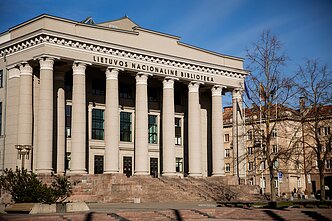
However, the Supreme Administrative Court of Lithuania upheld Morgenshtern’s appeal and annulled both the earlier ruling by a lower court and the original decision by the Migration Department to bar him from entering the country.
According to court spokesperson Paulius Žeimys, the court also awarded the applicant nearly 34 euros in legal costs.
The court found that the Migration Department had improperly relied on information provided by the Ministry of Foreign Affairs as the main basis for assessing a threat to national security.
Under Lithuanian law, such assessments must be carried out by the State Security Department, which in this case did not provide any conclusion. As a result, the decision was based on information from an “incompetent authority”, the court said.
The ruling also stated that factors cited in the original decision – such as Morgenshtern’s inclusion on lists in other countries, information from public sources and his past statements or artistic work – did not in themselves prove a threat to Lithuania’s national security.
The court noted that it was unclear on what grounds other countries had adopted their decisions, meaning such information could not automatically be applied in Lithuania’s case.
Judges further found that some of the arguments used to justify the ban were based on opinions rather than factual evidence, and that only information unfavourable to the applicant had been considered, rendering the decision unbalanced.
The court emphasised that a measure as strict as a 10-year entry ban must be based on clear and sufficient evidence. In this case, the lack of such evidence raised doubts about the proportionality of the restriction.
Morgenshtern had previously expressed support for Russian President Vladimir Putin, but after Russia’s full-scale invasion of Ukraine in February 2022, he spoke out against the war and criticised it in his music.
The rapper was designated a “foreign agent” in Russia in May 2022.

Newsletter
Every Friday morning.