













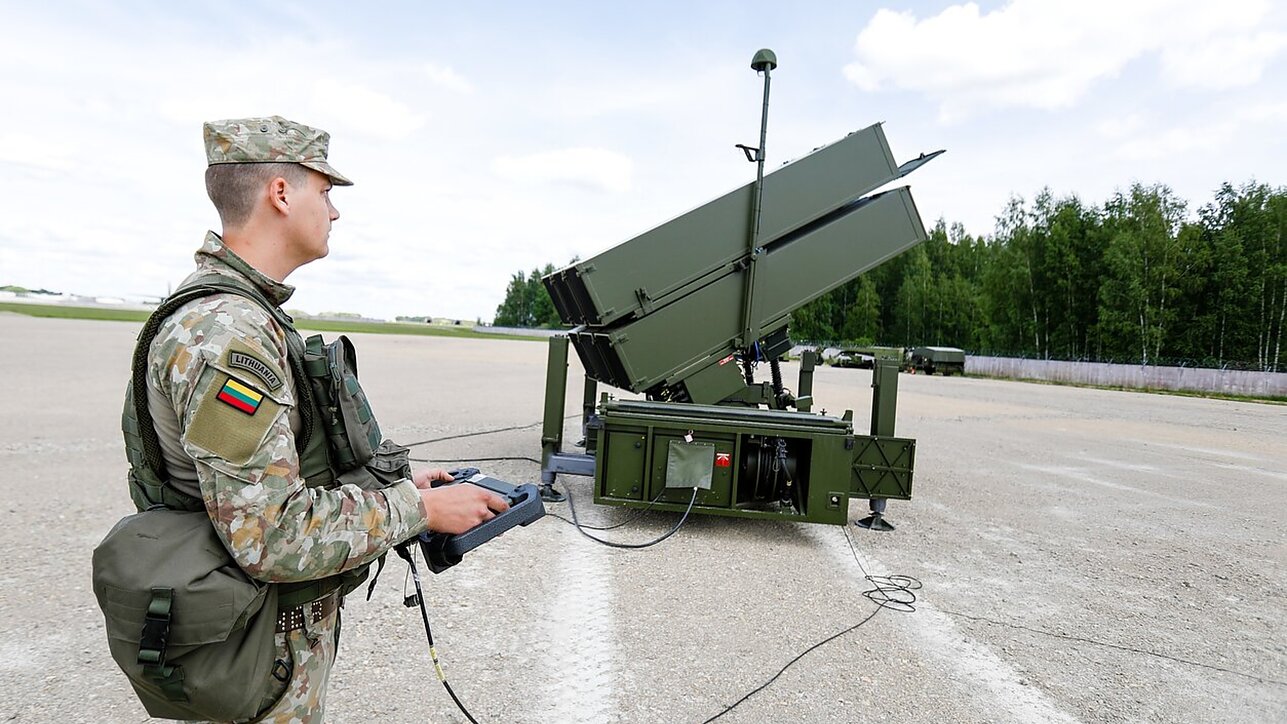
Lithuania has said it has already set aside sufficient funds for airspace protection, after Estonia this week scrapped a major armoured vehicle purchase and redirected half a billion euros towards air defence.
The broader debate over air defence in Lithuania and the Baltic Sea region has sharpened in recent weeks, after Ukrainian drones aimed at Russian territory came down inside NATO borders.
The Estonian government decided to halt its acquisition of CV90 infantry fighting vehicles worth 500 million euros, channelling the money instead into air defence systems and drones.
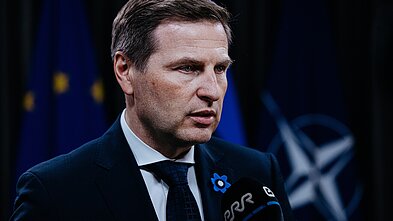
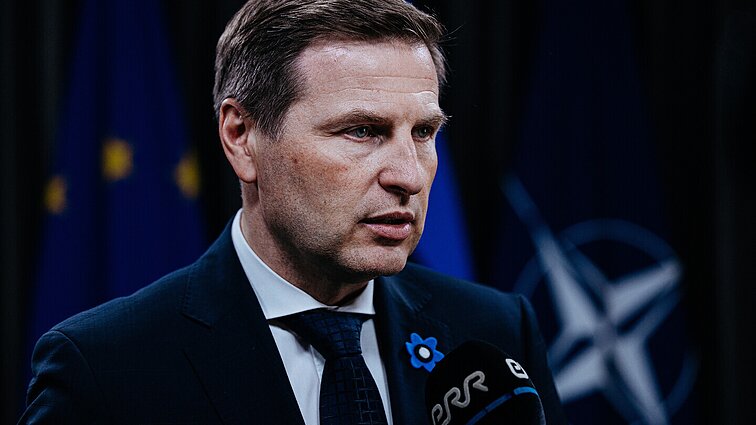
Defence Minister Hanno Pevkur said the move was driven by lessons from the war in Ukraine, conditions in the defence market, and military advice.
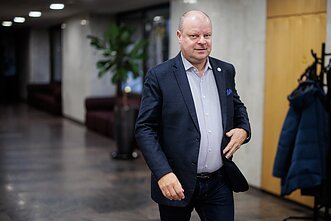
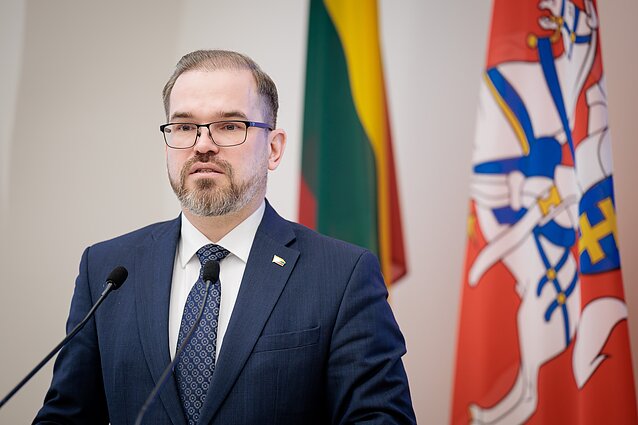
Lithuania's Defence Minister Robertas Kaunas said his country had taken a comparable step a year ago, allocating roughly half a billion euros to bolster air defences with the aim of establishing an integrated system by 2030 – something Estonia had not yet done until now.
"Lithuania is already receiving ordered radars, we are signing new contracts and negotiating with manufacturers, but the delivery of weaponry and other systems takes time," Kaunas said on Friday.
He noted that the Defence Staff is currently reviewing air defence development plans and will seek additional procurement if required, which could call for further funds from the defence budget.
However, Kaunas cautioned that money alone is not the limiting factor. The pace of procurement depends not only on investment, which he said is currently sufficient, but on the defence industry's ability to deliver systems promptly.
"Estonia will face the same problems because allocating money is not enough; they will also have to negotiate contracts and delivery terms, which takes time," he said.
The new CV90s had been due to reach Estonia by 2030. Tallinn now plans to modernise its existing fleet instead, extending their service life by a decade.
Kaunas noted that Lithuania does not have the same option, as it has no older infantry fighting vehicles available for modernisation. Estonia built up its armoured fleet earlier thanks to a sustained high defence budget, whereas Lithuania only began investing seriously in national defence around 2022, following Russia's full-scale invasion of Ukraine.
The minister added that Estonia's decision was partly prompted by signals from the manufacturer that it would be unable to deliver the vehicles on schedule. Lithuania, which is buying the same armoured vehicles as part of a five-nation consortium, has received similar warnings.
Lithuania currently plans to take delivery of around 100 infantry fighting vehicles by 2030.
"We have received indications that we might not receive the full quantity by the set time, but we are negotiating with the manufacturer to ensure Lithuania is prioritised due to our region's geopolitical situation," Kaunas said.
He added that if the manufacturer's revised terms prove unsatisfactory, Lithuania would not rule out terminating the contract and seeking an alternative supplier.

Newsletter
Every Friday morning.