













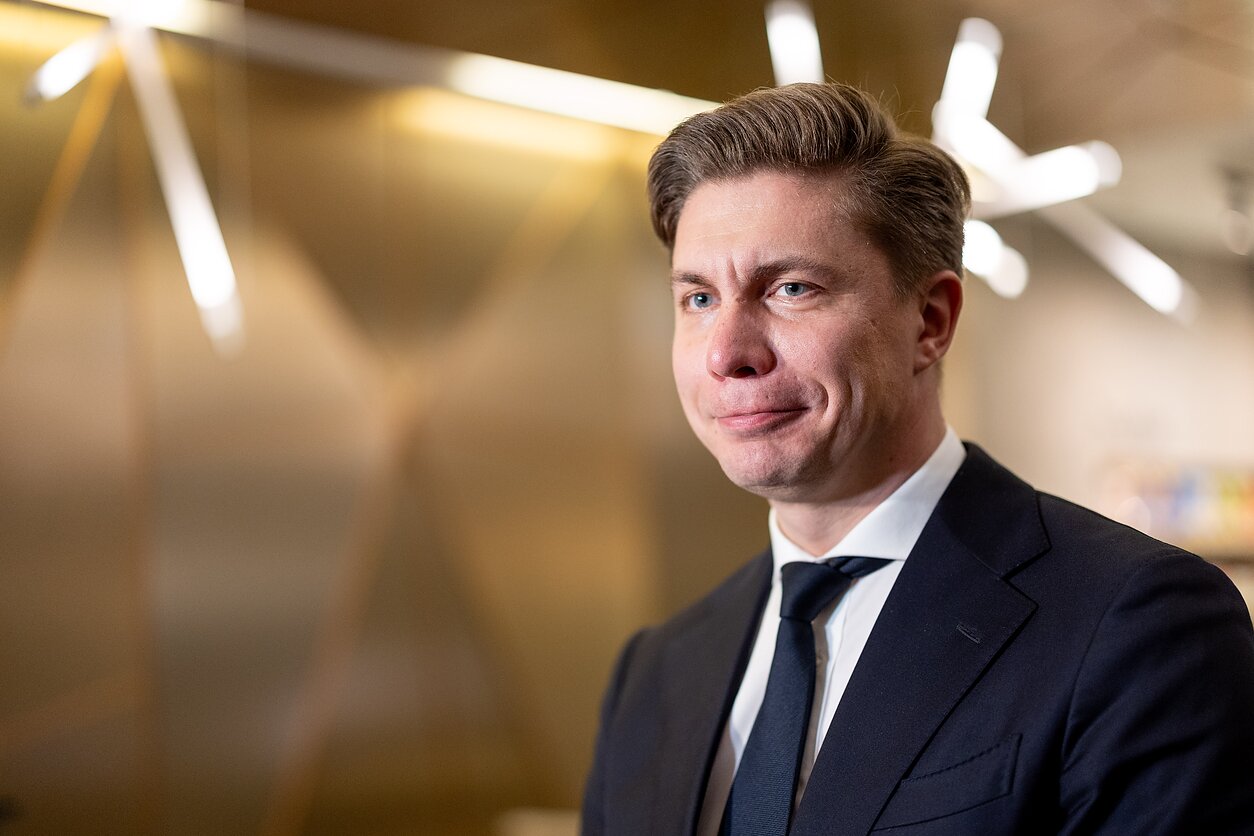
Lithuania's Social Democratic Party leader Mindaugas Sinkevičius has said politicians are open to discussing specific changes to the proposed public broadcaster LRT law, but rejected protesters' demands that the bill be scrapped altogether.
"I hear that individual articles of the law are considered unsuitable – we can discuss that. But to say that the project [...] should be thrown out entirely [...] it is not serious," Sinkevičius told Žinių Radijas on Tuesday.
"Let us respect each other's work; we have spent a great deal of energy and effort on this. I understand the issue carries political weight – we hear that, we see it, we understand it. But to say that everything in it is bad, unchangeable and untouchable... The LRT Law is not Holy Scripture. Corrections are possible," he added.
You can find the breakdown of the Law on LRT proposals here.
The latest draft of the Law on LRT, which has passed its first reading in the Lithuanian Parliament Seimas, seeks to define the national broadcaster's mission, introduce a new management body – a board – and increase the number of council members from 12 to 15.
It would also set requirements for council membership, limit the involvement of other media representatives in producing LRT content, and amend the conditions under which the Director General can be dismissed before the end of their term.
Under the proposal, the two-thirds majority threshold required to remove the LRT head through a vote of no confidence would be retained, but the requirement for an open vote would be dropped.
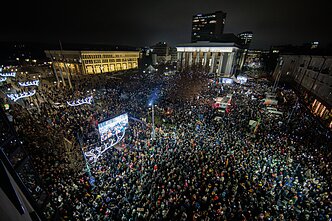
A protest against the amendments is planned outside the Seimas on Wednesday. Parts of the journalistic community argue the law would curtail LRT's independence and threaten freedom of speech.

Sinkevičius urged protesters to engage not only in demonstrations but also in the legislative process by submitting formal bill proposals.
He also defended a separate amendment, registered by a group of MPs, that would see LRT operate under a public service contract concluded with the government – arguing this would not compromise the broadcaster's independence.
"Who has the competence to arrange a programming grid and decide how much content there should be on a given subject? We are simply saying that certain themes – family, the state, patriotism, the fight against disinformation – should feature on the national broadcaster's agenda, and it would be great if an institution supported by taxpayers' money addressed those themes," Sinkevičius said.
"I don't know if there is a conflict here, or if it needs to be escalated to the point where people think politicians, some three wise men, will sit down and arrange an LRT grid, deciding who says what, for how long, and how many shows there should be about something," he added.
Under the proposed amendment, the public service mandate contract would be concluded every five years and "must guarantee stable funding for its entire duration and ensure editorial independence." The contract draft would be drawn up by the Ministry of Culture together with the LRT Council, with input from the Media Council and LRT itself.
A similar operating model has previously been proposed by the Association of Online Media, whose members include Lithuania's major news portals.

Newsletter
Every Friday morning.