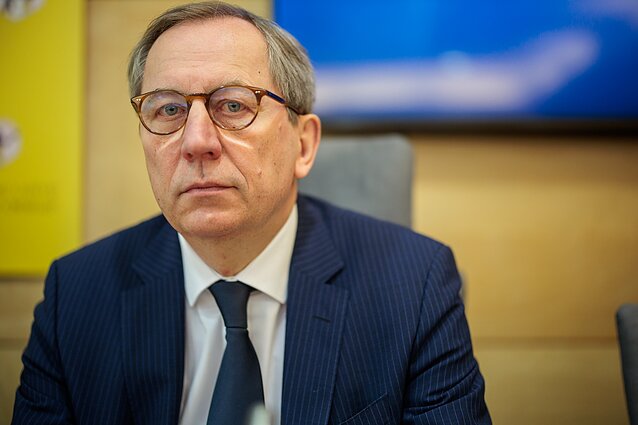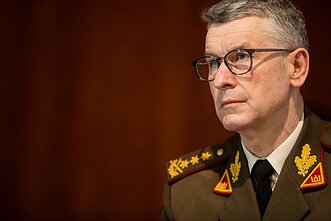














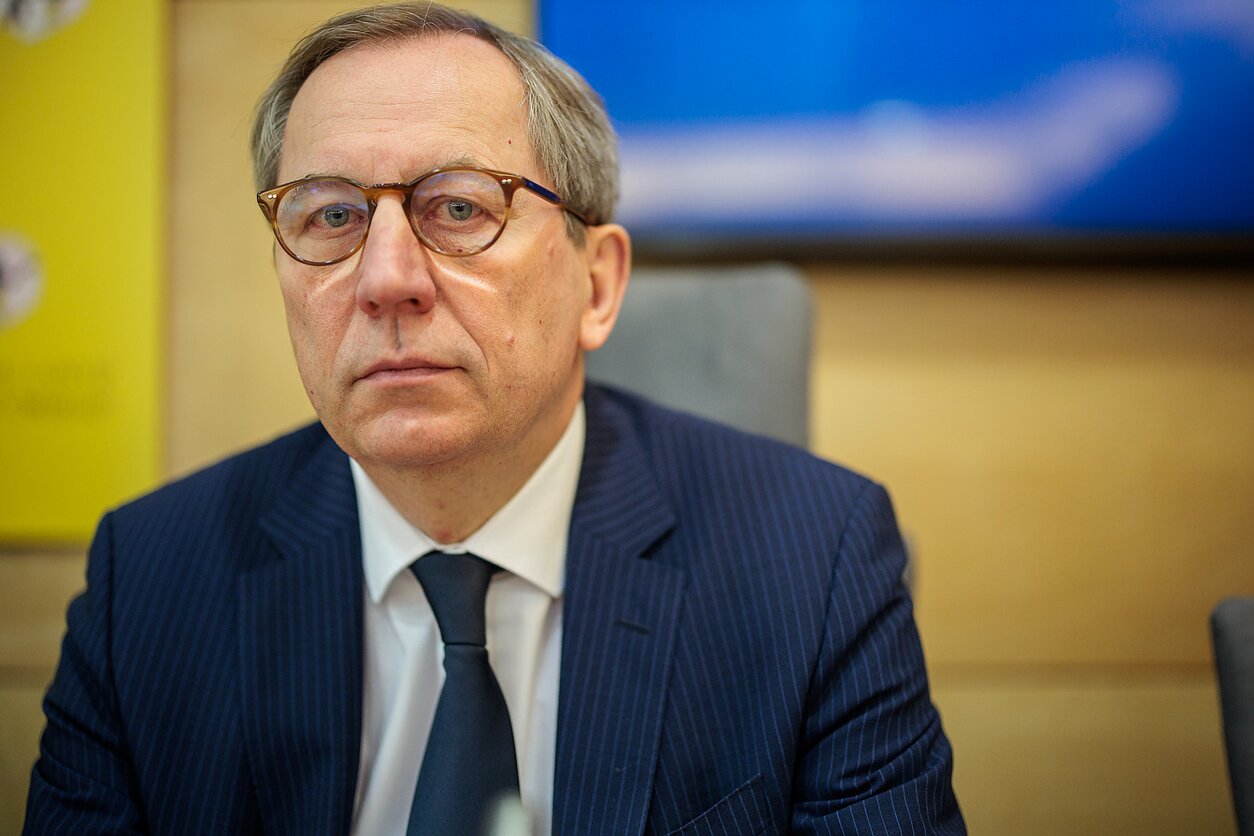
Deividas Matulionis, national security adviser to the Lithuanian president, has dismissed as "typical disinformation" allegations that former NATO Secretary General Jens Stoltenberg privately entertained the idea of turning the Baltic states into a buffer zone for Russia in 2021.
"At the end of 2021, the Russians presented what they called ultimatums to both NATO and the United States," Matulionis told LRT radio on Friday.
"The ultimatums were extremely crude, and one of the aspects was to withdraw all allied forces from new NATO members that joined after 1997. This would have affected 12 states. This was Russia's ultimatum. It was presented to us, we saw it, and there was not even a discussion about it," he stated
The controversy follows a review published by the news portal The Baltic Sentinel of Stoltenberg's autobiography, titled On My Watch: Leading NATO in a Time of War. The review focuses on a chapter in which the former alliance chief recalls a meeting with Russian Foreign Minister Sergei Lavrov in autumn 2021.
According to the review, Stoltenberg says that, despite knowing of opposition from the Baltic states and Poland, he suggested to Lavrov that the NATO-Russia Council discuss the Kremlin's proposal to create a buffer zone near its borders and withdrawing allied forces from the eastern flank to their pre-1997 positions.
The Baltic Sentinel characterised this as an admission by Stoltenberg that he had been willing to negotiate the Baltic states' security behind their backs.
However, LRT.lt was unable to find any explicit reference to claims that Stoltenberg had proposed discussing the withdrawal of NATO forces from Eastern Europe in Stoltenberg's autobiography. On the contrary, Stoltenberg writes that "a unilateral withdrawal was out of the question".
In the book, Stoltenberg writes: "I argued in favour of new meetings of the NATO-Russia Council, in order to discuss, among other matters, the proposed buffer zones. I knew that member nations such as Poland and the Baltic states were strongly opposed to the establishment of such zones, as they believed it would make it harder to defend their territories. But at the same time, I knew that NATO and Russia had previously managed to agree on geographical military limitations. If it was balanced and recast, it might help to ease the tensions."
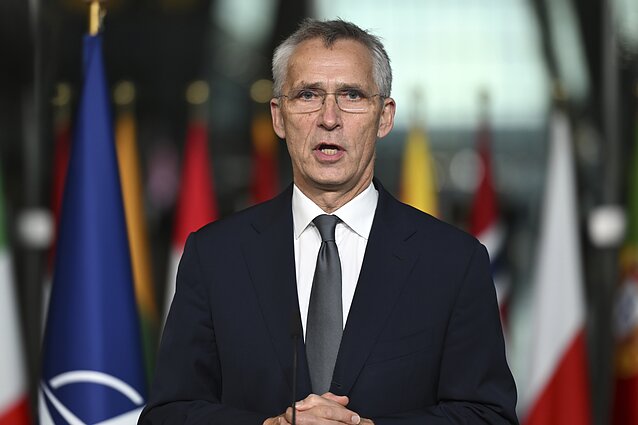
Matulionis stressed that the former Secretary General's willingness to hold talks should not be read as an endorsement of Russia's position.
"Talking does not mean he considered it acceptable. [...] This was Russia's dream – for NATO to take this decision. Stoltenberg agreed to talk [...] there was still a naive belief that Russia might not take military action against Ukraine," he said.
Aditionally, Matulionis emphasised that Russia's demands were strictly rejected.
"We had a preparatory meeting of the North Atlantic Council before the NATO-Russia Council meeting [...] and the NATO Secretary General said there very clearly and categorically that this was unacceptable because it would be equivalent to NATO's capitulation," he said.
He also noted that any such agreement would have been impossible to reach under NATO's rules. "The four or twelve countries that would have been affected would certainly not have approved such a decision. Decisions within NATO are made on a consensus basis, so this is a manufactured story – perhaps useful to Russia itself, to suggest that such discussions actually took place within NATO."
The so-called buffer zone formed part of Moscow's 2021 ultimatum to NATO, which demanded a halt to any further eastward expansion – specifically Ukrainian membership – as well as a ban on alliance military activity in Ukraine, Eastern Europe, the South Caucasus, and Central Asia and withdraw all NATO forces and weaponry from countries that joined the alliance after 1997.
NATO rejected the conditions as contrary to the essence of the alliance. Shortly thereafter, Russian forces invaded Ukraine in February 2022.
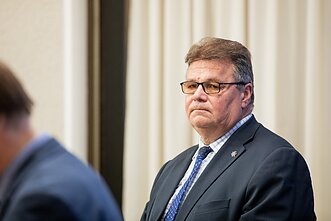
Linas Linkevičius, Lithuania's ambassador to Sweden and a former foreign minister, said he had no recollection of Stoltenberg ever unofficially considering ceding the Baltic states to Russia as a "buffer zone".

"I can only confirm that he constantly and persistently spoke about the necessity of dialogue with Russia. He spoke about this constantly and regularly during internal discussions. Generally, he was always cautious but firm and correct," Linkevičius wrote on Facebook on Friday.
"Even if he had entertained such intentions, they would have had no chance of reaching the alliance's agenda," Linkevičius wrote.
"The Secretary General does not lead the alliance – he represents it internationally, moderates discussions and chairs meetings. He has no vote in decision-making. Only the representatives and ambassadors of member states vote and decide," he stated.

Newsletter
Every Friday morning.