














Lithuania is prepared to hold a bilateral political meeting with Belarus but only if Minsk meets specific conditions, Prime Minister Inga Ruginienė said Tuesday.
“We could certainly have such a meeting, and we have appointed a responsible person for it,” Ruginienė told TV3. “But we have clearly sent a message to our strategic partners and society that we have certain conditions. It cannot be that one side prepares while the other does nothing.”
Ruginienė reiterated that Lithuania expects Belarus to halt the use of meteorological balloons for smuggling across the border, return detained trucks without additional fees or penalties, and prevent irregular migrants from crossing into Lithuania.
“If the main conditions are fulfilled, then we could consider taking certain steps forward from our side,” she said.
Her comments come after US envoy John Coale last week urged Lithuania to hold a bilateral meeting with Belarus and restore fertiliser transit through its territory. In an interview with LRT, Coale suggested such talks could take place at the deputy minister level and said dialogue should occur without preconditions.
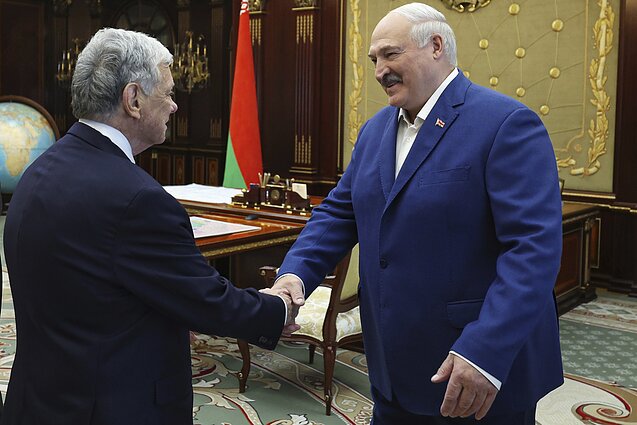
Ruginienė, however, said she sees no goodwill from Minsk and stressed that the United States has not formally asked Lithuania to resume fertiliser transit.
“The Americans have never raised the issue of fertiliser transit. Until they do, it is too early for us to consider it in Lithuania,” she said.
President Gitanas Nausėda last week also said political dialogue with Minsk would only be possible if Belarus demonstrated constructive behaviour.
Coale visited Lithuania in March, meeting with both Nausėda and Ruginienė. The Lithuanian president said he cautioned the US envoy to carefully assess statements made by the Belarusian leadership.
Following his visit to Vilnius, Coale travelled to Belarus, where he met with authoritarian leader Alexander Lukashenko. After the meeting, Minsk released around 250 political prisoners, while Washington eased some sanctions.
Relations between Lithuania and Belarus have remained strained in recent years amid accusations that Minsk orchestrated irregular migration flows to the European Union’s eastern border and amid broader tensions linked to Russia’s war in Ukraine.