













When many Lithuanians think about migrants from Belarus, they often picture long-haul truck drivers passing through the country. But new research suggests a different reality: thousands of Belarusians are settling in Lithuania with their families and planning to stay.
Researchers Alexander Chubrik and Natalia Shcharbina from the Lithuanian Social Research Centre say roughly 30% to 40% of Belarusians living in Lithuania arrived with family members and are seeking to build long-term lives there.
Their findings challenge the common perception that most Belarusians in Lithuania are temporary workers.
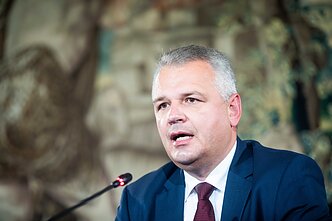
“We realised about two years ago that there is a misunderstanding in Lithuania about who these migrants actually are,” Chubrik said. “Many people assume they are here only for work and will leave soon. But in reality, many live here with their families and see their future in Lithuania.”
A community larger than expected
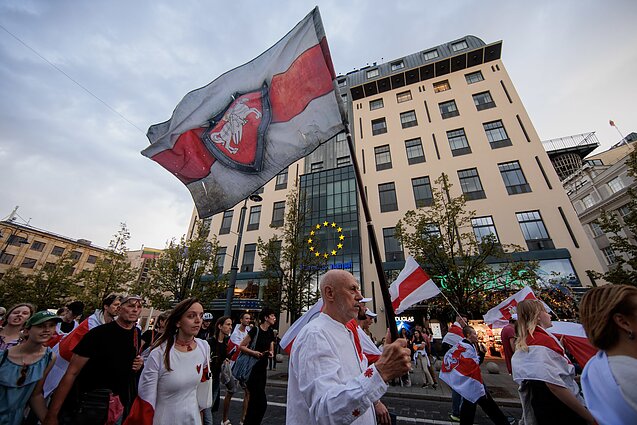
Around 60,000 Belarusians currently live in Lithuania. Many arrived after the contested 2020 presidential election in Belarus and the subsequent political repression by the government of Alexander Lukashenko.
According to the researchers, migration from Belarus surged in the years following the 2020 vote but has largely stabilised.
“Looking at the numbers, the period of mass migration is essentially over,” Chubrik said.
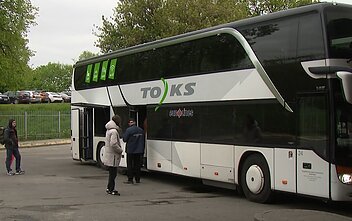
The researchers note that about 25,000 Belarusians in Lithuania work as long-haul drivers. Because many spend extended periods outside the country and often arrived through employment contracts, they are not always considered long-term residents in the same sense as families who relocate permanently.
To estimate how many Belarusians live in Lithuania with relatives, the researchers built a demographic model using available data such as age structures, family patterns from Belarusian census data and the number of children registered in Lithuania. According to official figures, about 4,200 Belarusian children currently live in the country.
Based on this model, they estimate that between 30% and 40% of Belarusian migrants in Lithuania live with families.
Families, Chubrik said, approach migration differently than individual workers.
“Families have a strong interest in integrating into the host country,” he said. “They think about long-term perspectives and about their children’s future.”
Motivated to integrate
The study found that many Belarusian families in Lithuania belong to what was previously the middle class in Belarus and left for a combination of political, economic and humanitarian reasons.
“They feel they share similar values with people in Lithuania,” Shcharbina said. “They had relatively stable lives in Belarus, but they left because of pressure or the risk of restrictions. For them, Lithuania represents safety and better opportunities for their children.”

Education is one of the strongest motivations for relocation. Parents interviewed by the researchers often expressed concern about what they described as growing propaganda in Belarusian schools and universities.
“In Belarus today, education increasingly includes ideological influence,” the researchers said. “Many parents told us they did not want their children growing up under that system.”
The researchers describe a typical Belarusian family in Lithuania as having two children, with both parents working. Their children attend Belarusian-, Russian- or Lithuanian-language schools and often show a strong interest in learning about Lithuanian society.
“When we asked what they knew about Lithuania – its geography, daily life, culture – sometimes they knew more than I would know about Belarus,” Shcharbina said.
Security concerns and misconceptions
Belarusian migration has also raised security concerns in Lithuania, particularly after Russia launched its full-scale invasion of Ukraine in 2022 and amid tensions with the Belarusian government.
Some critics have warned that migrants could be targeted for recruitment by Belarusian intelligence services.
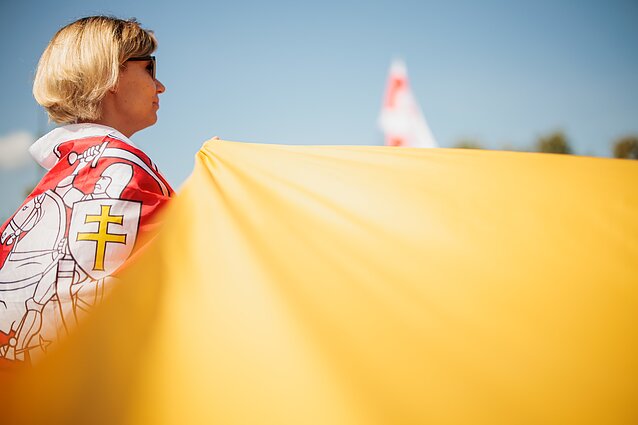
However, the researchers say many Belarusians who moved for political reasons are highly cautious about security issues and rarely travel back to Belarus.
“They often assess risks very carefully,” Chubrik said. “People think about their future here and about their children’s future.”
Culturally, the researchers say Belarusians are not very different from Lithuanians. Surveys such as the World Values Survey show significant overlap in social attitudes.
“Sociological research shows that when people move to another country, their core values usually remain similar,” Chubrik said. “They adapt to new rules and learn the language, but their values largely stay the same.”
Integration challenges
Despite strong motivation to integrate, Belarusian families face obstacles, particularly in education.
One of the biggest challenges is learning the Lithuanian language. Experts say the country lacks sufficient capacity to teach Lithuanian as a foreign language, especially to school-age children.
Although Lithuania has minority-language schools and textbooks, they do not fully meet the needs of newly arrived students. As a result, many children enter the general education system without enough language preparation.
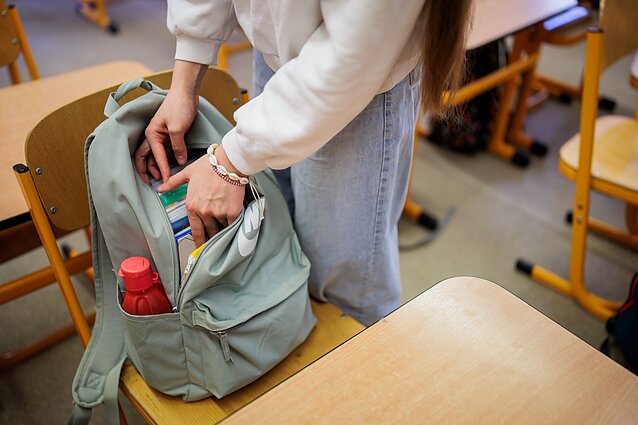
“I can learn Lithuanian,” Chubrik said. “But can I learn Lithuanian and everything about Lithuanian literature at the same time?”
Students who fail the Lithuanian language exam may struggle to enter Lithuanian universities, which sometimes leaves them with limited options.
“In some cases the only path becomes returning to Belarus,” he said. “But families often cannot do that, especially if returning poses risks.”
What policymakers could do
The researchers argue that better data about migrant communities can help policymakers make more informed decisions.
For example, debates about requiring foreign workers to speak Lithuanian may overlook differences between groups such as temporary truck drivers and families planning long-term integration.
“Perhaps we shouldn’t worry so much about whether long-haul drivers speak Lithuanian,” Chubrik said. “But families who move here want to learn the language and integrate their children.”
He said integration policies should focus on removing barriers that prevent those families from fully participating in Lithuanian society.
“Simply saying that everyone must speak Lithuanian is not enough,” he said. “Real opportunities and support have to be created for that to happen.”

Newsletter
Every Friday morning.