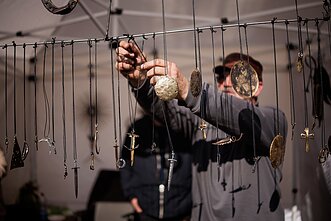















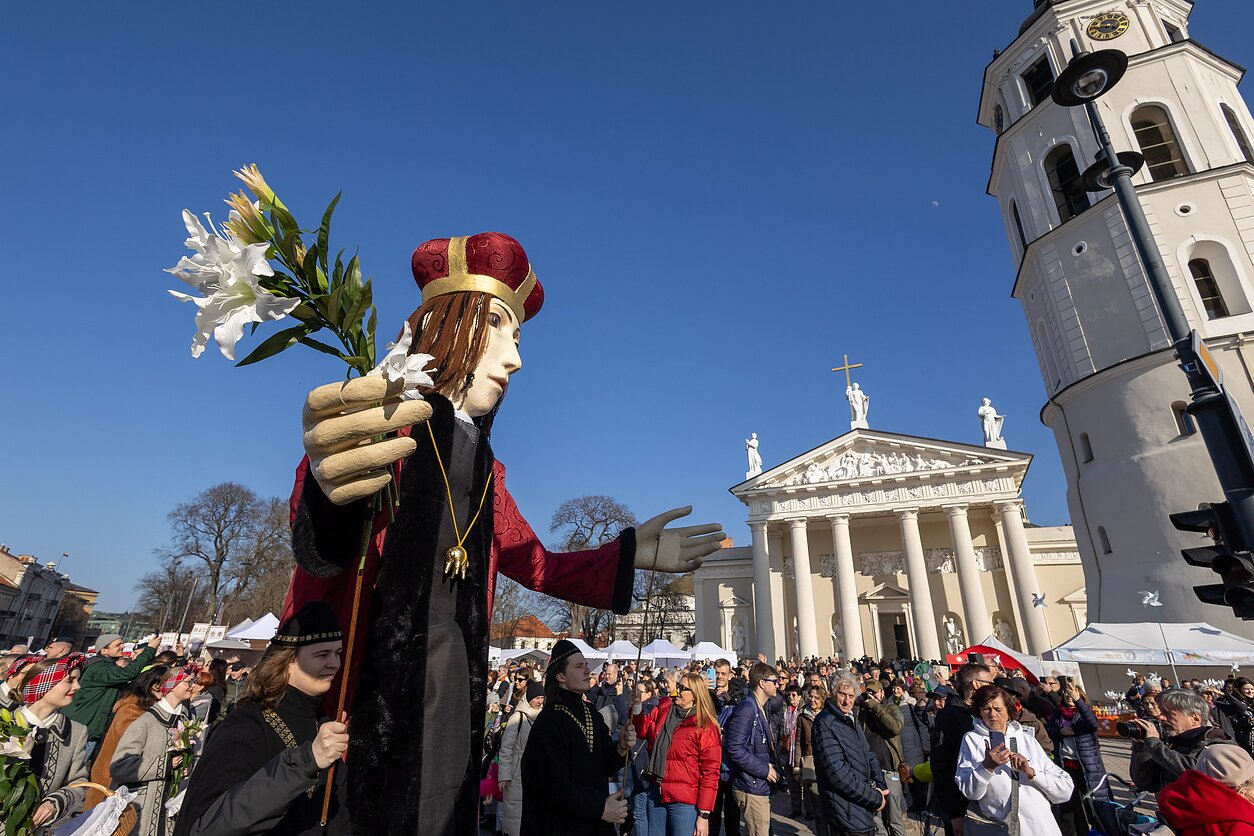
The traditional St Casimir Fair – or Kaziuko mugė – opened Friday in Vilnius, drawing artisans, food producers and visitors to the capital’s central streets for one of the country’s largest annual cultural events.
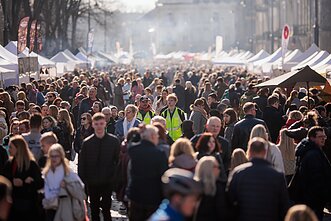
As usual, the fair is being held along Gedimino Avenue and nearby streets, though this year it will not take place on Barboros Radvilaitės Street or Maironio Street. Instead, the event has expanded to new areas, forming a larger route around Gediminas Hill and a smaller ring including Stuokos-Gucevičiaus, Liejyklos and Universiteto streets.
This year’s theme, And Hearts Blossom, highlights togetherness, human connection and the city as an open meeting space where tradition continues to live today.
“Vilnius’ Kaziuko mugė is a living cultural phenomenon that brings together people from across Lithuania and neighbouring countries every year,” said Vilnius Vice Mayor Simona Bieliūnė.
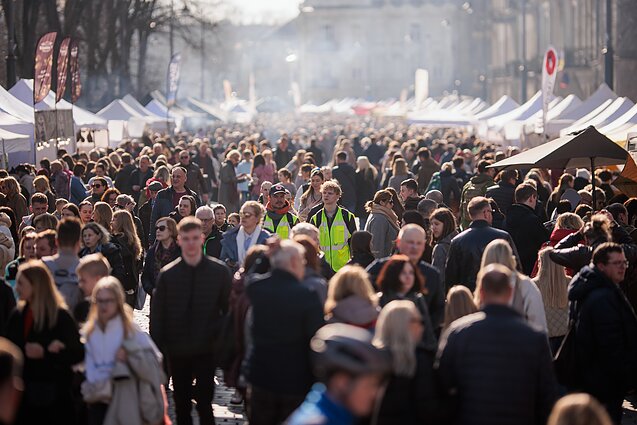
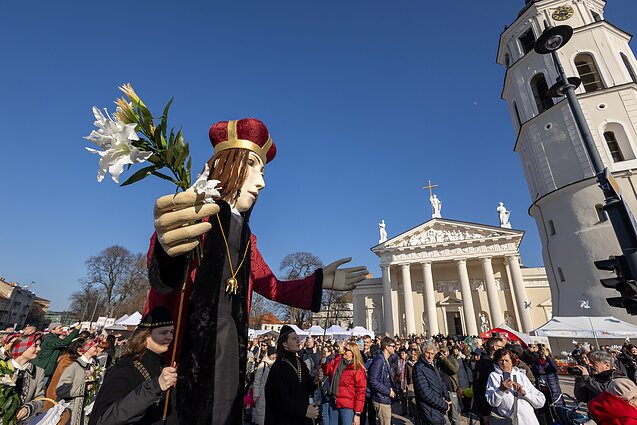
The event traditionally begins with a procession of artisans and fair participants led by Saint Casimir. The parade starts at 14:00 from Nepriklausomybės Square and heads toward Cathedral Square, where the official opening concert begins at 15:00. The fair will run through Sunday afternoon.
Organisers say more than 1,500 vendors are participating this year, including over 900 artisans and creators presenting handmade goods and about 600 food producers.
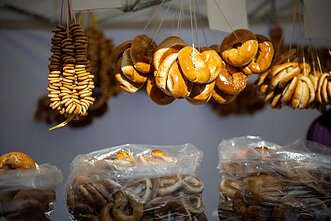
A major highlight this year is a presentation in Cathedral Square where invited craftsmen and food makers from Lithuania’s five ethnographic regions will showcase traditional crafts and cuisine.
During the fair, traffic in central Vilnius and the Old Town will be restricted and public transport routes will be adjusted.
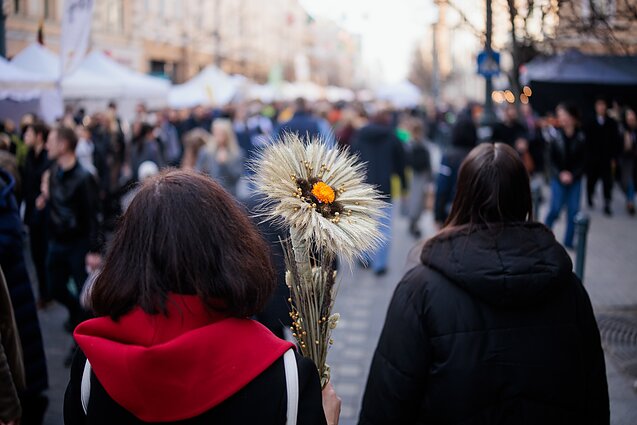
Vendors cite higher costs but hope for strong turnout
Traders interviewed before the fair said they were concerned about higher stall fees but remained hopeful that good weather would bring large crowds.
Ceramic artist Asta Pigulevičienė, who produces household pottery in the Šiauliai region, said she plans to keep prices unchanged.
“Our products are not essential goods, so we’re not raising prices,” she said, adding that she brought a larger selection this year, including items made from red, white and black clay.
Pigulevičienė said weather would be the most important factor for sales.
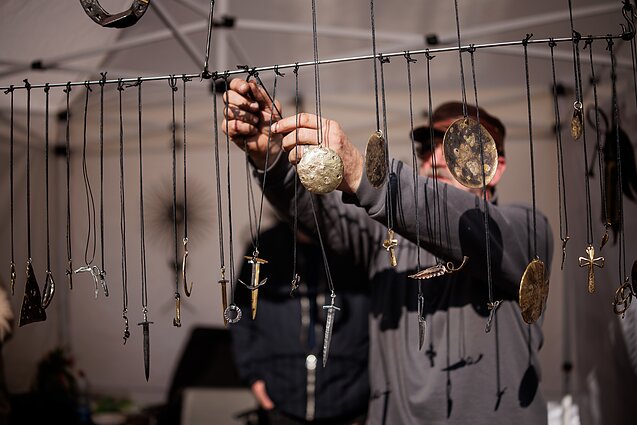
“If the weather is good, people will walk around, look and enjoy. Maybe they’ll come back later and buy something,” she said.
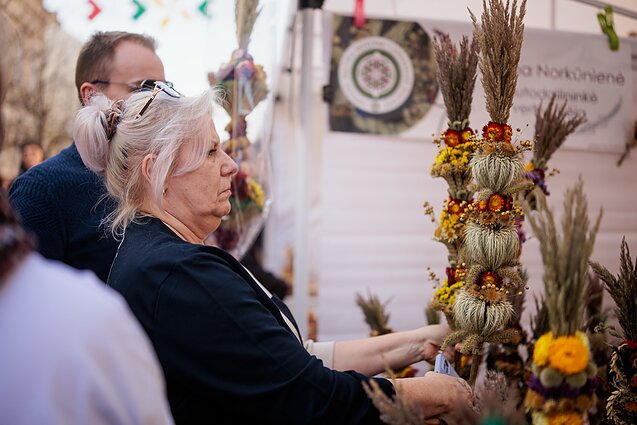
Renata Rynkevičiūtė‑Jančiauskienė, head of the palm makers’ association Verbų aristokratija, said she especially looks forward to a long-standing tradition at the end of the fair, when artisans exchange unsold handmade items with one another.
“When buyers thin out and we have a bit of time, we exchange goods – palms for baskets, clay dishes, tablecloths or wooden boxes,” she said. “It’s an old custom so we don’t return home empty-handed.”
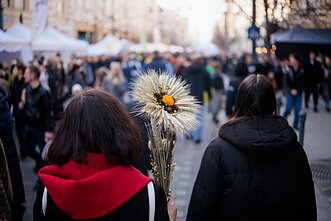
She said the prices of traditional Vilnius palms would remain similar to last year, when they rose slightly, and this year’s designs will feature earthy tones along with more yellow, purple and green.
Still, she noted that stall prices have increased this year. “But they won’t take away our good mood,” she said.
Candle maker Raminta Ciūnienė from Švenčionys said she brought more products, especially wax Easter eggs, which she expects to be popular ahead of Easter.
Meanwhile, woodcraft seller Rimantas Valenta said he lost his usual spot on Gedimino Avenue this year, which could affect sales.
“Regular customers won’t find me,” he said.
Online craft marketplace continues alongside fair
An online craft marketplace launched during the pandemic continues to operate but has not replaced the traditional event, according to Renaldas Gražys, one of the fair’s organisers and owner of the website craftson.lt.
The platform gained attention in 2021, when the street fair was cancelled because of the Covid-19 pandemic. Gražys said it now functions mainly as a broader online marketplace for artisans rather than a direct alternative to the fair.
“Sales are growing slightly and awareness is increasing, but more platforms are appearing, so there is competition,” he said.
According to Gražys, older artisans rarely use the online platform and prefer traditional fairs, while others sell through their own websites or social media pages.
Organisers also noted that 2027 will mark a milestone for the fair. It will be 200 years since Lithuanian merchants first secured the right to hold a three-day market in Cathedral Square – considered the beginning of the modern Kaziuko mugė tradition.
The fair itself dates back several centuries. Historians trace its origins to 1604, when residents of Vilnius held a procession to welcome a papal-blessed banner honouring Saint Casimir brought from Rome.

Newsletter
Every Friday morning.