



Lithuanian prosecutors on Tuesday questioned two senior politicians, both former prime ministers, as special witnesses in separate pretrial investigations, including a probe into suspected corruption at the State Plant Service and an illicit enrichment investigation.
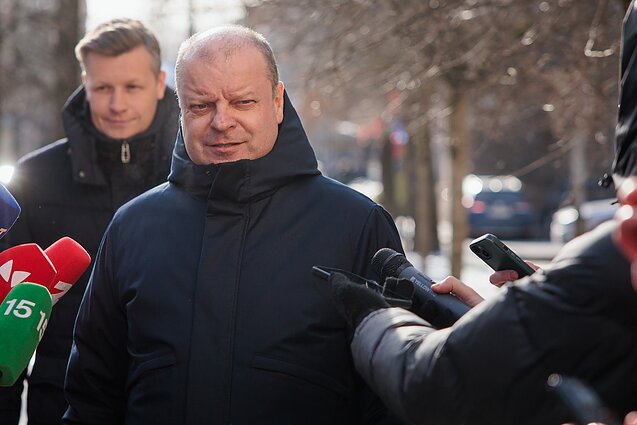
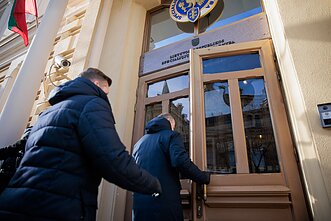
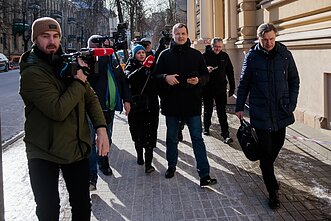
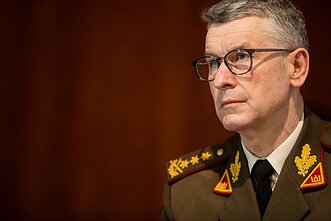
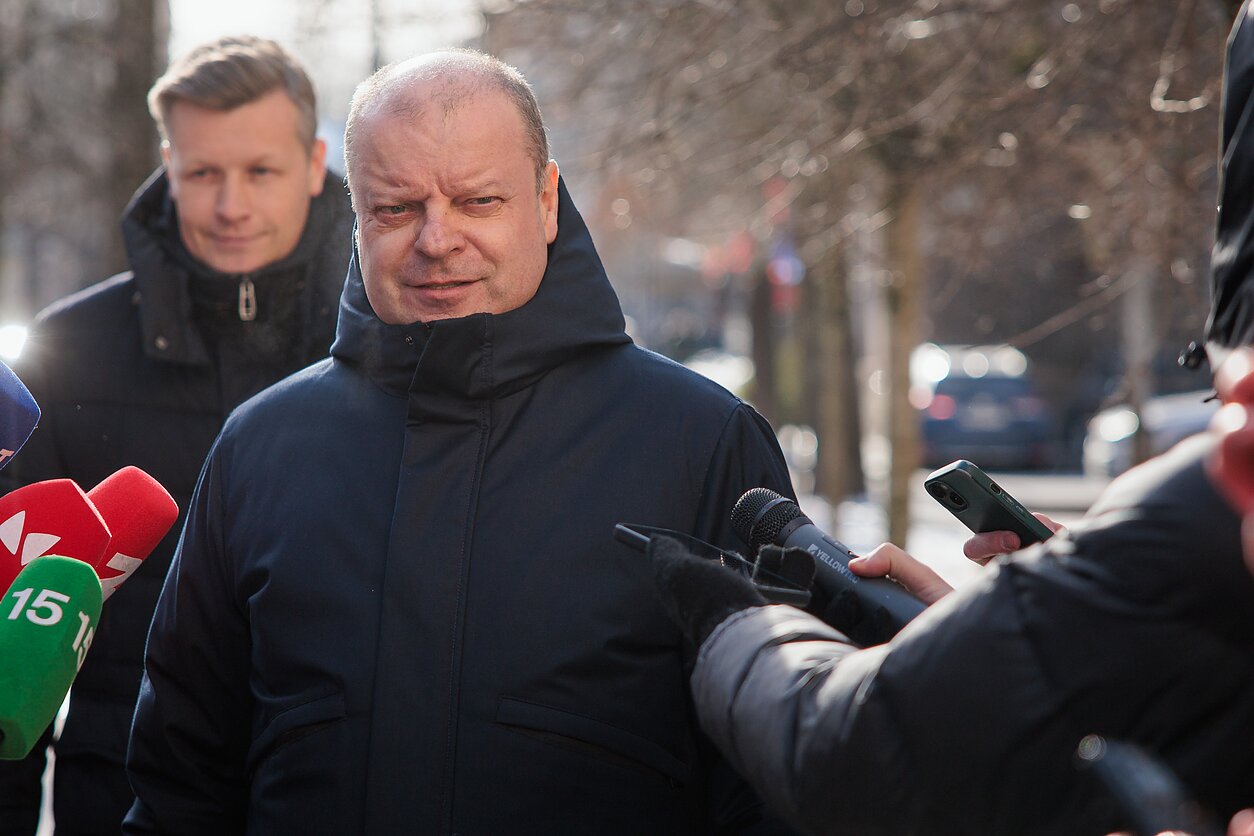
Saulius Skvernelis, leader of the Democrats “For Lithuania”, was interviewed by the Special Investigation Service (STT) in a case concerning alleged corruption at the State Plant Service.
“Everything is as it should be in a state governed by the rule of law – a legal process,” Skvernelis told reporters upon arrival.
Although he, as a former police chief, attended a traditional meeting of former police commissioners days before searches were carried out at his home and office in parliament – where he met with STT Director Linas Pernavas – Skvernelis said he had no prior knowledge of the investigative actions.

“I am very disappointed – he could at least have winked or whispered that such measures were coming,” Skvernelis joked. “But speaking seriously, they are professionals. I cannot reproach those who are doing their job.”
As part of the same probe, law enforcement last week also searched the parliamentary office and home of MP Kazys Starkevičius, who has suspended his membership in the conservative TS-LKD party. He appeared for questioning at the STT but, according to media reports, declined to testify.
Both politicians came under scrutiny as prosecutors investigate suspected systemic bribery at the State Plant Service, where representatives of plant-exporting companies allegedly were required to pay large bribes for phytosanitary certificates. Skvernelis and Starkevičius were questioned as special witnesses regarding possible political favouritism.
After about an hour at the STT, Skvernelis said he had committed no criminal offense and saw no grounds for prosecutors to ask the parliament to strip him of his legal immunity. However, he said he is considering his future as party chairman.
“I could make a decision today or could have done so yesterday, but then speculation might begin that something is wrong. That is why I am not taking such action,” he said.
“I feel the party’s support, but I understand the situation that has arisen after these procedural measures. It has dealt a blow to me and, although the party has nothing to do with it, also to the party. This is a weak spot that opponents can exploit – and it would be strange if they did not. I have options A, B and C, and we will discuss them at the board meeting on February 23.”
Skvernelis said he has no complaints about his former adviser, Agnė Šilickienė, who also figures in the corruption case and was questioned last week. “Our relations are good, friendly and collegial,” he said.
Political analyst Matas Baltrukevičius of the Vilnius Institute for Policy Analysis said that even without formal suspicions, reputational damage has already been done.
“Some people may not follow all the developments, especially if they turn out to be favourable, and as the story gradually fades. But they will remember the fact that there were searches and questioning. From a public relations perspective, that is not beneficial to anyone,” he said.

Meanwhile, former prime minister Gintautas Paluckas, a member of the Social Democratic Party’s parliamentary group, spent the day at the STT as a special witness in a separate investigation into alleged abuse of office and illicit enrichment. The probe follows journalistic investigations into his business dealings.
“We answer what we are asked,” Paluckas said after being questioned. “Everything is proceeding properly and in good faith. We are explaining what we know. I think this will end well.”
Both Prime Minister Inga Ruginienė and parliament Speaker Juozas Olekas have said Paluckas should consider suspending his party membership.

“Under our rules, it is not mandatory, but any distancing helps resolve problems. I think he should consider whether it is necessary. He knows better what situation he is in,” Olekas said.
Paluckas said he would assess the situation. “If I make any decision, I will inform the public,” he said.
Under Lithuanian law, special witness status means investigators lack sufficient evidence to bring formal suspicions or are unable to do so because, for example, the person enjoys legal immunity. Members of parliament can be held criminally liable only with the approval of the Seimas.

Newsletter
Every Friday morning.