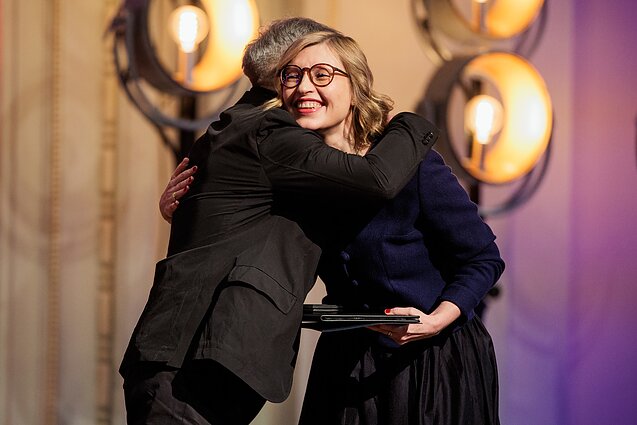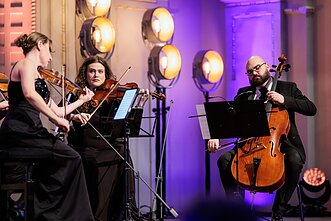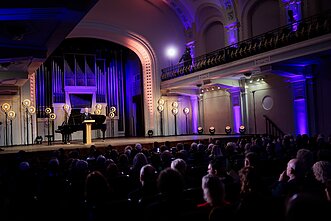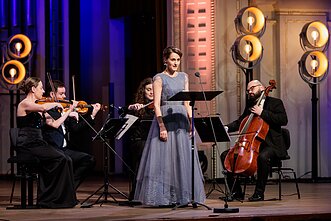
















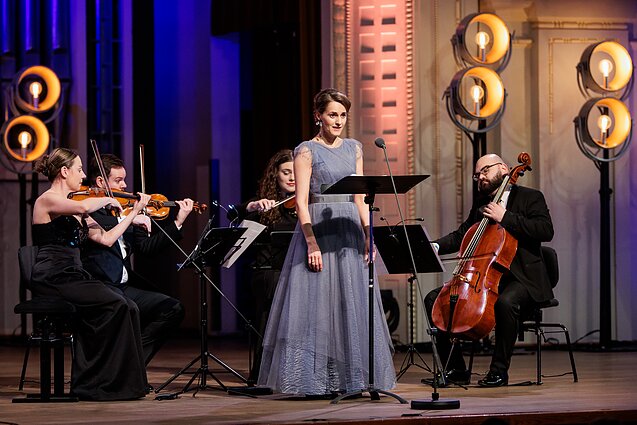
Lithuania’s National Prizes for Culture and Art, along with the Jonas Basanavičius Prize, were presented on Thursday at the Lithuanian National Philharmonic.
The 2025 National Prizes for Culture and Art were awarded to architecture historian Marija Drėmaitė, poet and playwright Gintaras Grajauskas, film director Ignas Miškinis, opera and chamber music performer Giedrė Marija Žebriūnienė, stage and screen actor Albinas Keleris, and artist Laisvydė Šalčiūtė.
The National Jonas Basanavičius Prize went to Arūnas and Vida Sniečkus, founders of the Antanas and Jonas Juška Museum, in recognition of their long-standing educational, creative and civic work linked to the museum’s living ethnic culture tradition.
The National Prizes for Culture and Art recognise the most significant works produced over the past seven years by artists in Lithuania and the diaspora, as well as lifetime achievements. Each laureate receives an award equivalent to 800 basic social benefits – nearly €60,000 this year.
The Jonas Basanavičius Prize honours exceptional contributions to ethnic culture, including the preservation of traditions, national identity and ethnocultural education. It was established by the government in 1992 and granted national prize status in 2017.
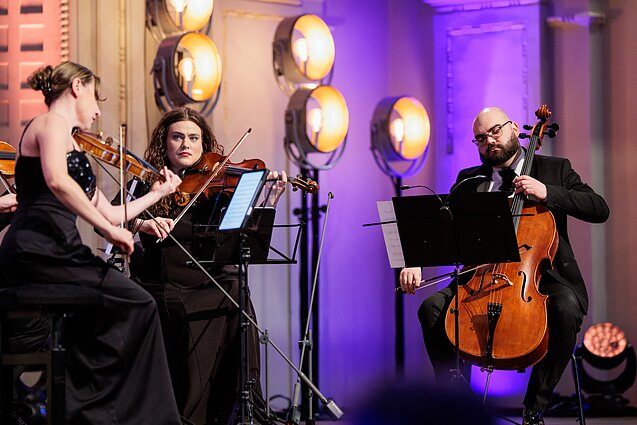
This year’s laureates received their awards from previous prize-winners.
Congratulating the winners, Culture Minister Vaida Aleknavičienė said their work strengthens communities and encourages cultural dialogue.
“These awards are not only an expression of gratitude for what has been created, but also a message that the state sees culture as a strategic value, protects creative freedom and recognises creators as one of its key strengths,” she said.
“Thank you for building the Lithuania we all love,” she added.
‘A very dear award’
Žebriūnienė, who performs under the stage name Giedrė Kaukaitė, described receiving the prize as a moment “full of coincidences”.
“Many years ago, I gave my first solo concert on this stage. I also said goodbye to my audience here. And by a fateful coincidence, I return today,” she said.
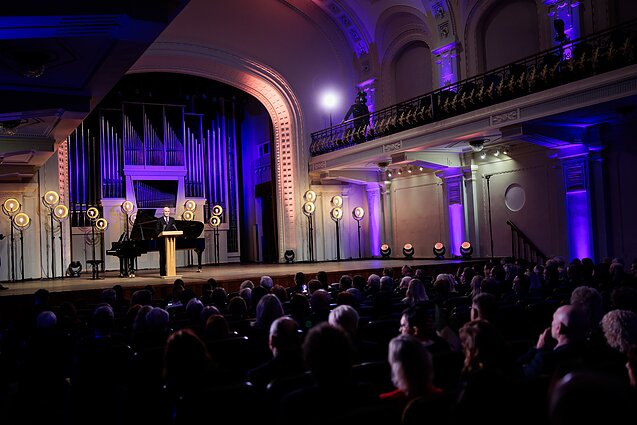
Meanwhile, Grajauskas admitted he was still taken aback by the recognition.
“Of course it is pleasant. Poets do sometimes receive such prizes – perhaps those from outside Vilnius less often [...] But yes, I feel good. It is a joyful occasion, very good company,” he said before the ceremony.
In his acceptance speech, he thanked Lithuania’s young people for their courage and honesty.
“I am sincerely ashamed of some of my peers. Do not pay attention to those suited liars and bores. They had far more power then, but they lost,” he said.
“Protect and defend your freedom from them. Everything is exactly as you see it. You are right, not them. You will win and they will collapse like old mushrooms,” Grajauskas added.
Keleris described the prize as recognition of his life’s creative work.
“It is a very dear award. I value it greatly,” he said.
Drėmaitė said she felt fortunate to be receiving the award “in a still relatively stable world, which, unfortunately, is rapidly changing before our eyes”.
“I mean not only geopolitics and the war in Ukraine. Lithuania’s cultural community was forced to take to the streets in protest. That is not merely a problem of the cultural sector – it is a response to flawed political decisions,” she said.
A less formal ceremony
Traditionally, the prizes are presented at the Presidential Palace by the head of state.
However, the format changed following last autumn’s protests by cultural figures over the ruling coalition’s decision to assign the Culture Ministry portfolio to the Nemunas Dawn party and its candidate, who had limited experience in the cultural field – a move that also drew criticism of President Gitanas Nausėda.
Although Nausėda was invited to Thursday’s ceremony, he was unable to attend due to an informal European Council meeting in Belgium.
“Traditions can always change,” Aleknavičienė told reporters.
“Together with the commission, we decided to introduce some changes, and this year the prizes were presented by previous laureates. There is nothing unusual about that – I think it may even be more interesting,” she said.
Grajauskas welcomed the revised format, saying the significance of the award does not depend on who presents it and that the ceremony felt “cosier” and less formal.
“It is a great idea and I do not think it needs changing. The significance of the prize neither decreases nor increases depending on who presents it. It is simply more relaxed, among our own, with fewer rituals,” he said.
Earlier, the National Prizes for Culture and Art Commission had decided to move the ceremony to Sapiega Palace. The Culture Ministry later announced it would instead take place at the Philharmonic.
Commission chairman Arūnas Gelūnas said the change of venue meant fewer security checks and more seats for guests, calling it “a celebration of the autonomy of art and culture”.
Grajauskas said the awards should remain separate from politics.
“Politicians come to promote themselves – that is their job. But whether they are truly connected to national culture and art is sometimes still a big question,” he said.

Newsletter
Every Friday morning.