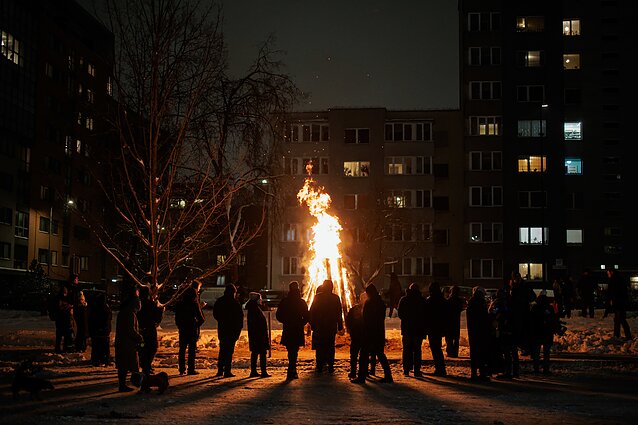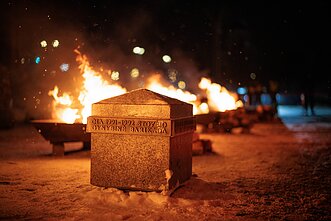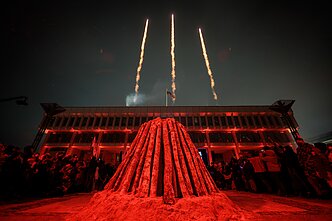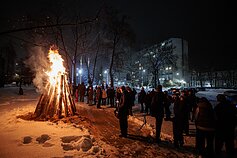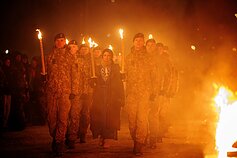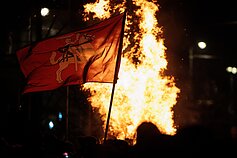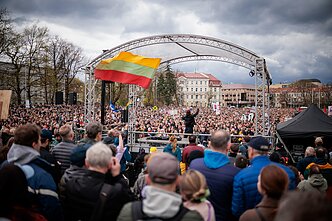


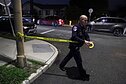


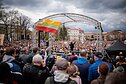


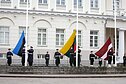
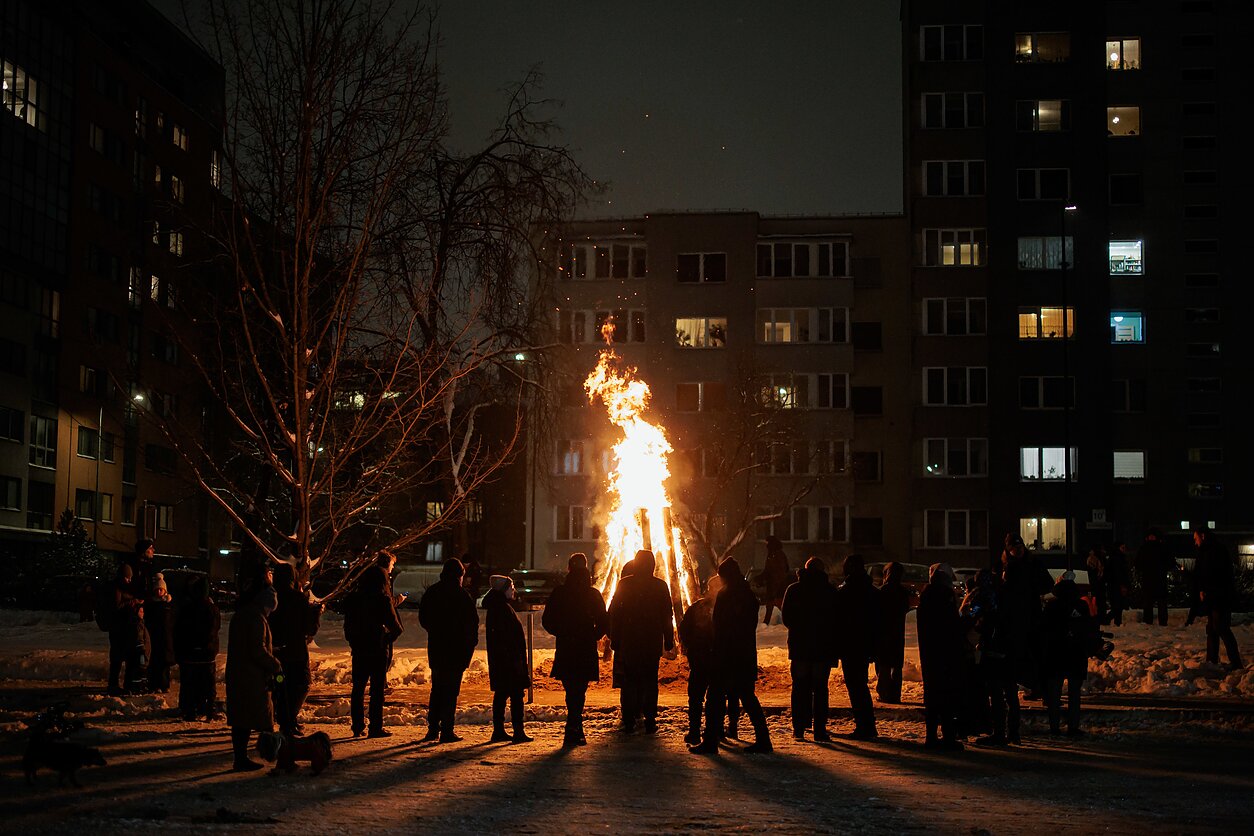
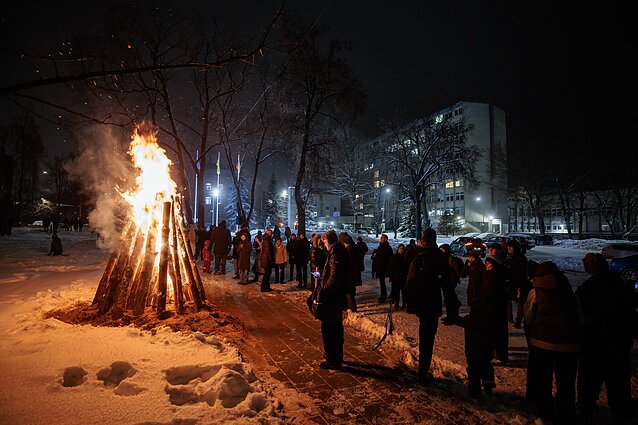
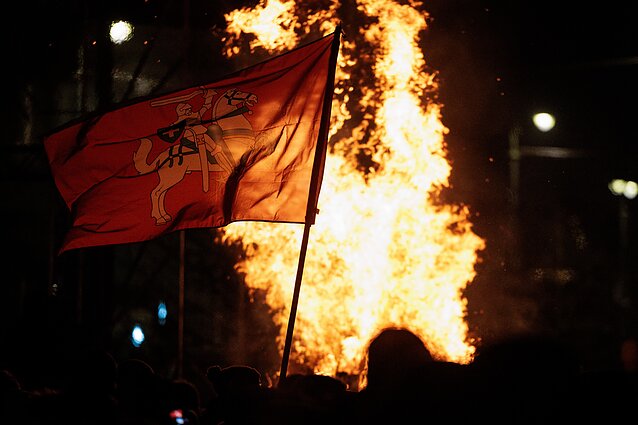
Bonfires were lit across Vilnius on Monday on the eve of Freedom Defenders Day as hundreds gathered to honour the victims of the January 13, 1991, Soviet military crackdown.
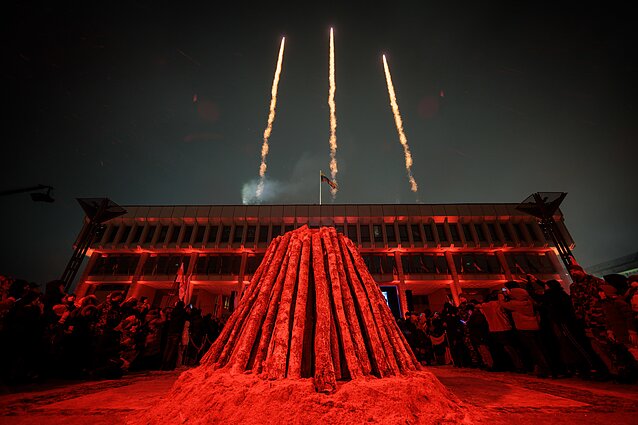
A bonfire burned near the Vilnius TV Tower, where more than 100 people assembled to pay tribute to those killed. Bonfires were also lit outside the Lithuanian National Radio and Television building, while later in the evening fires were ignited in Independence Square during the Flame of Freedom concert, which drew more than 1,000 people.
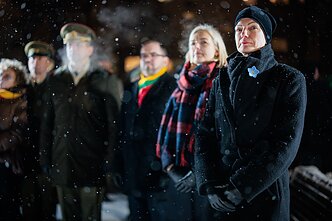
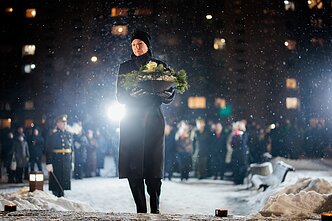
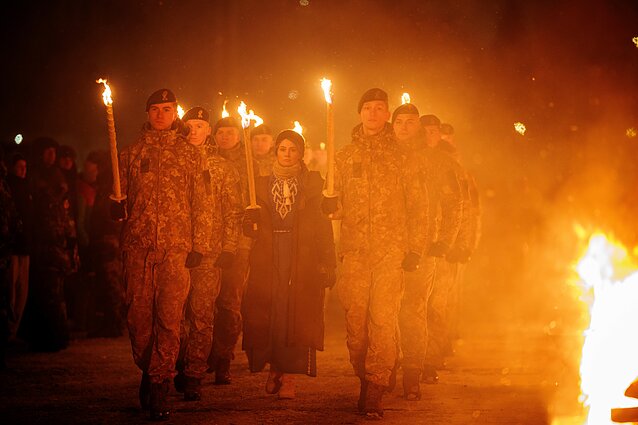
Crowds gathered at the January 13 memorial near the TV Tower, including President Gitanas Nausėda and first lady Diana Nausėdienė. Prime Minister Inga Ruginienė, Seimas Speaker Juozas Olekas, Defence Minister Robertas Kaunas and Lithuanian Armed Forces Commander Raimundas Vaikšnoras also attended.
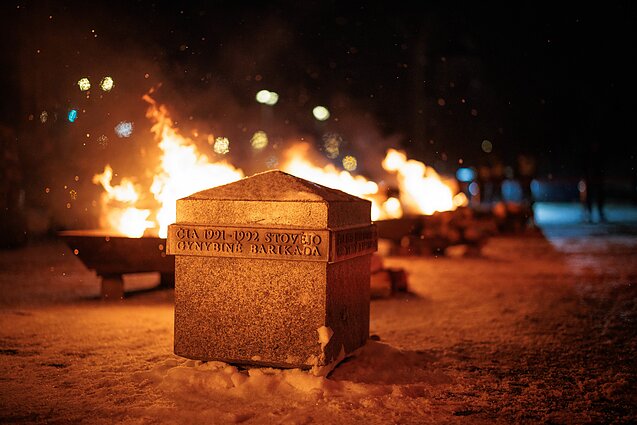
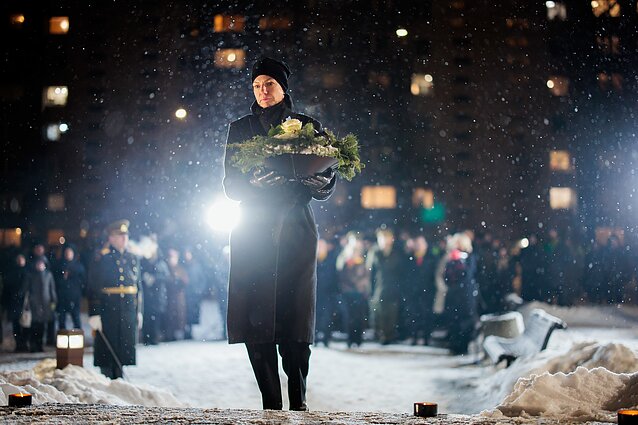
Participants laid flowers and lit candles at the memorial as patriotic songs were performed. Archival footage from the January 1991 events was shown on screens during the ceremony.
Lighting the bonfire, Nausėda said freedom, like fire, must be constantly nurtured “so that it burns brightly”.
“We must never stop or think that the struggles for freedom are something of the past, that we won them once and for all. That is not the case, and Ukraine’s bleeding reminds us of the price of freedom, which we must be ready to pay at any time,” Nausėda told reporters near the TV Tower.
He said his thoughts were first and foremost with those who made the ultimate sacrifice.
“They gave their lives so that their sacrifice would pave the way for others, the way to create,” he said. “No matter how different we are or how different our views may be, there is one common denominator – freedom.”
Among those attending was 57-year-old Birutė Steponėnaitė, who told BNS that January 13 symbolises freedom and must be remembered every year.
“This is the freedom we won. We cannot not be here on such a day. Serious things were happening back then. If there had been no January 13, it’s unclear how we would be living now,” she said.
Steponėnaitė, who worked in television broadcasting services at the time, recalled how transmissions were moved to Kaunas after the Vilnius signal was cut.
“We waited and watched television, watching [news host] Eglė Bučelytė when everything went silent,” she said. “When the signal from Kaunas appeared, we connected everything to the transmitters and broadcast as much as we could.”
Albertas, 75, said he attends the commemoration every year.
“I was here 35 years ago. I saw the tanks, the soldiers with leaden faces. At first we didn’t believe they would shoot with live ammunition. It was terrifying,” he told BNS.
Goda, 32, said the January 1991 events were often discussed in her family.
“I’m an absolute patriot. I was born in 1993, but in my family this was talked about a lot. That sense of patriotism was instilled in me. I feel it inside and come every year,” she said.
On the eve of the anniversary in Kaunas, 14 memorial fire altars were lit near the city municipality building. Commemorations were also held in other cities.
In January 1991, Soviet forces attempted to overthrow Lithuania’s government, which had declared independence from the Soviet Union on March 11, 1990.
During the night of January 13, Soviet troops stormed the Vilnius TV Tower and the Radio and Television Committee building, killing 14 people and injuring more than 1,000 unarmed civilians.
Those killed on January 13, 1991, or who later died of their injuries were Loreta Asanavičiūtė, Virginijus Druskis, Darius Gerbutavičius, Rolandas Jankauskas, Rimantas Juknevičius, Alvydas Kanapinskas, Algimantas Petras Kavoliukas, Vytautas Koncevičius, Vidas Maciulevičius, Titas Masiulis, Alvydas Matulka, Apolinaras Juozas Povilaitis, Ignas Šimulionis and Vytautas Vaitkus. Stasys Mačiulskas, wounded near the TV Tower, died in a hospital in April 1991.
Although Soviet troops seized the TV Tower and the Lithuanian Radio and Television building, they did not attack the parliament building, which was protected by thousands of civilians.

Newsletter
Every Friday morning.