









America’s seizure of Venezuela’s authoritarian leader marks a new stage in geopolitics. Washington is declaring its return to a 19th-century doctrine of “spheres of influence”, a move that could embolden countries such as China and Russia to act more aggressively in their own neighbourhoods.
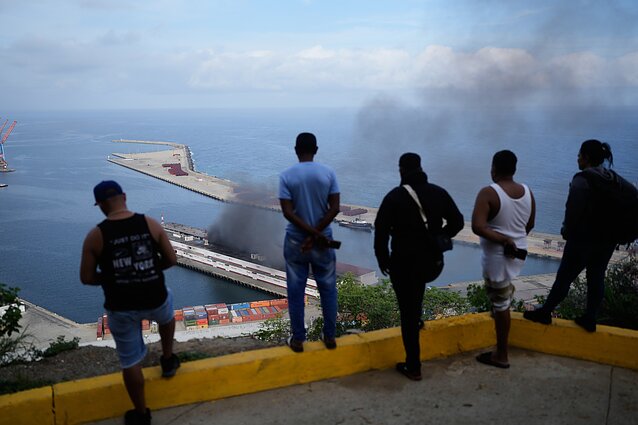
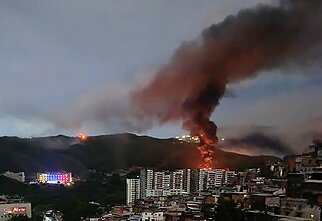
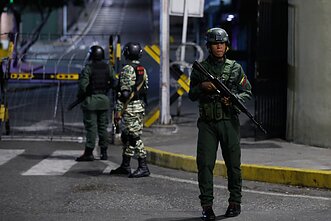
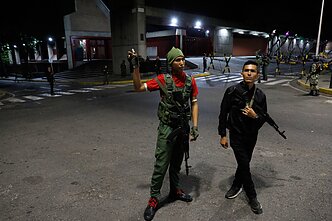
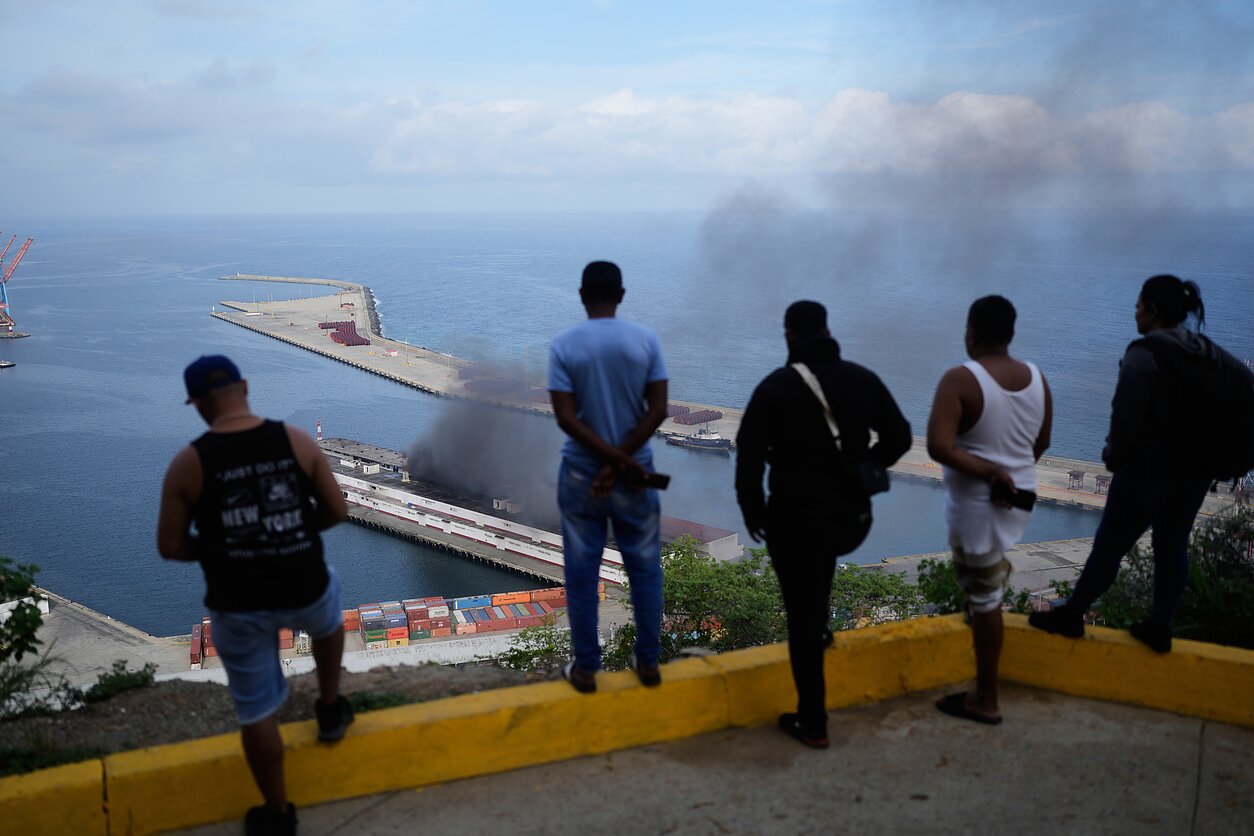
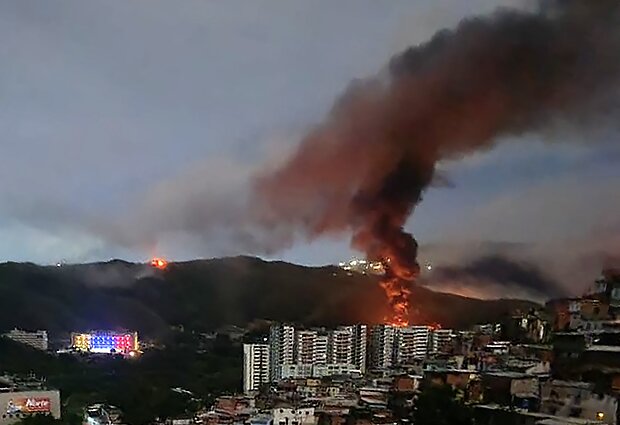
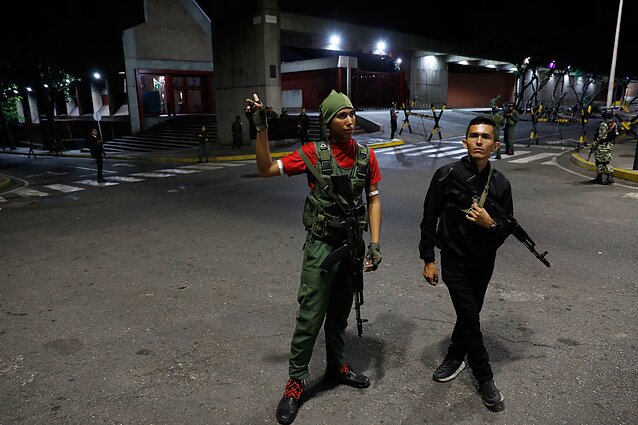
Events in Venezuela – when US forces seized leader Nicolás Maduro in a lightning military operation on January 3 – point to the revival of the Monroe Doctrine, which was also referenced in the American National Security Strategy published in November last year.
“The Monroe Doctrine is a big deal, but we've superseded it by a lot, by a real lot. They now call it the Donroe doctrine,” US President Donald Trump said on Saturday after the Venezuela operation, adding the first letter of his own name to its title.
In 1823, the fourth US president, James Monroe, declared that the world was divided into spheres of influence and that the Western Hemisphere – the Americas – fell within the US zone of dominance. After the doctrine was proclaimed, the United States took part in dozens of military conflicts and coups in the region.
“There’s a vision of the world where Russia is a great power with a sphere of influence in Eastern Europe, China would also have its sphere of influence over the Middle East and East Asia. This [American] part of the world is the US space of activity,” Enrique Arias, a political scientist and director of the Bildner Centre for Western Hemisphere Studies at City University of New York, told LRT.lt.
Concerns about such a world order – dominated by major powers that control smaller states through military and other means – began to surface among European politicians after Russia’s annexation of Crimea in 2014, and intensified further following Moscow’s full-scale invasion of Ukraine in 2022. They were reinforced later by Trump’s deal-making, power-based approach to international relations.
“That reality has now hit with full force,” Tomas Jermalavičius, a researcher at Estonia’s International Centre for Defence and Security (ICDS), told LRT.lt. “In this new world, the old powers [European countries] are newcomers.”
In Lithuania, the mantra that prevailed after independence – that the country should never again be left alone like before the Second World War – drove efforts to join NATO and the European Union, where “small” states also have a voice.
However, anxiety about being placed on the chessboard of great-power politics is now being heard not only in Lithuania, but also in European countries that have traditionally been centres of power.
In his end-of-year address, Germany’s Chancellor Friedrich Merz had to stress that “we are not dependent on the goodwill of great powers”.
According to Jermalavičius, “the question is whether the EU will crystallise as a separate centre of power that can counter not only Russia, but also the United States and China”.
“The problem is that Europe – and we, Lithuania – cannot rely on America using such measures only against dictators and against states whose interests are hostile to the US. That is the fundamental change,” he said.
At the centre of these concerns is Greenland, and Trump’s threats that it should be brought under US control.
“We could find ourselves in a really bad situation. This would be a true game-changer, something we have not seen before. It would be hard to predict all the consequences and dilemmas that would arise for countries like Lithuania,” Jermalavičius said.

A world based on international law – a thing of the past?
Justifying the detention of Venezuela’s president, Nicolás Maduro, the US Department of Justice said it had carried out a law enforcement operation supported by the military.
According to Washington, such measures were necessary to detain Maduro, who has been indicted by a New York grand jury on charges related to terrorism, drugs and arms trafficking.
This was also not the first time the US has used military force to detain leaders of other countries.
However, international law experts have criticised the Trump administration’s attempt to present the operation simultaneously as a purely law enforcement action while also citing it in discussions about possible long-term US control over Venezuela.
"A criminal indictment alone doesn't provide authority to use military force to depose a foreign government, and the administration will probably hang this also on a theory of self-defence," Matthew Waxman, a law professor at Columbia University specialising in national security law, told Reuters.
Despite potential legal violations, experts do not believe the United States would face significant legal consequences.
“Few states demonstrate trust in international law and institutions except when those laws and institutions serve the interests of their leaders,” said Bruce Bueno de Mesquita, Silver professor of politics at New York University.
According to Jermalavičius, former Estonian president Lennart Georg Meri once likened international law to nuclear weapons for small states.
“But in reality, there is an element of power behind it. When there is no fear of consequences, that nuclear weapon simply does not exist and becomes an empty threat,” Jermalavičius added.
The logic of great powers is applied by Vladimir Putin – namely, that they are entitled to dominate their neighbourhoods. He uses this to justify pressure on countries like Ukraine, Belarus and the Baltic states.
In the past, Kremlin rhetoric has often included claims about the importance of a multipolar world, which would no longer be subjected to American dominance.
“The thesis of a multipolar world was a polite way of concealing the blunt statement that everything depends on the great powers. The Russians have cultivated this as an aspiration since the 1990s,” Jermalavičius said.
For countries such as Lithuania, this would mean a return to spheres of influence based on military power. The main concern is that, despite NATO membership, this would open the door to Russian aggression and dominance in the Baltic states.
“If the Russians win, or at least do not suffer consequences for what they have done and are allowed to recover, they will also seek to ‘share the world’ by exploiting the circumstances. Their zones of interest are well known,” Linas Linkevičius, Lithuania’s former foreign minister and the country’s current ambassador to Sweden, told LRT.lt.
However, this does not mean a global transformation has already taken place.
“Are we entering a multipolar, spheres of influence world -- perhaps for the moment, but we should remember that Russia is not a major international actor beyond the suicidal threat of nuclear war,” Bueno de Mesquita said.
“The actual Monroe doctrine, by the way, really was just an effort to keep European powers out of the Americas and not an assertion of American dominance over the region – Monroe's US was weak,” he added.

Newsletter
Every Friday morning.