










Discussions about foreigners arriving in Lithuania continue to flare up: questions are raised about whether too many are being admitted, and various threat scenarios are painted. LRT.lt interviewees stress that the key issue is not numbers, but how prepared the country is to receive newcomers.
“Integration responsibilities are divided among several institutions – ministries, municipalities and non-governmental organisations. There is no central leadership, which creates a risk that responsibility becomes fragmented and outcomes uneven,” said political scientist Aistė Žemaitytė.
“One of Germany’s biggest mistakes when it began inviting temporary foreign workers was the assumption that everything was temporary and that those arriving would not stay. This allowed policymakers to turn a blind eye to integration. For example, it was assumed that newcomers did not need to learn German because they would return home. It took two decades to realise that people naturally settle where they work. The problems arose not because of immigration, but because of political denial. It would be good if Lithuania did not repeat this mistake. Most arrivals are young people who have or are starting families, so it is essential to think about integration measures rather than assume families will not stay here,” said Dr Irma Mačkinė, Associate Professor of Sociology at Vilnius University.
“The issue is sensitive, so we must assess it based on facts rather than emotions. Compared with Western European countries, immigration to Lithuania is not relatively high,” Žemaitytė, a political scientist and Vice-Dean of the Faculty of Political Science and Diplomacy at Vytautas Magnus University, told LRT.lt.
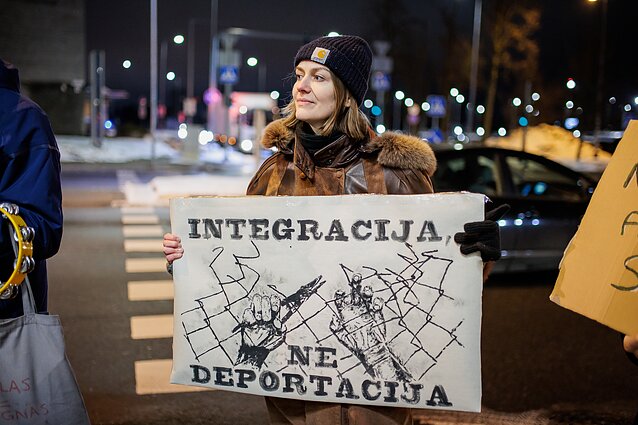
She noted that since independence Lithuania’s population has declined significantly due to emigration, falling birth rates and previously low immigration.
“Over the past six years, we have begun to see more people immigrating than emigrating. This is a natural indicator of a growing economy and a developing country,” she said.
According to Žemaitytė, it is natural that Lithuania is becoming increasingly attractive to foreign nationals, but statistics alone do not justify claims that the country is admitting too many people. Other criteria must be considered.
“For example, can the state cope with these numbers? Is the integration system working? Is the labour market oversaturated? Do immigrants contribute to social welfare? Assessment should not be purely quantitative but also qualitative: are we able to ensure that newcomers integrate into society?” she explained.
She agreed that, due to the complex geopolitical situation and hostile neighbourhood, Lithuania applies higher screening standards for arrivals. However, risks relate to individuals, not entire nationalities, and it is therefore wrong to claim that everyone arriving from Belarus or Russia poses a threat.
“When discussing migrants from more distant countries or Muslim communities, emotional assessments play a large role. We hear fears more than real threats. Our society is not used to diversity – this is a new experience for us. Religion or origin in themselves do not create a threat. […] Threats arise when integration and social policy measures do not function. Immigration itself is not a threat; it becomes a challenge when the state fails to act politically – and Lithuania is working in this area,” said the political scientist.

Lack of central leadership
Lithuania, she said, lacks experience in immigration, and its integration system is still being developed. Žemaitytė pointed to positive examples, such as the successful integration of Ukrainians into the labour market and recognition of their qualifications. Local communities, NGOs and universities play an active role in the integration process.
“One issue still awaits coordination: we do not have clear and stable integration pathways. Integration responsibilities are divided among institutions, ministries, municipalities and NGOs. There is no central leadership, so responsibility becomes dispersed and outcomes uneven,” she said.
Asked whether all newcomers must speak Lithuanian, Žemaitytė noted that accessible language courses are not always available, which must also be taken into account.
“In many countries, language proficiency is considered part of integration, but should it be mandatory immediately? I think there should be a transitional model. Yes, if someone works in a field requiring communication, it is logical for Lithuanian to be mandatory – as is the case in many European countries,” she said.

In other sectors, she added, requirements could be more flexible, allowing time to learn the language.
“Language is not a rule of integration; it is a key – linked to better working conditions, participation in society and communication. We must provide that key ourselves, and at the moment we are struggling to do so,” she said.
Asked about frequent claims that Sweden or Germany now regret accepting so many migrants, Žemaitytė noted that media often highlight tensions between local communities and newcomers, but the causes lie elsewhere.
“Problems arise not because people are migrants, but because very large numbers arrived in a short time and integration systems failed to respond adequately. In some communities this led to social risks. When immigration is accompanied by discrimination and exclusion, risks grow. Can we learn from this? Absolutely. Lithuania does not need to compare itself to Sweden or Germany in terms of numbers, but integration should not be left solely to migrants,” she said.
Fewer asylum applications compared to previous years
Vilnius University sociologists Dr Irma Mačkinė and doctoral researcher Mažvydas Karalius note that most temporary work permits are now issued to citizens of Uzbekistan, Tajikistan and Kazakhstan. Before Russia’s full-scale invasion of Ukraine, most workers came from Ukraine, Russia and Belarus.
Karalius observes that the number of foreign students is rising, while asylum applications are declining.
“In 2024, 362 asylum applications were registered – fewer than in any year between 2016 and 2019. This does not include recipients of temporary protection, namely Ukrainian citizens. Even their numbers were lower last year than in 2023,” he said.
What matters most, he stressed, is not the number of arrivals but the country’s reception and integration ecosystem.
“Lithuania long led Europe in negative net migration. Now we are seeing positive indicators, but foreign nationals have increased from a very low base. Compared regionally, their share remains small. Migrants are simply more visible, especially those from less familiar regions. Even rising migration numbers only slow population decline – they do not reverse it,” Mačkinė said.
Stereotypes experienced by Lithuanians abroad
Karalius warned that political rhetoric portraying migrants’ religion as a threat fuels fear.
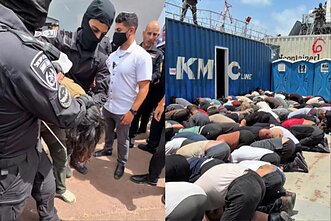
“When numbers rose at the Belarusian border, this was framed as a national security threat, justifying barbed wire and pushbacks, severely limiting access to asylum,” he said.

In 2024, one third of recorded hate speech cases were related to nationality, with Ukrainians and Jews most affected.
Mačkinė noted that Lithuanians themselves experienced stereotypes during past emigration waves.
“We know how Lithuanians in the US overstayed tourist visas for decades and worked in the shadow economy. In Iceland, being in criminal news headlines once led to Lithuanians being associated with crime. Such images fade, but anthropologists still find ‘Do not steal’ signs written in Lithuanian in small shops abroad. Yet, when speaking about others, we attach labels more quickly,” she said.
The problem is not immigration, but political denial
There are pleanty of claims that countries such as Sweden or Germany, which have taken in large numbers of foreign nationals, now regret doing so. People argue that integration has failed and that rising crime is a cause for concern but such assertions should to be treated with caution, say LRT.lt sources.
Karalius added that migrants in Lithuania are still often seen not as people who might want to build a life in the country, but as a convenient source of temporary labour from which added value can be easily extracted.
Integration is more than language courses
Despite criticism, Sweden ranks highest in the Migrant Integration Policy Index 2025 (MIPEX 2025). Lithuania scored just 37 out of 100.
MIPEX 2025 data on Lithuania show that the weakest areas are political participation, access to citizenship and healthcare. In political participation, Lithuania scored just 5 points out of 100.
“Inclusion must be discussed from a perspective of mutual responsibility. First of all, it is important to recognise that this is a two-way process: efforts are required not only from newcomers, but also from society itself, and the state should offer foreigners more than just language courses. It is promising that a sociocultural introduction programme has recently been launched, aimed at familiarising foreigners arriving in the country with shared social norms, encouraging them to get involved in activities and to take initiative,” Karalius told LRT.lt.

He added that services must be accessible not only in major cities but also in smaller municipalities. Inclusion should not be the sole responsibility of central government, as the Nordic countries demonstrate.
“Lithuania certainly has examples to follow in terms of policy measures. Where do the challenges arise? Among second-generation migrants, there is noticeable frustration with the situation in the country, and this does not happen without tensions within society. If you are born and raised in a country, you see yourself as a citizen and a member of that society, but society does not necessarily accept you in the same way. This is one of the factors that can lead to the formation of negative attitudes. Sweden certainly faces such challenges, and the more negative societal attitudes become, the more difficulties arise. We need to think about the inclusion of different people who either choose the country themselves or are born there as a result of their parents’ choices,” said sociologist Mačkinė.
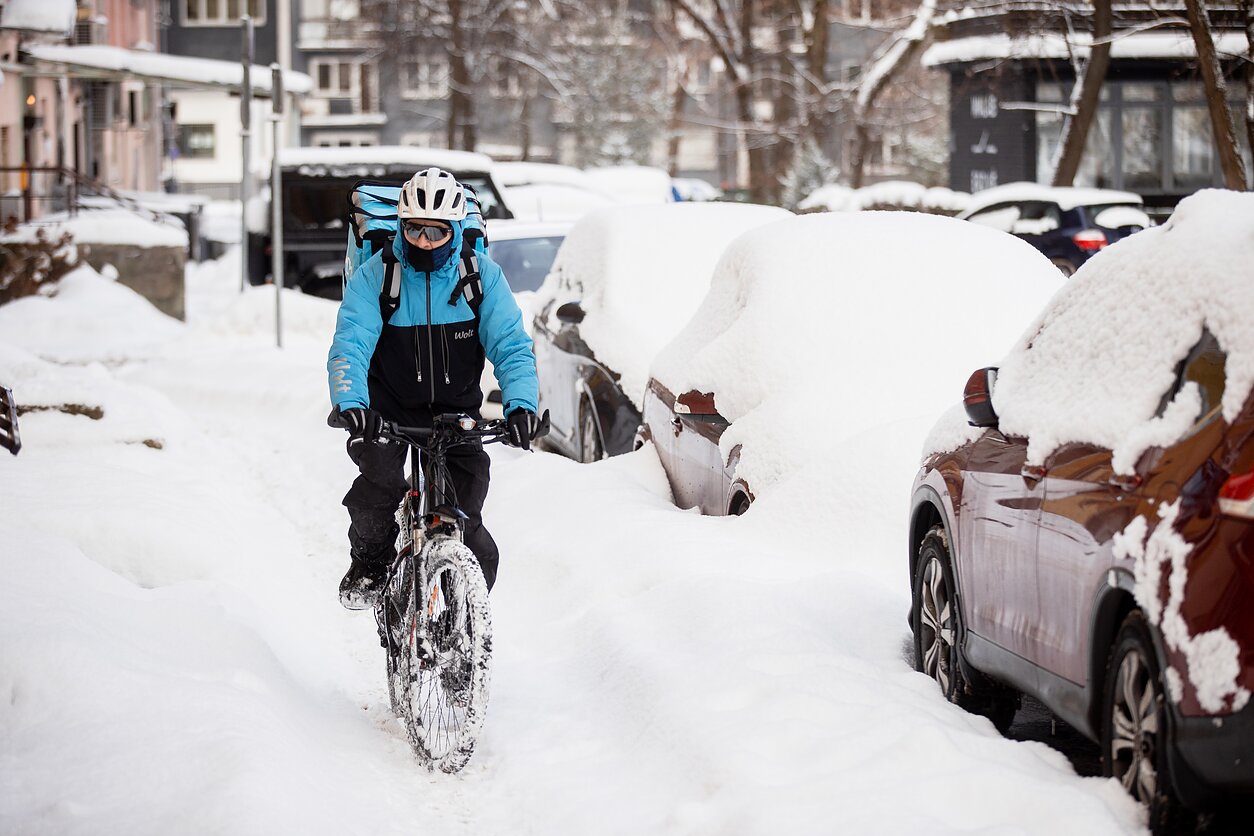
The interviewees agree that it is not true that newcomers take jobs away from local residents, although such fears exist in all countries. Currently, work permits for non-EU citizens in Lithuania are most often issued in freight transport and construction. However, it is important not to overlook less regulated sectors that require greater attention, Mačkinė notes.

“The so-called household sector is less visible. This includes people working in private homes, most often foreign women. Examples from other countries show that this is a poorly regulated sector, based largely on informal arrangements, and frequently overlooked at the policy level. In Germany, there are many cases where women who arrive to work end up living with families and becoming dependent on them. Lithuanian society is ageing, fewer people are having children, and accessible care services for old age are still insufficient. Delays in expanding infrastructure will only lead to higher migration numbers,” the Vilnius University sociologist told LRT.lt.
Migration can be part of the solution
In a comment to LRT.lt, the International Organization for Migration (IOM) stressed the importance of safe, well-managed migration grounded in human rights and international law. According to the organisation, policy decisions and public discourse should be non-discriminatory and based on respect for every individual.
“There is no internationally agreed threshold for how many migrants would be ‘too many’ in a country. Decisions on migration flows should be guided by an assessment of labour market needs, demographic trends and other social and economic factors. Migration is a global phenomenon and will continue due to political, environmental and economic reasons. In this respect, Lithuania faces challenges similar to those of many European countries: a high standard of living and rising wages, but also an ageing society and a declining birth rate. Well-managed migration can be one of the tools to help address these challenges in the long term,” IOM said.
The organisation notes that migrants are often portrayed as a threat, with the focus placed on irregular migration or isolated incidents, despite such claims lacking evidence. Negative attitudes may intensify when migrants’ culture, religion or background differs from that of the host community.
“IOM emphasises that integration is a two-way and long-term process. While migrants are encouraged to participate actively in shared activities and seek dialogue, openness and support from the host society are equally important for the success of this process. Preconceived attitudes can significantly hinder integration from the outset, which is why inclusive policy frameworks and community openness are crucial. Each country’s social, historical and economic context is unique, so comparisons with other states should be made with caution.
“MIPEX research shows that clearly planned and consistently implemented integration policies deliver strong results. Successful integration depends on inclusive policies, sufficient investment and opportunities for interaction, rather than on migrants’ origin or religion,” IOM said.
The organisation also rejects another common myth, saying there is no evidence to support claims that higher levels of migration are linked to rising crime. “Crime rates are far more closely related to social and economic factors such as marginalisation or social exclusion,” it said.
According to the statement, IOM’s office in Lithuania focuses on supporting migrant integration by offering a free consultation helpline, psychological support, training sessions, joint activities and cultural events.
“Most migrants who seek our support are looking for opportunities to make friends, become part of the community, learn the language and understand the local culture. Building connections and receiving support from local communities are essential to ensuring successful and mutual integration,” the organisation said.

Newsletter
Every Friday morning.