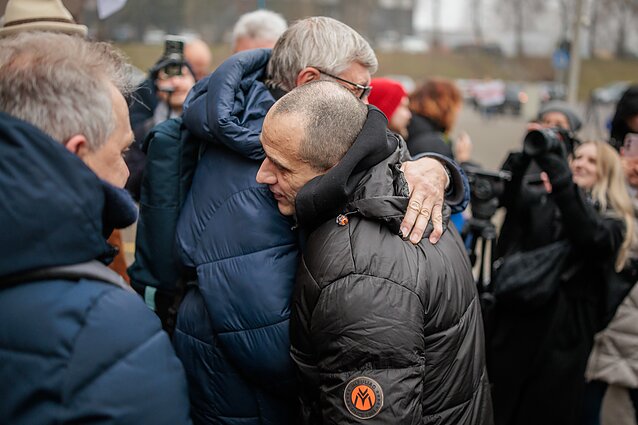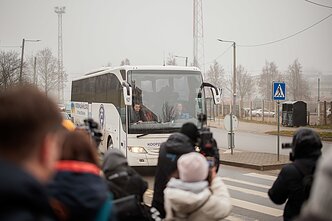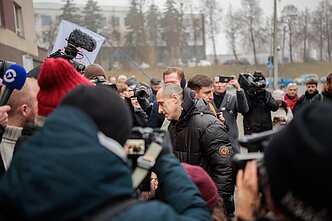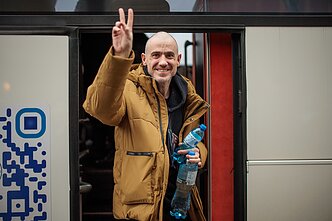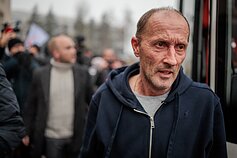






Some of the political prisoners released in Belarus on December 13 and forcibly taken to Ukraine have arrived in Lithuania. In total, 20 people arrived in Vilnius last week after being freed from prison in exchange for the lifting of US sanctions on Belarusian potash fertilisers.
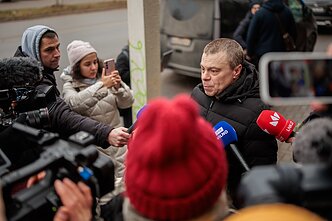
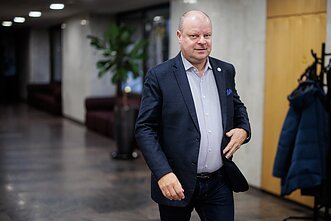
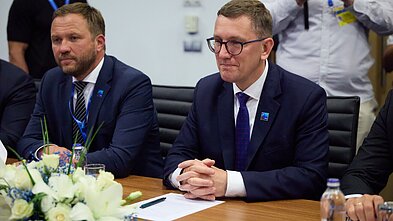
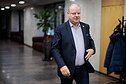
Those who arrived in the Lithuanian capital on December 18 include Belarusian politician Pavel Seviarynets and human rights defender Vladzimir Labkovich from the Viasna centre, a colleague of Nobel Peace Prize laureate Ales Bialiatski.
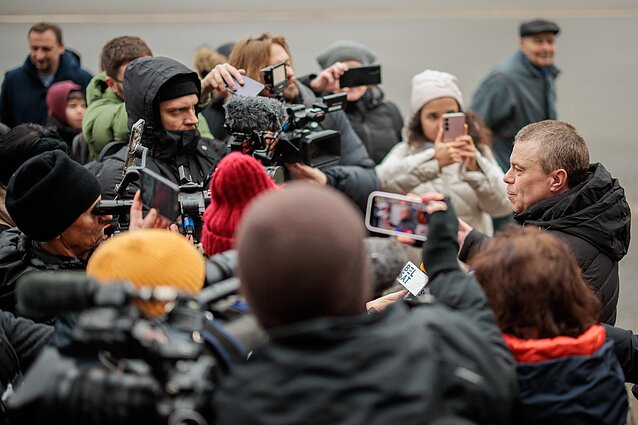
“It is very important for us that the people who remain there return home as soon as possible,” Labkovich told reporters upon arriving in Vilnius.
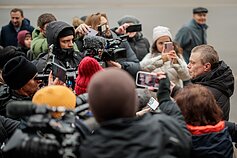
He was one of the few people on December 18 who agreed to speak to journalists in Vilnius.
According to Labkovich, the release was a powerful emotional shock for everyone who regained their freedom. He stresses that the operation to move people out was carried out under extremely difficult conditions and required serious coordination efforts, including on the Ukrainian side.
“The way this operation was organised is something special, the highest level of organisation. First of all, I want to express my huge gratitude to the Ukrainian side, which undertook this operation and carried it out under particularly difficult conditions. In Ukraine, in the literal sense, every two hours we had to go to a bomb shelter, because Ukraine really is at war, fighting every minute,” he says.
The former political prisoner emphasises that the most important thing now is not to divert attention from those who remain in prison.
“We are no longer heroes. The heroes are behind bars, in prisons and detention centres. Today is a working day; after lunch, prison commissions will meet, and people will be sent to isolation cells. That is why it is very important for us that those who remain there return home as soon as possible. For that reason, I will weigh every word I say very carefully,” the human rights defender stresses.
Explaining why he decided to go specifically to Lithuania, Labkovich first cites personal and professional reasons.
“My family lives in Lithuania, and the Viasna human rights centre operates here. I do not know how to do anything else – in other fields I am a complete amateur – so I would be very grateful if I were accepted as a volunteer,” he says.
Having just been released from prison, he admits that it is still difficult to talk about rest. Emotional tension and physical exhaustion are taking their toll, and he says his priority is spending time with loved ones.
“Since our release, none of us has slept properly. The emotions are very strong; they prevent you from relaxing. I really want to be with my family. They have had to endure even more than I have: my children had to live without me for a long time. Now my daughter is sitting exams; she could not come, and it is very important for me to spend this time with her,” Labkovich says.
Speaking about why he was released, Labkovich sees no special symbolism and links what is happening to broader processes.
“Probably because everyone is being released now. It was simply my turn and that of my colleagues. I am very happy about it and hope that everyone, without exception, will be released soon,” he says.
In his view, the release of individual people is only the first step.
“This is the minimum task. The maximum task is to do everything possible to stop this flow of repression. I have seen how the numbers on the Viasna website continue to grow, with new political prisoners appearing. For this process to stop being constant and routine, we have to stop it, first and foremost through diplomatic means,” he explains.
At the same time,Labkovich stresses that the legal status of those released remains unclear and that the procedure itself lacks transparency.
“I do not know under what procedure we were released. I do not know whether I was granted a pardon. My passport was not returned; I have nothing. Everyone was given certificates that essentially mean nothing. To this day, I do not understand what my legal status is in the Republic of Lithuania,” Labkovich says.

After five years of isolation, returning to normal life is difficult, both emotionally and physically, according to Labkovich.
“For five years I read nothing, so I have absolutely no idea what is going on. These past few days, I can only last about half an hour on the internet. As Aliaksandr Fiaduta, with whom I travelled, said, it feels as if we had all been abducted by aliens. It is very hard for us to answer questions – sometimes I do not even fully understand what I am being asked,” Labkovich says.
The release of Belarusian political prisoners began as early as February this year. At that time, three people arrived in Lithuania. In June, another group was released and expelled from Belarus, including Siarhei Tsikhanouski. Several more released individuals arrived in Lithuania on September 11.
The Belarusian authorities announced on December 13 a mass release of political prisoners following negotiations with the US special envoy John Coale.
A total of 123 people were freed. In exchange for the release of political prisoners, the US agreed to lift sanctions on the company Belaruskali.
Most of those released – 114 people – were forcibly taken to Ukraine, while a further nine were taken to Lithuania. Later, 89 people left Ukraine for Poland, and 20 of them arrived in Vilnius on December 18.
According to data from the Viasna human rights centre, 1,109 people are currently recognised as political prisoners in Belarus.
Human rights defenders stress that repression continues, and that over the past six months, hundreds of people have been convicted in politically motivated criminal cases.

Newsletter
Every Friday morning.