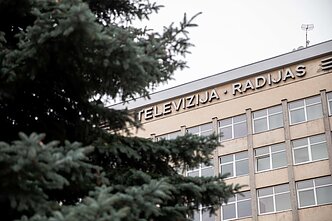












Lithuanian President Gitanas Nausėda said Monday that the ruling coalition has pledged not to rush amendments to the law governing the dismissal of the LRT director general, while the opposition has promised to refrain from filibustering.
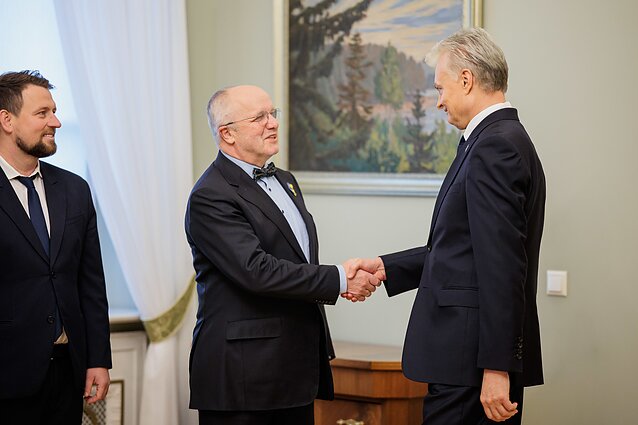
“I think we have found a way forward. First, we must acknowledge in good faith that such serious legal changes cannot be made under an expedited procedure. Rushing means one thing only – unwillingness to hear alternative opinions, to consider expert findings and recommendations, and pushing changes through like a bulldozer,” Nausėda said after meeting with leaders of parliamentary factions.
He added: “On the one hand, from the ruling side there will be no ‘bulldozer’; on the other hand, from the opposition, we heard the promise that there will be no filibustering.”
When asked about the idea of depoliticising the LRT Council – where currently eight out of 12 member are appointed by politicians – Nausėda said the issue could be considered. “This is not a question that cannot be discussed or is taboo. Not at all. I think it can also be included in the discussion, either at this stage or at a later stage,” he said. He emphasised that the members he and the parliament appoint to the council are “independent as individuals”.
Four members of the LRT Council – which supervises the national public broadcaster and appoints its director general – are delegated by the president, four by the parliament (two by the governing parties and two by the opposition), and four by civil society organisations.

“They do not run around asking the person or institution that delegated them how they should act in a given situation. If you appeal to me, I have never issued such discussions, requests, or statements about what someone must do,” Nausėda said.
New bill by February
Seimas Speaker Juozas Olekas says that the governing parties will draft a new bill on amending the LRT Law by by February.
“We agreed that there is no longer any urgency. [...] We have until around February, when we can continue discussions: the ruling party, the opposition, and experts,” Olekas said at a press conference after meeting with the president.
“Today, I will meet with representatives of some of the protesters,” he said.
According to the politician, the new version would “improve the current proposals”.
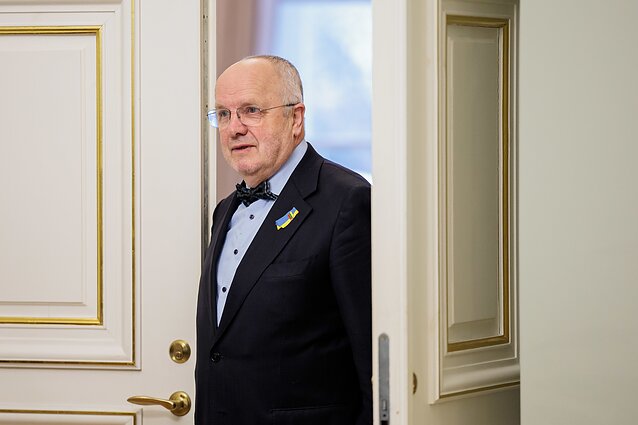
The ruling coalition had planned last Thursday to pass amendments allowing the LRT director general to be dismissed if seven of the 12 council members vote in favour by secret ballot.
However, the process stalled after the chairman of the Culture Committee, Kęstutis Vilkauskas, fell ill, blocking the bill in committee and forcing the cancellation of a scheduled extraordinary parliamentary session.
On Friday, the ruling coalition announced that consideration of the amendments would be postponed until next year. Experts and public representatives are expected to be involved in the discussion.
To reduce tensions between the bill’s initiators and protesters, Nausėda and Prime Minister Inga Ruginienė have called for the LRT Council to resign, which would also lead to the resignation of the director general and her deputy.
Both LRT and the Association of Professional Journalists have warned that rushed proposals introduced without broad consultation threaten the independence of the public broadcaster and media freedom.
Protests outside parliament last week and this week drew more than 10,000 participants each, citing concerns over threats to freedom of expression.
Further reading

Newsletter
Every Friday morning.