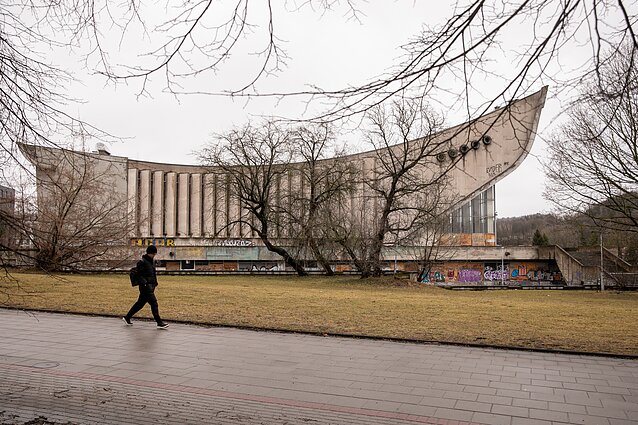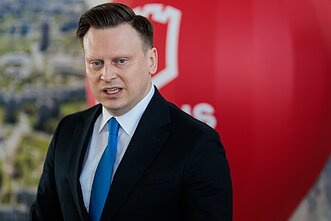









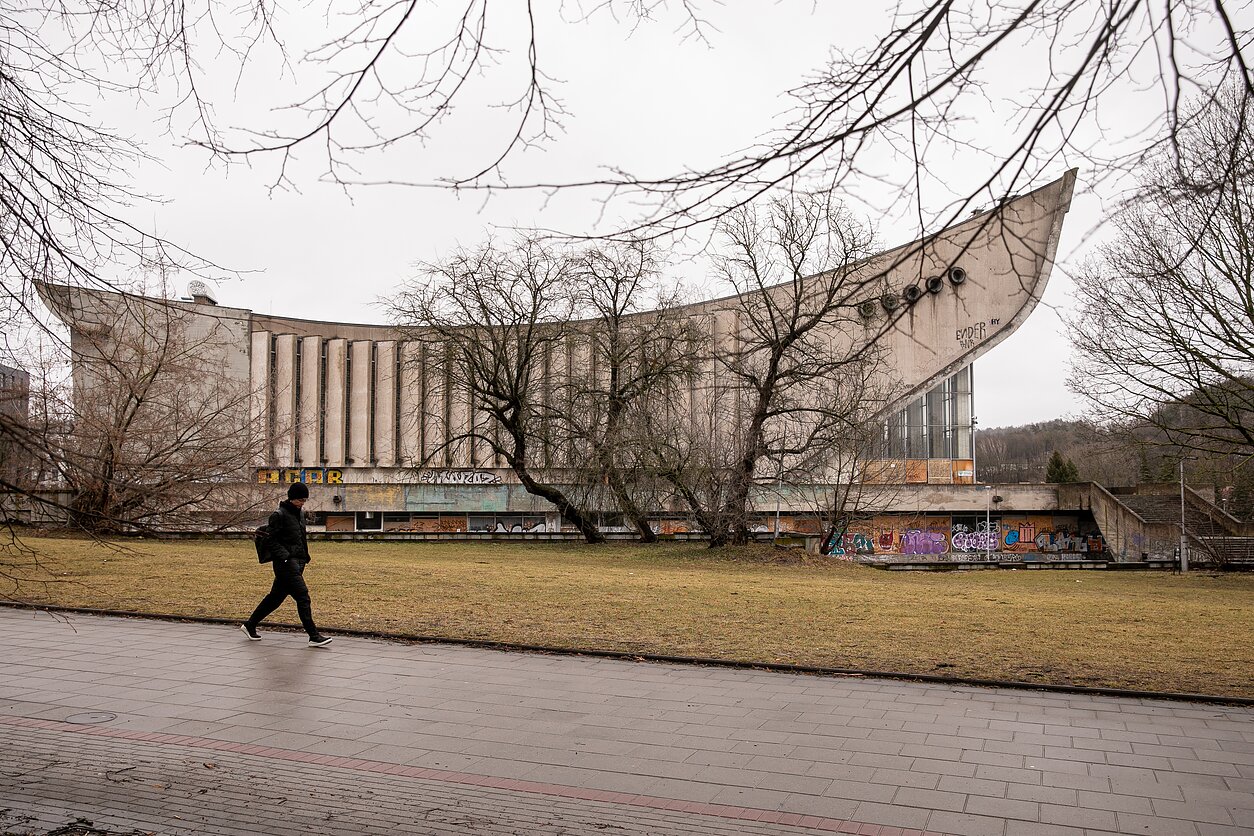
Vilnius Mayor Valdas Benkunskas believes that transforming the long-abandoned Sports Palace into a museum dedicated to Lithuania’s “historical tragedies” is the only viable path for reviving the edifice that stands on the site of an old Jewish cemetery.
Benkunskas told BNS Wednesday that the city should launch an international competition to determine how the 1970s building could be repurposed, with global experts proposing a full concept. “The main idea is that it would truly serve a museum function that gives meaning to parts of our nation’s history,” he said.
The mayor discussed the issue with members of the Seimas Culture Committee during an off-site meeting.
The future of the 1971 Concert and Sports Palace has been debated for years. In 2022, the previous government proposed converting the deteriorating complex into a museum or memorial dedicated to Lithuanian Jewish history. An earlier government led by the Farmers and Greens Union had planned to turn the site into a convention centre, but that project never began.

Last summer, then–Prime Minister Gintautas Paluckas announced that the building would instead be converted into a centre for conferences, cultural events and congresses, along with improvements to the surrounding territory of the old Šnipiškės Jewish cemetery and a memorial to the events of January 13, 1991.
After a change of government, new Prime Minister Inga Ruginienė said in early November that she favoured transferring the property to the Vilnius municipality.
Benkunskas told lawmakers Wednesday that the city has “little desire” to take over the building but acknowledged that doing so “would help move the situation from a dead point”.
“This would certainly not be a sweet treat handed to us that we eagerly accept,” he said. “But if it were transferred, we would not refuse.”

Plans to redevelop the building have faced opposition from some Jewish groups, who object to construction on the site of a historic Jewish cemetery that operated from the 16th century. Benkunskas said Jewish organisations would support transferring the property to the municipality, noting their disappointment with earlier proposals to revive the convention centre idea.
“We received reactions from both Lithuanian and international Jewish communities that they were disappointed and did not support that solution,” he said. “Later, we heard that if the building were transferred to the city and the city continued the work already done by the working group, they would support this approach and its continuity.”
The mayor said no further discussions with the prime minister on the issue have been scheduled.

Culture Committee chair Kęstutis Vilkauskas urged caution, saying the government should not rush a decision. “Given the geopolitical situation, it is important to evaluate not only domestic issues but how they look externally,” he said.
But committee member Vytautas Juozapaitis, a conservative, argued that the process has already dragged on too long. “We’ve been doing our homework for 10 years,” he said. “These questions are too complex and too important to postpone.”
Maintaining the building has cost the state-owned Property Bank €780,000 over the past four years.
The Sports Palace hosted the founding congress of the Lithuanian Reform Movement, Sąjūdis, in October 1988. In January 1991, it was the site where Lithuanians paid their final respects to the people killed during the Soviet crackdown on the country’s push for independence.

Newsletter
Every Friday morning.