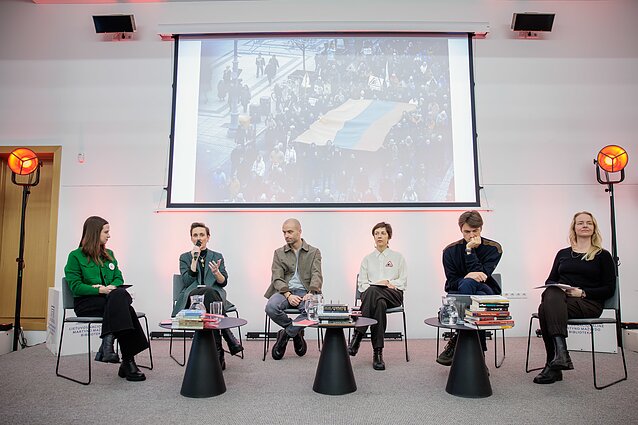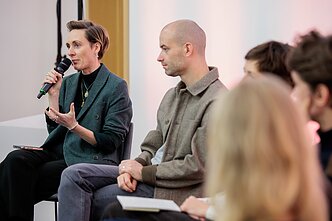
















Following last Friday’s cultural protest, which drew thousands, members of the Culture Assembly’s initiative group announced at a Monday press conference that no further protests are planned for now, and that December will be designated as a month of education and self-development.
“December, starting today, has been designated as an education month,” Karolis Kaupinis, a member of the Assembly, told reporters.
“The Assembly has already published a self-education reading list compiled by Lithuanian writers, and we will also publish a list of political self-education readings compiled by philosophers,” he said.
Kaupinis said the initiative is focused on “political education and maintaining vigilance over the actions of the politicians of Nemunas Dawn.”

The Assembly sees education as essential because it views Nemunas Dawn’s entry into the Culture Ministry as symptomatic of a neglected political field in Lithuania, where many citizens perceive politics as dry and avoid it altogether.
“This month, the Assembly will strongly promote education and self-education. One of the main events will be an international forum in Vilnius,” he added.
A two-day forum will bring together journalists, activists, artists and cultural figures to explore ways of using cultural resistance to help build more resilient democracies.
The forum, scheduled for December 5–6, is intended to bring together journalists, activists, artists and cultural figures to explore ways of using cultural resistance to help build more resilient democracies. It will also show that Lithuania’s political challenges are not unique in Eastern Europe and that similar developments are occurring in neighbouring countries.
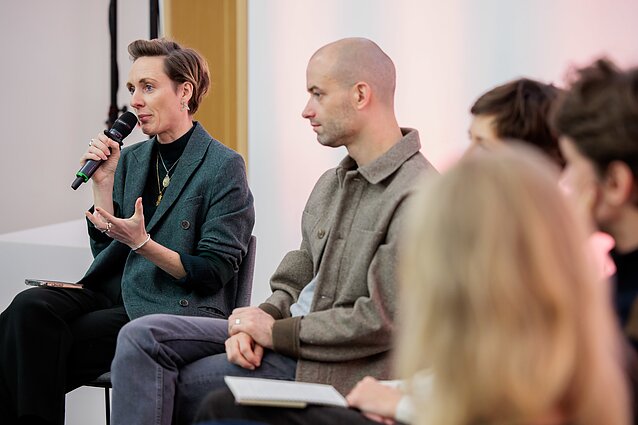
“We called this forum Jump Out of the Boiling Pot because the democratic problems we face here are even more advanced elsewhere, and some countries are following in our footsteps,” Kaupinis said.
The Assembly is also expanding into regional areas by establishing local assemblies to encourage political discussion and civic engagement.
“[These assemblies] should create opportunities for political discussion on key issues. We want to encourage people not only to debate but also to take responsibility and consider running for local government,” he said.
Gintarė Masteikaitė, a member of the Assembly’s initiative group, echoed this view, stressing that civic engagement is the only way to change the situation.
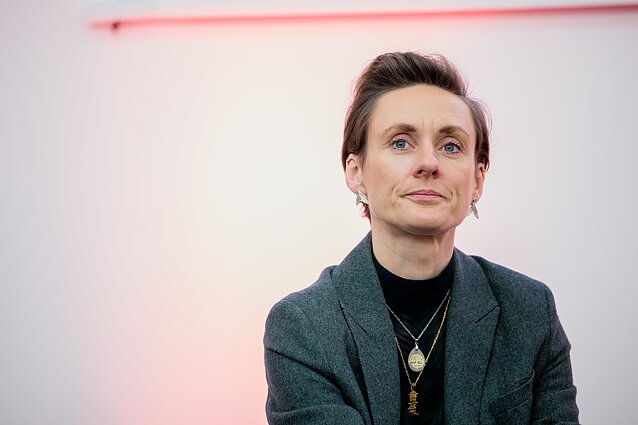
“We encourage people to join existing political parties,” she said, adding that the Culture Ministry “should also take strict steps to stop this propaganda machine.”
Kaupinis highlighted that Culture Minister Vaida Aleknavičienė has engaged with the issue, attending the November 21 rally, unlike President Gitanas Nausėda, Prime Minister Inga Ruginienė, or the leaders of the ruling parties.
“It seems to me that the president has been somewhat behind the political reality in Lithuania over the past two months,” Kaupinis said.
Assembly members said they do not currently plan to form their own political party, instead urging people to join existing ones.
“At this moment, I am not joining a party. I do not know where life will take me. But right now, working in culture, being active in public life, and leading civic movements is already a very big responsibility, and we want to do it as well as possible,” Masteikaitė told reporters.
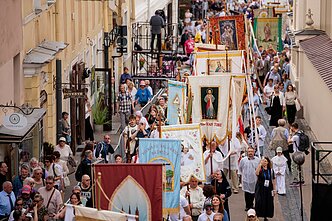
Two months after uniting to prevent Nemunas Dawn from taking leadership of the Culture Ministry, the cultural community held a rally last Friday to voice concern over the country’s broader future, concluding a month of protests that began in late October.

Newsletter
Every Friday morning.