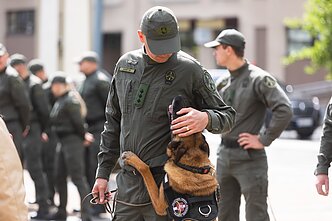













Unions representing police officers, border guards, firefighters, and other uniformed personnel are calling on the government to honour its earlier pledge to raise salaries, warning they will join a protest planned by the cultural sector at the end of November if no action is taken.
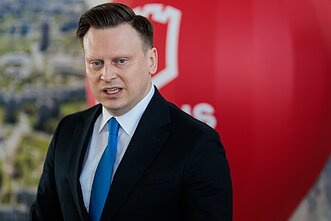
Union leaders say next year’s state budget falls short by at least 150 million euros to cover wages and essential work equipment. Interior Minister Vladislav Kondratovič said that although pay increases were planned, rising national defence and other state priorities have outweighed the allocation for law enforcement.
Newly hired firefighters face life-threatening challenges on the job yet earn little more than the country’s minimum wage, according to the unions.
“The latest figures show a starting firefighter earns around 840 euros,” said Loreta Soščekienė, head of the Lithuanian Law Enforcement Officers’ Federation. “They work 24-hour shifts, respond to fires and car crashes. How can they survive without taking a second job? They don’t do it for fun, they do it to feed their families.”

The unions estimate that about 80 percent of firefighters hold second jobs, often working as drivers or security guards to make ends meet. Similar trends are seen among police officers and border guards.
The staffing shortage has become critical: Lithuania currently lacks about 1,500 police officers, 1,000 firefighters, and more than 300 border guards.
“We’re hiring just about anyone at this point because there aren’t enough qualified candidates,” said Rimantas Liepa, a representative of the Border Guard Union. “I remember when five people competed for one post. Now, we can’t find even one for five vacancies. The quality of work suffers – and if we’re talking about defending the state, it’s a tragedy. There’s a lack of weapons and proper equipment.”
Ineta Kursevičienė, chair of the Association of Officers’ Trade Unions, said the number of police patrols responding to incidents has dropped from about 580 to 480 in the past four years.
“If that’s not a clear indicator, then here’s another: we’re short 1,500 officers, the very people who come when you need help,” she said.
Customs officers are reportedly in the worst position, with the lowest pay in the sector and one-third of posts unfilled. “The customs service is being held up by older officers just waiting to finish their service,” said Leokadija Daujotaitė, head of the Customs Workers’ Union.
Unions recalled that the previous government, led by Gintautas Paluckas, had proposed a phased salary increase for law enforcement. However, the current administration has limited its plan to providing a 300-euro monthly bonus for officers with more than 25 years of service.
“When the minimum wage goes up, officers’ salaries increase by maybe five euros,” Soščekienė said. “No additional funding was allocated for wages, and funds for equipment and services were even cut. Officers will keep driving old vehicles and using outdated gear.”

Minister Kondratovič acknowledged the concerns. “It’s true these salaries are not enough to motivate officers,” he said. “But you can’t solve a problem this big in one move. The 19th government had planned a 7-percent raise next year, but the situation changed – we had to prioritize defense and other needs.”
Union leaders said they are not backing down and plan to join the cultural sector’s upcoming protest.
“We’re preparing a major action,” Kursevičienė said. “Officers may come with resignation letters in hand – to be released with dignity, to retire, or to seek jobs where they’ll be respected and properly valued.”
The unions stress that internal security is inseparable from national defence and warn that, at the current pace, “there soon will be no one left to ensure public safety”.
They are demanding that officers’ pay be raised to at least the national average wage, just over 1,300 euros net per month.

Newsletter
Every Friday morning.