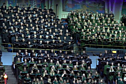
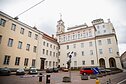
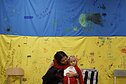





“I used to joke with my mother that perhaps some good surgeon would learn by practising on our bodies,” says Valerijus, who came to say farewell to his late mother. Both of them have decided to donate their bodies to science after death. On Wednesday, Vilnius University’s Faculty of Medicine held Lithuania’s first-ever burial ceremony honouring donors who had given their bodies for medical education and research.
The ceremony began at Vilnius University’s Faculty of Medicine, where relatives were able to pay their last respects. Later, the remains of 27 donors were interred at Antakalnis Cemetery, blessed by the university’s chaplain, Father Aldonas Gudaitis.

‘Mum, I’m with you’
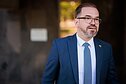
Valerijus says he is saying goodbye to his mother Olga, who died two years ago of a heart attack. When she decided to become a donor, he chose to follow her example.
“My father died of cancer, and it was just my mother and me after that. She had many health problems and asked her doctor how she could donate her body to medicine. Then she suggested I do the same. I told her: ‘Mum, I’m with you.’ And we made that decision together,” he recalls.
He says both he and his mother were at peace with their choice.
“We would even laugh that maybe some good surgeon would train on us. When she passed away, I said goodbye in the Christian tradition. Later, as agreed, I gave her body to the university.and waited for the year specified in the contract to pass. I don’t mind donating my body either. The most important thing is that she and I will be buried side by side,” says Valerijus.

‘A way to express gratitude’
Students attending the ceremony told LRT.lt that it was a meaningful way to express gratitude to those who had chosen to contribute to science.
“As a student, I’m glad that this process is being honoured properly. This is the first such ceremony, and I think it’s an excellent beginning, it might even encourage more people to consider body donation in the future,” said Juozapas, a fourth-year medical student.
Another student, Mindaugas, added: “We work with the bodies for a long time, and we wanted to show that donation is important, not just to us as students, but to the entire university. The donors’ contribution doesn’t go unnoticed. We see them, we’re grateful to them, and we want to show that.”
He emphasised that learning from real human bodies is irreplaceable.
“No simulation or computer model can match it. Donated bodies show us the complexity of the human organism in a way no textbook can. Without this experience, we wouldn’t feel as confident stepping into operating theatres or attending practical seminars. It’s the foundation of medical education, and of becoming a doctor.”
Growing number of donors
According to students, the youngest donor was just 19 years old. Vilnius University has received around 500 applications from people wishing to donate their bodies, with about 35 new pledges made each year.
Last year saw a record 70.
Professor Janina Tutkuvienė, head of the Department of Anatomy, Histology and Anthropology, said the number of donors has grown significantly in recent years.
“Over the past two or three years, we’ve received between 30 and 60 declarations annually. Of course, we actually receive fewer bodies, usually between six and eleven a year. The average age of donors is around 65, which is relatively young compared with the past,” she said.
She added that the 27 donors buried on Wednesday had expressed a wish to be laid to rest in the university’s designated plot.
“Some families choose to bury their loved ones privately, according to their wishes. Today, we are honouring those who wanted to be buried by the university. The process of securing a burial site took time, but eventually the city allocated a beautiful plot in Antakalnis Cemetery. These people deserve the highest level of respect,” said Professor Tutkuvienė.

‘An invaluable gift’
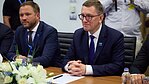
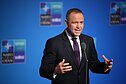
Professor Dalius Jatužis, Dean of the Faculty of Medicine, called body donation “an invaluable gift”.
“It’s a gesture of immense generosity, one that allows future doctors to learn and grow. Our ‘silent teachers’ offer perhaps the truest form of immortality, their contribution lives on through the students they educate.
Of course, today’s students have access to books, models, and computer simulations. But touching a real human body, understanding its structure – that’s an irreplaceable stage of learning and also a lesson in humanity. It teaches respect, dignity, and empathy,” he said.
Asked whether such ceremonies will continue, the dean confirmed that they will.
“The burial ground is large enough for future ceremonies, and we intend to hold similar events periodically to honour those who donate their bodies to medical science,” he added.
How to become a donor
Those wishing to become donors can contact the Faculty of Medicine at Vilnius University.
“There is a dedicated staff member who can guide anyone through the legal process. If someone decides to donate their body, they simply need to contact the faculty and they’ll be given all the necessary information,” said Professor Jatužis.

Newsletter
Every Friday morning.