












Over the past five years, apartment values in Lithuania have roughly doubled, while other types of buildings have increased by 60% to 100%, the State Enterprise Centre of Registers (RC) reported Wednesday.
The nationwide real estate valuation found the highest growth – about 120% since 2021 – in Palanga, Kaunas, and Birštonas. The lowest increases, around 40% to 50%, were recorded in Kalvarija, Kelmė, Jurbarkas, Pakruojis, Joniškis, Skuodas districts, and Pagėgiai.
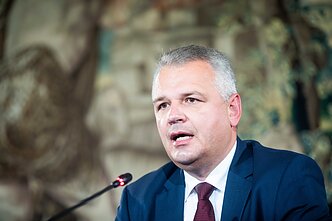
Finance Minister Kristupas Vaitiekūnas, commenting on the new tax values, said they are largely in line with expectations. “They are similar to what we anticipated. Everything is proceeding as planned,” he told reporters at the government headquarters.
He added that property tax collection from households is expected to decline next year, but combined with business taxes, total revenue may rise.
Kazys Maksvytis, director of the RC’s registry management division, said residents can check the new taxable values for apartments, residential houses, and other buildings online ahead of their official implementation on January 1, 2026.

“The increase in taxable values is directly related to rising real estate prices in Lithuania, driven in recent years by growing demand, higher household incomes, favourable loan conditions, inflation, rising construction costs, and other factors,” Maksvytis said. “As a result, the largest increases have been recorded in major cities, while growth in regional areas has been more moderate.”
Current property values will remain relevant for residents when filing property declarations for 2025, while the updated values will be used for future property tax calculations.
According to RC, residential property values increased most in Neringa, Kaunas, Klaipėda district, and Birštonas, and least in Kalvarija, Jurbarkas, Kelmė, Šakiai, Vilkaviškis, and Joniškis districts.
Taxable values for other property types grew significantly over five years: administrative and healthcare buildings rose 87%, garages 90%, cultural and educational buildings 79%, recreational and sports facilities 104%, garden buildings 62%, and commercial and special service buildings 70%.
The RC assessed 6.3 million real estate objects, with an average total value of €196 billion. Of that, €147 billion comes from 3.7 million buildings – a 90% increase since January 1, 2021.
Under new legislation passed by the Seimas, taxable values for buildings will now be updated every three years instead of every five.

Newsletter
Every Friday morning.