














Lithuania’s cultural sector has revolted in opposition to the transfer of the Culture Ministry to the Nemunas Dawn party and the appointment of Ignotas Adomavičius as culture minister, citing his lack of experience in the field. Feeling disregarded by President Gitanas Nausėda, who confirmed the nomination, several cultural institutions have either suspended cooperation with the presidential office or saw key members resign in protest.
Responding to the revolt, Prime Minister Inga Ruginienė’s adviser Ignas Dobrovolskas said on Friday that “joint work and compromise” were needed to ease tensions, pledging the government would give special attention to the sector.
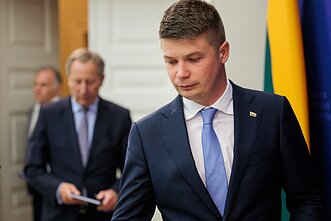
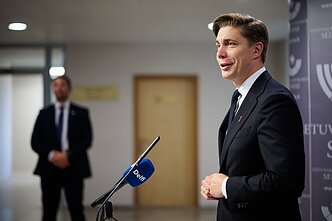
Newly appointed Culture Minister Ignotas Adomavičius also sought to reassure cultural workers, writing on Facebook that he would “do everything possible to ensure past mistakes are not repeated”.
Meanwhile, Remigijus Žemaitaitis, leader of Nemunas Dawn, dismissed the wave of resignations and criticism, telling BNS: “If they resign, I can’t change that. If someone decides to step down, I can’t keep them tied in place.”
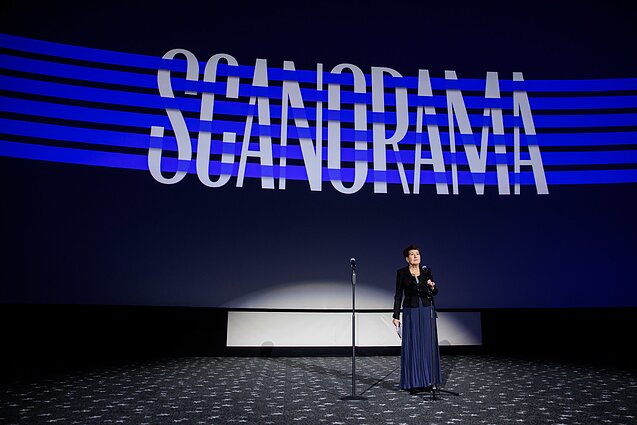
Scanorama
On Thursday afternoon, the European film festival Scanorama announced it would reject the president’s patronage, citing the decision as a matter of principle.
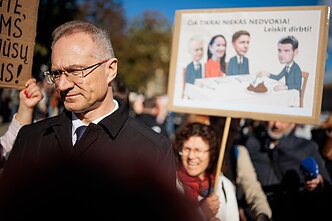
The announcement came against a backdrop of mass demonstrations in cities across Lithuania, where protesters demanded that the ministry be led by a qualified professional capable of genuinely representing their interests.
Earlier in the week, the cultural community had also launched a petition opposing the transfer of the Culture Ministry to the Nemunas Dawn party and Adomavičius’ nomination. It quickly gathered more than 51,000 signatures.
Scanorama’s organisers argued that the protests showed how the voices of cultural professionals had been ignored.
In response, President Nausėda’s adviser, Saulius Olencevičius, urged the cultural community not to make hasty decisions.
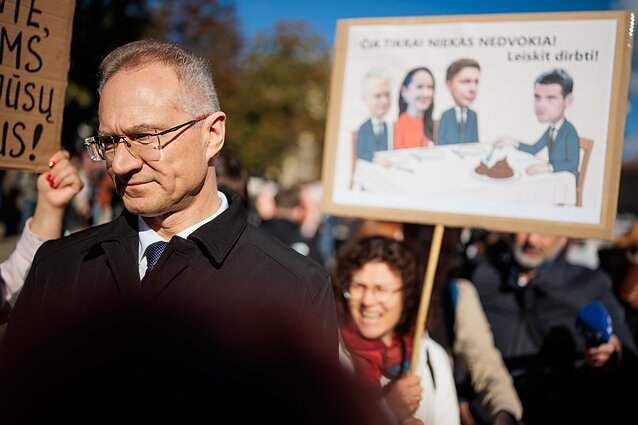
He stressed that the appointment of ministers does not fall under the president’s discretion. “The president, under the Constitution, approves the submitted list. He even asked the prime minister if there was an alternative name. He was told there wasn’t at this moment,” he said. “The president’s role has ended. He did what he could by signing the decree. But the work does not stop here.”
His words, however, did little to stem the wave of protest.
Kosmos Theatre
Several institutions announced they would suspend cooperation with the presidential office. Among them was Kosmos Theatre, which said on Thursday it was halting collaboration with the President’s Chancellery.
“We believe in a Lithuania where culture and cultural professionals are respected, their opinions taken into account, and where cultural policy is led by a competent figure,” reads the post from Kosmos Theatre. “We believe in a President of Lithuania who still has the power to prevent this.”

Vilnius Book Fair
By Friday, the backlash had intensified. The Vilnius Book Fair said President Gitanas Nausėda, Prime Minister Inga Ruginienė and the newly appointed minister would not be welcome at next year’s event.
The Lithuanian Literary Translators’ Union
The Lithuanian Literary Translators’ Union also announced it would no longer award the Saint Jerome Prizes through the Culture Ministry, with chair Daiva Daugirdienė telling LRT.lt: “We do not want to be associated with Nemunas Dawn, which to us feels like dusk.”

Literature Council at the Culture Ministry
That same day, nine key Literature Council members at the Culture Ministry resigned en masse.
One of the resignees, Chair Dr Aistė Kučinskienė said on Facebook: “The cultural community exists. We feel unheard, deceived, and humiliated. Therefore, we do not wish to cooperate with the new leadership of the Ministry of Culture.”
Other resignations
The wave of resignations extended beyond the Literature Council. Andrius Ropolas stepped down from the Architecture Art Council, Robertas Švelnikas resigned as chair of the Movable Cultural Property Certification Commission, and Žygimantas Jančoras left his post on the Cinema Council.

MO museum
Visible symbols of resistance also appeared across the capital. The MO Museum placed protest imagery in its windows, with representatives saying the institution stood with the cultural community in rejecting the ministry’s transfer to Nemunas Dawn.
Further reading

Newsletter
Every Friday morning.