












While much of Europe’s attention has been on Ukraine’s heroic fight against the Russian invasion, another European country is waging its own battle against the Kremlin’s aggression – a fight for democracy and for a European future: Moldova.
Moldova is defending itself and the EU’s borders against a different kind of attack. If Russia’s war on Ukraine is more conventional, its assault on Moldova is hybrid – waged through disinformation, corruption, and subversion. Ahead of Moldova’s parliamentary elections scheduled for 28 September, these hybrid attacks have reached unprecedented levels.
Only a pro-European government can lead Moldova into the EU, and that is exactly what is at stake for Russia.
Recent espionage cases in the Czech Republic and Romania linked to Belarus – Moscow’s satellite – reveal the Kremlin’s playbook. Since the start of the invasion in 2022, Russia has used Belarus to target Europe and Ukraine. The Kremlin wants to use Moldova in the same way.

Although small, Moldova occupies a strategic position, bordering the EU Member State Romania and war-torn Ukraine.
A former Soviet republic, with deep historical, cultural, and linguistic ties to Romania, Moldova has faced Russian interference since its independence in 1991.
Since Moldova obtained EU candidate status in 2022, Moscow has intensified its destabilisation efforts, and its hybrid aggression has taken many forms. These include energy blackmail – cutting off gas supplies to trigger an energy crisis and force concessions – EU support was crucial to overcoming this pressure.
They also include illegal financing of pro-Russian politicians, notably through fugitive oligarch Ilan Shor’s network, which funnels money and bribes voters.
Disinformation campaigns have become increasingly sophisticated, using artificial intelligence to target Moldovans both at home and abroad, while the Ukrainian refugee crisis triggered by the Russian invasion has also put significant pressure on Moldova’s borders and internal affairs.
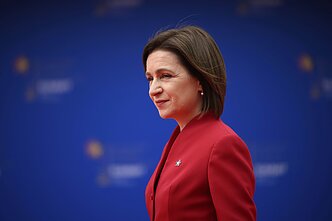
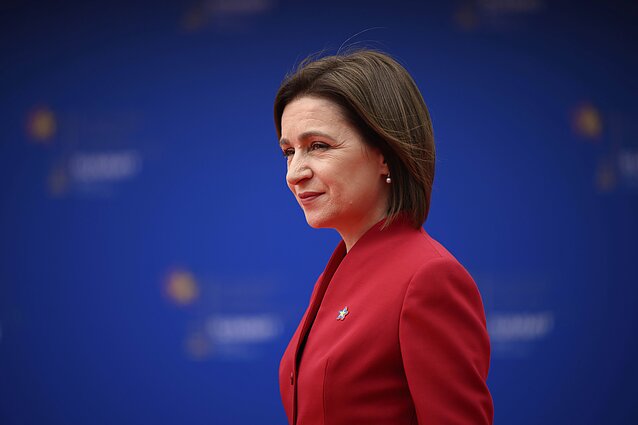
Unlike in Belarus, however, Russia’s attempts have so far been pushed back – thanks to President Maia Sandu’s pro-European leadership and the Moldovan people, who voted for a European future despite Kremlin meddling.
Against all these threats and challenges, Moldova has guaranteed the stability of the EU’s eastern border. Russia has so far failed to turn Moldova into another Kremlin-controlled satellite on the EU’s frontier, and to orchestrate a migration crisis like the one on the Polish-Belarusian border.
Moldova needs Europe. But Europe also needs Moldova
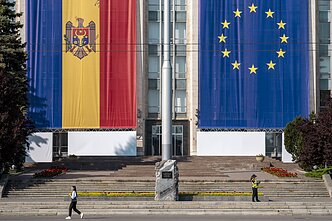
Moldova deserves our appreciation. Despite unprecedented pressure, it has stayed the course toward European integration. Since 2022, Moldova has secured EU candidate status, opened accession negotiations, and made real progress in state modernisation, anti-corruption efforts, judicial reform, and improving living standards.
Recognising Moldova’s strategic importance, the EU has provided €1.9 billion in support, liberalised trade, and integrated Moldova into additional European programmes and initiatives.
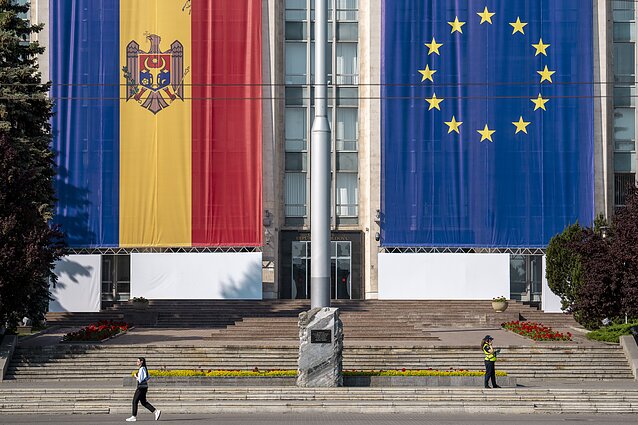
With this support, Moldova – the David in this story – is fighting a vastly disproportionate battle against the Goliath that is Russia. It is a fight for democracy, independence, and a European future. Moldova is holding the line – but will only win if Europe continues to back it. EU membership remains Moldova’s only long-term security guarantee.
Moldova needs Europe. But Europe also needs Moldova. Without an independent, European Moldova, the EU’s borders cannot be fully secure.
This is the context in which Moldova very soon will hold parliamentary elections. In the run-up to the elections, Russian interference has reached alarming levels. Only a pro-European government can lead Moldova into the EU, and that is exactly what is at stake for Russia: to influence the elections and block a new victory for the pro-European forces in Chișinău.
In the 2024 presidential election, when pro-European Maia Sandu was re-elected, around 300,000 voters – nearly 20% of the electorate – were targeted by Russian manipulation or bribery. Moscow lost then. Sandu won. Moldovans also voted in favour of EU accession in a simultaneous referendum – two pro-European victories despite unprecedented interference.
This year, the stakes are even higher. Russia’s resources for interference are expected to surpass those of 2024. Intelligence reports suggest that €200 million has been mobilised to influence the vote – more than 1% of Moldova’s GDP. For comparison, imagine €43 billion being spent to influence elections in Germany.
Every vote will count to ensure Moldovans – not the Kremlin – decide Moldova’s future.
Moldova’s diaspora – the key to victory
Moldova’s diaspora – in Spain, Germany, Italy, and beyond – was decisive in Sandu’s 2024 victory. It could be decisive again in maintaining a pro-European parliamentary majority after elections.
Our call, therefore, is to all Moldovans, at home and abroad: vote. Moldova’s struggle is not just its own – it is a fight for all who believe in a safe, democratic, and prosperous Europe.
Europe will only be secure when Russia loses the war it has unleashed against Ukraine, against Moldova, and against the entire democratic Europe.
Rasa Juknevičienė is a Lithuanian member of the European Parliament. She sits with the European People’s Party group.

Newsletter
Every Friday morning.