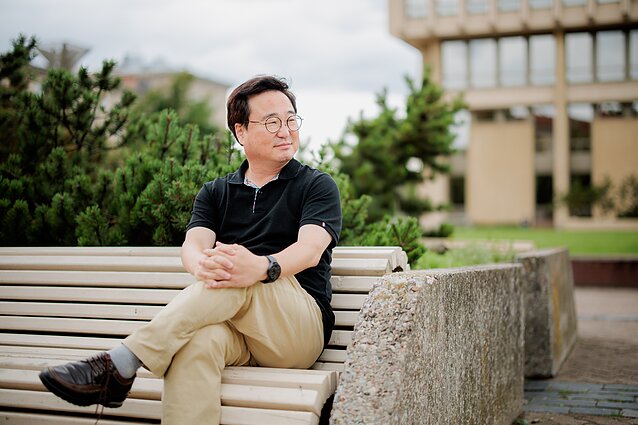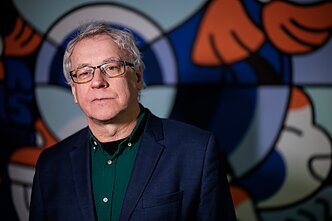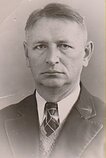











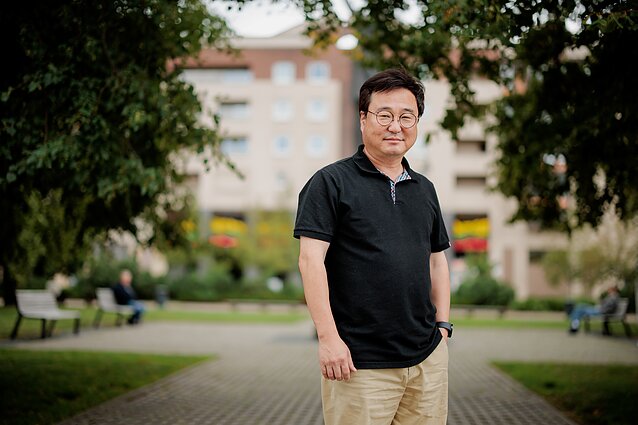
South Korean scholar Jinseok Seo is a seasoned expert in Baltic languages and culture. He is currently translating The Forest of the Gods, the memoir by Lithuanian poet and writer Balys Sruoga. This year marks the 80th anniversary of the book’s completion. Speaking in fluent Lithuanian, Seo explained what led him to this language and literature.
– How did you first discover Lithuania, and what do you find most compelling about its culture?
– Although there were no political activists in my family, from my teenage years I was fascinated by communist states and the workings of socialist systems in Europe. That curiosity led me, after finishing school, to enrol in the Polish Department at the South Korean University of Foreign Studies, where I studied the language and the country’s history.
When Lithuania regained its independence in 1991, the programme introduced lectures on the country. I was immediately captivated – here was a nation I had never heard of before, yet one that shared many historical parallels with Poland. I felt compelled to visit, so I signed up for Lithuanian language courses at Vilnius University.
Soon afterwards I enrolled in the Baltic Studies Department at the University of Warsaw, which offered extensive material on Lithuanian history and literature. Our literature courses were taught by Professor Małgorzata Zdzisława Kasner, who had previously headed the Polish Institute in Vilnius. We were given plenty of assignments, reading and discussing a wide range of short stories. I enjoyed the course immensely, and from it grew my dream of building a future connected with the Lithuanian language.
In Warsaw I had the option to specialise either in linguistics or in literature. I chose literature, and defended a dissertation comparing Lithuanian short stories with Korean ones.
– Did you find parallels?
– In the works of both cultures, I would highlight a shared sensibility of sorrow. I don’t mean that the literature is sad, but rather imbued with a certain mournfulness. Lithuania went through a period when it was forbidden to write using Lithuanian letters. Korea experienced a similar period, only later.
Writers from both countries became prominent around the same time. It is remarkable that, in that dark age, culture often developed more rapidly than under conditions of freedom. These shared experiences reflect the reality of the era and its prevailing emotions, when people could not express their thoughts openly or clearly. Instead, they conveyed them discreetly in their stories and songs. That is where I found many parallels.
– Which Lithuanian authors did you discover during your studies?
– At Warsaw University’s literature course, I read the works of Žemaitė, Jonas Biliūnas, Vincas Krėvė and Antanas Vienuolis. We held many discussions about them. My first more personal connection and professional interest emerged when I turned to contemporary literature. I became acquainted with the works of Romualdas Granauskas, Kazys Saja and Alvydas Šlepikas. I even translated Šlepikas’ novel My Name is Marytė into Korean.
– Did you learn Lithuanian of your own accord? Was it difficult?
– Yes, I was inspired while studying Polish at university in Korea. Lithuanian is not an easy language, but learning it is not as difficult as people imagine. Its grammar is well-structured and systematic – almost like mathematics. If you understand a formula or rule, you can put words together as you would numbers.
For instance, I also studied Estonian and Finnish, which have virtually no grammar at all. It is difficult to learn, but it has its own internal logic – and that logic helps.
– How many languages do you speak in total?
– I studied Polish in Korea. The Baltic studies programme also included courses in Lithuanian and Latvian. Later, while studying folklore and shamanism in Estonia, I picked up some English and Russian as well.
– Is translation your bread and butter?
– Translation is not my main occupation. I teach Latvian at the Korean University of Foreign Studies, where more than 50 languages are taught. I also head the Centre for Baltic Studies, where we focus on the processes of de-Sovietisation in the Baltic states and on memory politics.
– So translation and interpreting are more of a passion for you?
– I would like to be a professional translator, but there is simply not enough to translate (laughs). Lithuanian literature is still little known. Many writers win prizes in various competitions, yet it remains difficult to convince publishers to commission translations. Recently I read Park Sang-young’s Love in the Big City, which explores the lives of sexual minorities. It was longlisted for the Booker Prize, and it is likely this author may win the award in the near future. I found the book fascinating because it reveals a lesser-known side of Korean society. By contrast, Lithuanian literature is far too little known, making it hard to persuade publishers. I have still prepared several proposals, but interest has been limited. Lithuania really should invest more in its talented writers.
– You mentioned translating Alvydas Šlepikas. How did you discover him?
– The writer Hailji, who in 2009 published a book in Korean about the Republic of Užupis, gave me several works by popular authors. Among them was Šlepikas. We prepared proposals for various Korean publishers, but all of them declined. Then, about two years ago, I happened to submit the already completed proposal to a fairly well-known publishing house. After reading just the first page, its editors were convinced they had to publish the book. As the publisher mainly releases titles about children and their experiences during wartime or in exile, Šlepikas’ novel moved them deeply. So the book was published thanks to this coincidence. The Lithuanian Culture Institute also made it possible to invite the author to Korea for the launch, where he spoke about Lithuania and its literature. Everything came together beautifully.
– And Balys Sruoga’s The Forest of the Gods – is the translation your own initiative? I understand you are in residence under a project supported by the Lithuanian Culture Institute and “Vilnius, UNESCO City of Literature”.
– Back when Lithuania still had no embassy in Korea, the then cultural attaché, Tomas Ivanauskas, sent me a stack of books to browse and asked me to select the one most suitable for translation. I prepared several proposals and submitted them to publishers. One leading house – Minumsa, the country’s largest and best-known publisher, which issues both Korean and world literature – runs a popular classics series. They were particularly struck by Sruoga’s work. After studying his life and writing in detail, they asked me to translate The Forest of the Gods.

– What drew you personally to this challenging work, rooted in the author’s experiences in the Nazi Stutthof concentration camp?
– To be honest, at first I found the book strange and difficult to grasp. But on a second reading it became truly fascinating. Without any context, it’s impossible to understand properly.
There are many elements in the book that simply cannot be rendered into Korean – wordplay, idioms, or the specific hierarchy of German soldiers. It was especially difficult to translate terms like klipata, katorgininkas and kalinys. I had to reflect deeply on which words to choose, and even now I am not entirely sure I’ve found the best solutions. There are still sections I haven’t managed to translate fully. I’ll need to consult with professors and discuss the finer points. The work is compelling, but also extremely demanding and complex.
– How do you resolve the dilemma when you come across words that cannot be translated?
– I simply explain them in Korean. Take klipata, for example – it means a very weak, sick prisoner, close to death. If I can’t find an exact equivalent, I explain the meaning within the context of the text.
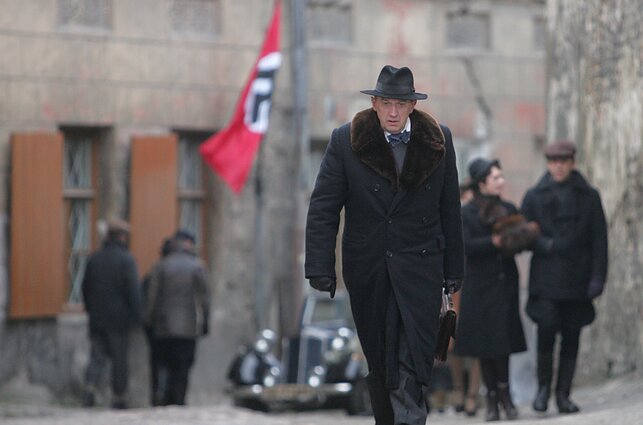
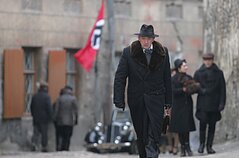
– Have you seen Algimantas Puipa’s film adaptation of The Forest of the Gods?
– Yes, I have. I had expected the film would help me grasp the essence of the book, but in fact the opposite happened. For instance, in the book a Japanese woman is mentioned in just a single sentence, but in the film she is shown living with the prisoners in the camp. Some scenes were created in a very peculiar way.
– How did you come to terms with The Forest of the Gods? What moved you personally in the work?
– I discovered a very striking detail: during the Second World War, the Japanese built brothels for soldiers in South-East Asia and forcibly sent women and girls there to work as prostitutes. As the war drew to a close, they killed them all. Today, Japan does not acknowledge that this ever happened. When I read in The Forest of the Gods that the Germans did the same thing, I was astonished. In Korea, this will be a major revelation. This fact shocked me as well.
– In your view, why is the book relevant in today’s world?
– Sadly, prison camps and forced labourers still exist in North Korea today. Many people there live without freedom. The Forest of the Gods shows what life is like when freedom is taken away; it reminds us of the value and meaning of liberty, something that is often hard to appreciate in ordinary life. The book helps us to understand just how vital freedom truly is.
– Have you ever encountered censorship in your work?
– No, no, no! This isn’t North Korea. There can be no censorship. But while translating My Name is Marytė, there were debates over the title and the rhythm of the text. Its structure was a little like poetry, so I translated it as written, but the publishers didn’t approve, and I didn’t like their revisions. They argued that the content mattered more. They also increased the book’s format so it would stand out in bookshops – smaller editions are less visible, so they don’t sell. That isn’t censorship, but there were plenty of discussions, and in the end, I gave way to the publisher.
– And will The Forest of the Gods be published in a larger format too?
– No. The publisher’s philosophy is that books in its classics series must fit in the pocket, so they can be carried and read anywhere.
– When will the translation appear in Korea?
– I had planned to finish it during my residency in Lithuania, but I now see I’ll need to continue working through the autumn. I’ll then submit the manuscript to the publisher. After that, it will take a few months for editing, layout and checks. If all goes well, the book will be published in the spring. I’ll do my best to ensure it is released by then.
– Do you plan to translate any other Lithuanian books?
– If I receive an offer – gladly. Next week I plan to visit bookshops and see which authors are popular in Lithuania today. I once tried to prepare a project for Vilnius Poker, but that turned out to be even more difficult than The Forest of the Gods. If needed, I am ready to take on any Lithuanian work.
I once gave a seminar on Lithuanian literature to postgraduate students at a Korean university. They read short stories by various Lithuanian writers that I had translated for my own pleasure, not for publication. We read them together, discussed them, and the students enjoyed them very much. I dream of publishing a collection of Lithuanian short stories one day.

Newsletter
Every Friday morning.