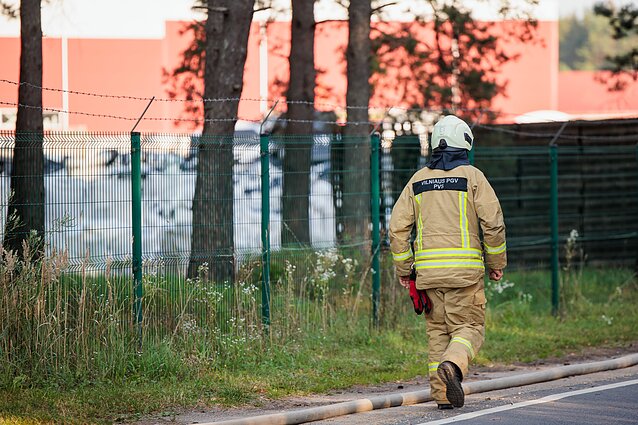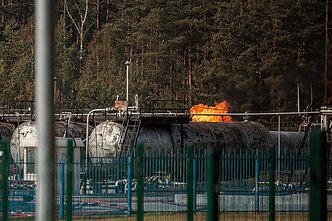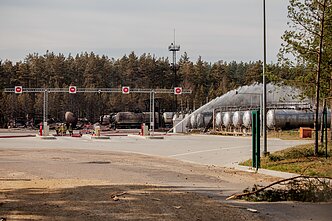











A fire that broke out last week at the Jozita gas depot in Vilnius has been fully extinguished, authorities said, describing the incident as one of the most dangerous industrial blazes in the country’s history.
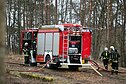
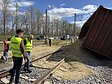
The blaze began when eight train tankers carrying gas caught fire, with four exploding. Flames later spread to a gas distribution station reservoir. Firefighters deployed large numbers of emergency crews, drones and even an armoured vehicle from the police anti-terror unit Aras. Vilnius municipality declared a local emergency, four schools were closed, and seven nearby residents were evacuated, though they returned after the danger zone was reduced from one kilometre to 350 meters.
Officials compared the accident to the most serious industrial disasters in Lithuania: the 1989 Jonava ammonia spill that killed seven and the 2006 Mažeikiai Oil fire that caused more than 380 million litas in damage.
“This is treated as a dangerous industrial accident,” said Donatas Gurevičius, spokesman for the Fire and Rescue Department.
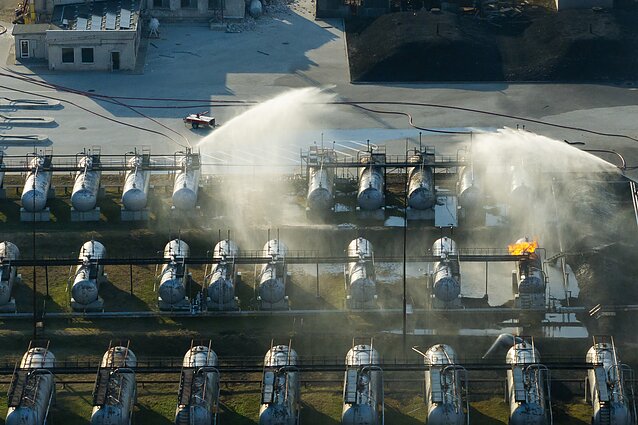
Chemist Rimantas Vaitkus of Vilnius University said that unlike Jonava, where toxic nitrogen dioxide formed, the Vilnius blaze produced mostly carbon dioxide. Still, he warned the flames could have spread to forests nearby.
Residents reported hearing multiple blasts. “It looked like it was within arm’s reach,” said local resident Valdemaras Čatrauskas.
Firefighters contained the blaze by closing valves to cut off escaping gas and cooling reservoirs while waiting for remaining fuel to burn off. On Thursday, tanker fires were extinguished, and by Friday the stationary reservoir blaze was also out.
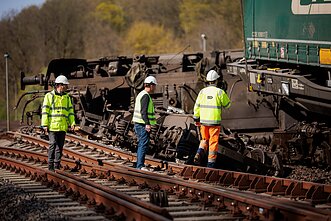
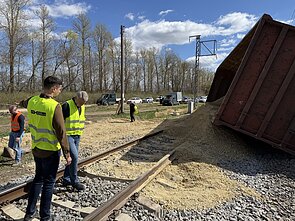
“The scenes are apocalyptic,” Fire and Rescue Department Director Renatas Požėla said. “The blast bent railway tracks, hurled tankers and scattered debris.”
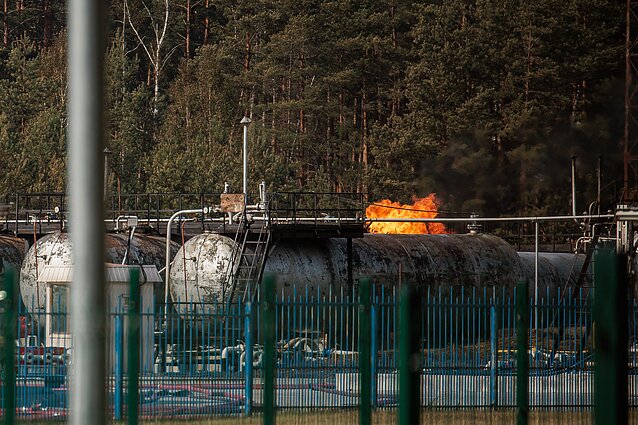
Police said initial findings point to human error, questioning a worker injured in the explosion. Experts said a flame source – possibly a spark or cigarette – was needed to ignite leaking gas.
Retired Col. Vaidotas Malinionis urged investigators not to rule out sabotage, though officials, including Vilnius Mayor Valdas Benkunskas, dismissed speculation linking the fire to military drills conducted by Russia and Belarus.
The National Crisis Management Centre said Russian disinformation networks spread false claims that a drone caused the fire or that Lithuania would accuse Moscow of sabotage.
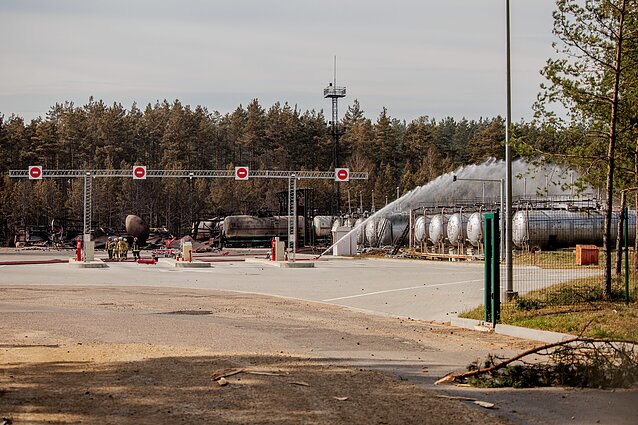
Authorities said there are 47 high-risk industrial sites in Lithuania, 20 of them at the highest danger level. Fire safety lecturer Kęstutis Lukošius of Vilnius Gediminas Technical University said current laws allow companies to invest minimally in fire safety, since regulators apply the same standards to high-risk sites as ordinary factories.
Police Deputy Commissioner General Renaldas Žekonis said there was no indication of arson, and therefore no need to increase security at other industrial facilities.

Newsletter
Every Friday morning.