















Lithuanian authorities on Wednesday deported a Cameroonian man who had lived in the country for nearly four years and started a family, despite protests from rights groups urging officials to halt the expulsion.
The State Border Guard Service confirmed to BNS that the man was escorted by three officers on a flight to Cameroon via Istanbul. His removal was financed with European Union funds.
“This year, there have been about 50 such cases to countries including Azerbaijan, Ivory Coast, India, Iraq, Sri Lanka, Tajikistan and Kyrgyzstan. This is not the first such case of sending to Cameroon,” service spokesman Giedrius Mišutis said.
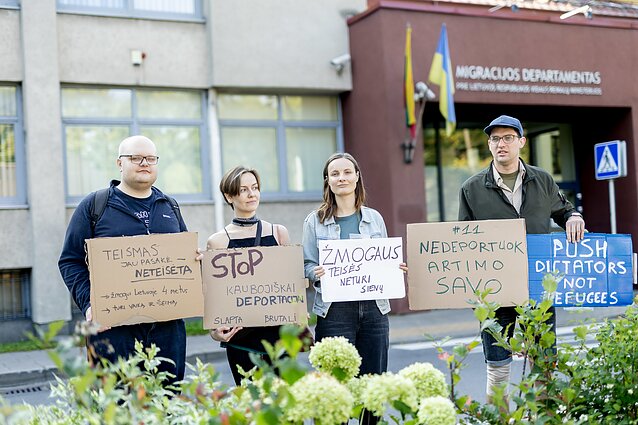
The NGO Sienos Grupė (Border Group) staged a protest outside the Migration Department in Vilnius, holding signs reading “Stop cowboy deportation”, “Human rights have no borders” and “Push dictators not refugees”. The group said the man lived in Lithuania with his Eritrean partner, who has refugee status, and their son, who was also granted refugee protection.
Rights advocates argued the deportation violates the European Convention on Human Rights, which protects the right to family life.
“Separating a child from his father is irreparable harm,” said the group’s lawyer Emilija Švobaitė, who added that the decision ignored a child welfare authority’s opinion that the removal was not in the child’s best interest.

The Migration Department said the man had been staying in Lithuania illegally since 2021, when his asylum request was denied. “He simply refuses to leave,” department spokesman Rokas Pukinskas said, noting that lengthy court proceedings had delayed enforcement of the decision.
Švobaitė said the man faces a three-month entry ban but could later apply for family reunification. However, she warned the procedure could take years, especially since Lithuania has no external service provider handling such applications in Cameroon.
The lawyer accused the Migration Department of abusing the system by repeatedly reissuing nearly identical deportation orders after courts overturned them.
The department rejected that characterisation, saying deportation is used only as a last resort when foreigners refuse to leave voluntarily.
Sienos Grupė said it is supporting at least six similar cases it calls “family preservation cases”.

Newsletter
Every Friday morning.