








Have you ever seen a couple of thousand hedgehogs in one place? Not live ones, but ones crafted from a variety of materials – from paper to stone. Such a collection is exhibited in Kretinga, offering just one example of the unique museums found across Lithuania, capable of surprising even the most experienced travellers. LRT.lt invites you to take a closer look at five of them.
Museum of Eight-Wheeled Vehicle
For many years, the multifaceted Museum of Eight-Wheeled Vehicle has been based in the town of Nemakščiai, Raseiniai district. It features approximately 9,000 exhibits, organised into 25 themes.
The founder, Leonas Tamulevičius, says the main theme is the eight-wheeled vehicle. The world’s first eight-wheeled vehicle chassis was created a little over a century ago, by Lithuanian nobleman Pšemislovas Neveravičius.
“The origin of all eight-wheeled vehicles is right here in Lithuania, in Nemakščiai,” says Tamulevičius. “Therefore, we should be proud, boast about this,” says the founder, who offers visitors eight-wheeled vehicle rides during the warmer months.

Another prominent theme of the museum is the life and work of film director Robertas Verba, also born in Nemakščiai.
“We have all of his films, which we screen, along with a book of memoirs,” states Tamulevičius. “His wife, Laima Pangonytė, along with their daughters, donated his desk, chair, and first cameras to the museum. We also have his watches, ties, jackets, books from his library, awards, and photographs. Verba’s dream was to create a museum so that people could see his work,” Tamulevičius says.

Across the museum’s twelve rooms, visitors can also explore topics such as religion, local history, toys, communication technology, firefighting, carpentry, sewing, and forestry. Yet, the most memorable exhibit for many, Tamulevičius says, is the toilet.
“The toilet is also full of exhibits. It’s a fully working toilet, but the walls are covered in all sorts of trinkets – everything related to beauty and the bathroom, from old chamber pots to hair clippers and razors.”
Outside, in the courtyard, next to the historic eight-wheeled chassis, visitors are greeted by an oak sculpture of the late musicologist Zita Kelmickaitė – a friend of Tamulevičius and a frequent museum visitor.

“When everyone else was making benches, I didn’t want one. I had a tree and decided to commission a sculptor. In the end, a life-sized sculpture of Zita was carved,” he says.
Hedgehog museum
In Kretinga, the small Hedgehog museum has opened its doors in recent years. The founder, Vaidotas Kisielius, says that its prehistory was tragic.
“There was a large dog in the enclosure. One night, about 14 years ago, a hedgehog came by to eat. The dog mortally wounded it... Birutė (Kisielius’ wife) shed many tears, so I bought her an amber hedgehog. Then the children bought one, then others, and so it began. The collection accumulated little by little, and then we realised that it was turning into something interesting, so we began actively looking for more,” Kisielius says.

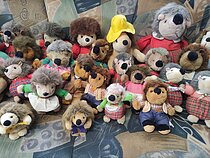
The collection now numbers around 1,700 hedgehogs, made from paper, wood, stone, iron, ceramic, and other materials. Vaidotas Kisielius notes that they are not the only hedgehog collectors in Lithuania.
“We know and keep in touch with them [other collectors],” he says. “But we are probably the only ones who display our collection publicly. There’s nothing to hide – it’s better to share.”
Kisielius observes that finding hedgehogs in Lithuania can be challenging, so they also rely on the internet and antique fairs to expand the collection. Visitors often bring them new exhibits from all over the world.
“Birutė was a teacher. Her pupils have scattered all over the world. One of the most recent examples – someone visited from Honolulu, Hawaii. They said that over five years they had found a single hedgehog – and brought it with them,” the Kisielius says.

“A neighbour who works in Norway brings us 10 to 15 hedgehogs from each trip; we’ve received over 100 from him alone. My sister also brought a very beautiful skydiver-hedgehog from Norway,” he adds.
According to Kisielius, their collection is full of unique, even one-of-a-kind items. For instance, there’s a potato-peeler-hedgehog, a hedgehog picture glued from yarn by an 80-year-old senior at a day centre, and a ceramic hedgehog mug specially ordered by relatives. The collection also includes older pieces, like Soviet-era plastic toys, glass Christmas tree ornaments, as well as Russian and German greeting cards.

“A woman from Šiauliai called recently. She said, ‘I collected stuffed hedgehogs as a child, but I don’t need them anymore. If you’ll take them, I’ll give them to you.’ That’s how we received 35 hedgehogs from Šiauliai,” Kisielius says, sharing his stories. “And in Alytus, a man with the last name Ažukas (a name similar to the word for hedgehog – ežiukas – in Lithuanian) passed away; he had been given hedgehogs because of his name. After his death, we received about 20 beautiful hedgehogs.”
Road museum
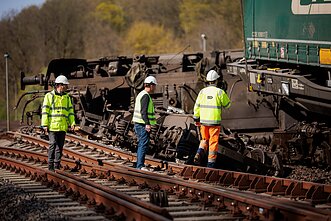
Where roads stretch, progress is born – this is the principle that guides the Museum of Roads in Vievis. The space, which is celebrating its 30th anniversary, invites visitors not only to view more than 8,000 exhibits but also to experience what it means to be a road builder.
Visitors can explore the history of road construction and infrastructure, from ancient paths to modern motorways. The museum houses both historical tools and contemporary technological solutions, from a horse-drawn bitumen boiler made in Germany in the mid-19th century to a modern impact attenuator that has saved countless lives.

“The museum’s exhibitions allow visitors to travel through time – to touch the history of the Žemaičiai Highway construction, feel the engineering spirit of interwar Lithuania, get a close look at the creation of the Vilnius-Kaunas-Klaipėda motorway, or learn about the tools, boots, and even specially adapted carts that road workers once used,” says Rimantas Zagrebajevas, a representative of the Museum of Roads. “Visitors can also see original traditional Lithuanian čempes – a type of sturdy, special footwear for road workers. Also on display is the kalamaška, a pounding machine used in constructing the legendary Žemaičiai Highway.”

According to Zagrebajevas, a large portion of the exhibits came from road workers themselves, who shared their personal stories along with the equipment. The museum also offers a variety of interactive activities, including a road maintenance simulator, a virtual truck driving experience, and games designed to teach about road safety principles.

The museum is currently undergoing an intensive modernisation, creating contemporary indoor and outdoor exhibitions, interactive displays, educational programs, and themed events. The museum’s representatives are ambitious, as they aim to make the Museum of Roads the most advanced museum of its kind in Northern and Eastern Europe.
The Frog House
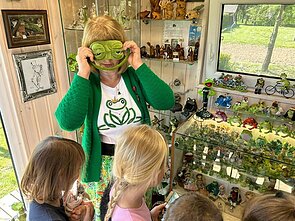
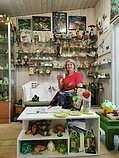
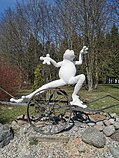
In the Lukšiai village of the Šakiai district, you’ll find The Frog House, a museum established by collector Reda Pečiulienė-Šilingė and her husband, Gintautas. Pečiulienė-Šilingė says that her fascination with frogs has been with her since childhood.
“I grew up on a homestead by a pond full of frogs. I spent my whole childhood with them, and my love for them has never disappeared,” she says. “I’ve been collecting for 19 years now, and The Frog House officially opened to the public in 2018.”
She recalls that it all began with a couple of frog figurines she bought during the Christmas season. “My husband and I went to buy Christmas gifts, and for the first time, I saw frog figurines. I bought the first two that day, but my heart was pounding, and I wanted every single one in the store! I felt like I had to buy them all. Since it was Christmas, I asked Santa Claus for one thing: I wanted frogs, and nothing else. I was also expecting our youngest child at the time. So, when I came back from the hospital with the baby, I found Santa’s gift under the Christmas tree – 50 frogs,” she recalls with a smile.

Since then, her entire family has been incurably ‘infected’ with the frog fever. Frogs now arrive from all over the world, and The Frog House has been recognised as a Lithuanian record holder three times and has even made it into a second-grade textbook.
“I consider that to be the most pleasant achievement. Not the record books, but the fact that the story of The Frog House is in a second-grade school textbook. It truly warms my heart,” says Pečiulienė-Šilingė.

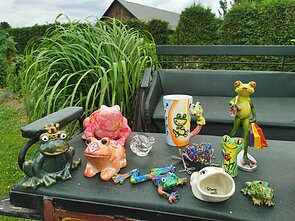
According to her, The Frog House currently contains about 7,000 exhibits.
“I decided I couldn’t collect all the frogs in the world (we already have two small houses and a teahouse filled with them), so I’ve chosen a new direction,” she notes. “The second house is now home to frogs from antique shops, flea markets, artists’ creations, and Christmas ornaments – the kind of unique items you can't just go and buy in a store. These are the special ones I’m searching for now.”

The oldest exhibit in Pečiulienė-Šilingė’s collection is a music box made in 1795. The collection also includes items with personal significance.
“One exhibit is a porcelain figurine of newlywed frogs that we received as a wedding gift from a woman we didn’t know at all,” Pečiulienė-Šilingė smiles. “On the second day after our church wedding, she drove all the way from Mažeikiai to give us some frogs, and among them were the newlyweds. It was a wonderful coincidence.”
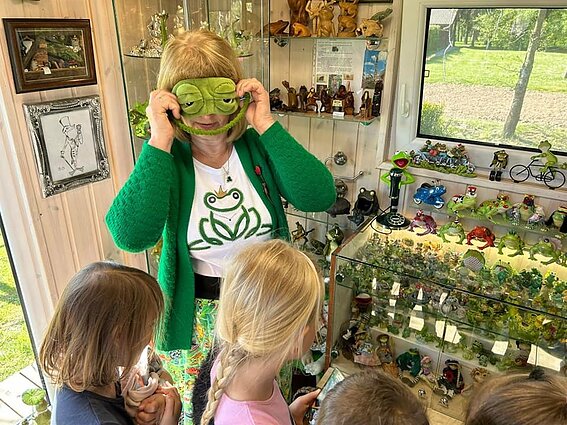
She also has several frog-themed dolls in her collection. These are creations by an artist from Vilkaviškis, and they are modelled on Pečiulienė-Šilingė herself.
“One portrays me as a farmer, with a bucket and a frog-shaped apron, rushing to my cows because I still live a rural life,” she laughs. “The other one depicts me as the Frog Queen. That title was bestowed upon me so beautifully, so I really enjoy it. Everyone calls me Reda, the Frog Queen.”
Museum of Scissors
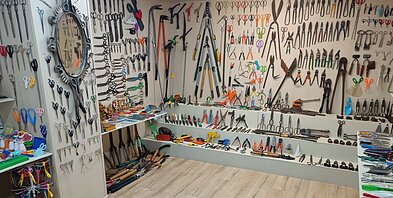
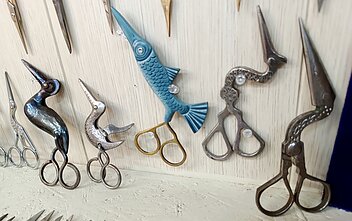
Kęstutis Mėlinis says he used to collect candy wrappers and stamps. Over time, he began collecting scissors and eventually realised he had no place to store them. This is how the Museum of Scissors was established in 2022 in Griniai, Kelmė district.
“I’ve been collecting scissors for 11 years,” says Kęstutis Mėlinis. “When I opened the museum, I had about a thousand of them. Now there are over 1,800 exhibits. It might even be 2,000 by now, as the collection grows more or less every month and week. I only count them once a year, on New Year’s, for a reference point.”
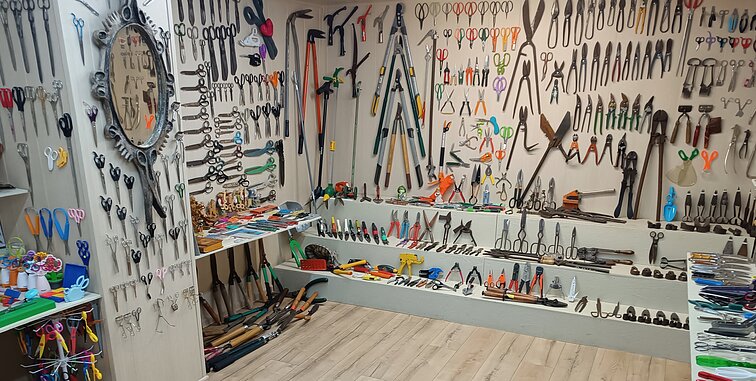
He finds new items online, at auctions, markets, and car boot sales, while also receiving offers from locals.
“I’m now looking for more interesting, unique, and rare scissors,” he says. “If I get simpler ones that I already have plenty of, I’ll add them to the collection, but I’m not actively looking for them anymore.”

He points to one of his most interesting exhibits: wire-cutting scissors from the Tsarist Imperial Russian army, once mounted on a Mosin rifle. “People might not even realise they’re scissors!” he notes. Still, this is not the oldest item in his collection.
“I have some very old scissors, but it's hard to say how old they are,” he explains. “For example, I have glassblower’s scissors – a museum in France lists the same item as dating back to the mid-18th century. I don’t know for sure if they're that old, but they’re probably the oldest in my collection.”

Mėlinis reveals that he is especially interested in scissors made in Lithuania. “They don’t produce them anymore, but they did during the Soviet times. I’m trying to find all the different colour variations. I even managed to get some of the original boxes! When you tell people that these scissors were made in Lithuania, they’re always amazed that it’s even possible.”
When asked what other scissors he dreams of acquiring, he doesn’t hide his long wishlist, which includes everything from Thai hair-cutting scissors to the ceremonial scissors used in the Peruvian danza de tijeras dance. Mėlinis smiles, saying that sometimes he discovers scissors he never even imagined could exist.
Translated to English by Smiltė Titovaitė.

Newsletter
Every Friday morning.