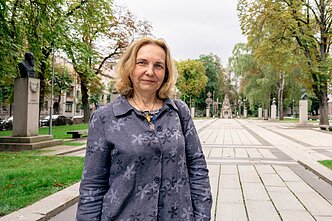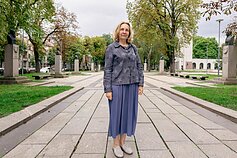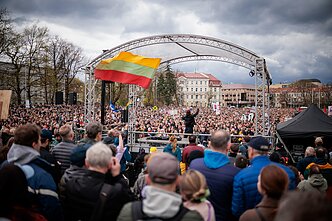




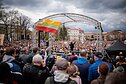

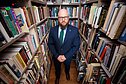

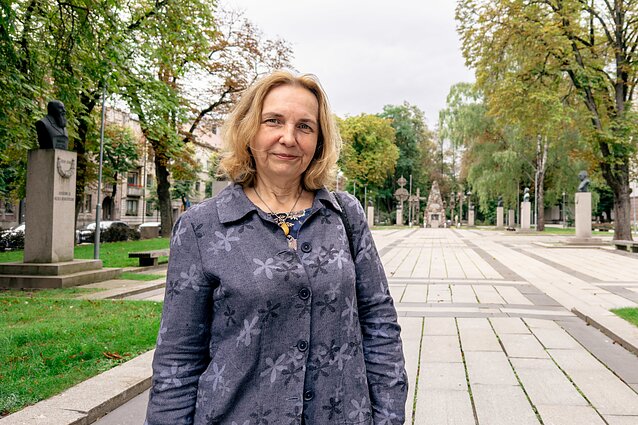
“Freedom truly is a wonderful thing,” says Kaunas resident Monika Gineikienė, one of more than two million people who, 36 years ago, joined hands across the Baltic Way in hope of liberty. “Freedom is also just the freedom to carry a flag, to be able to listen to a song that you yourself choose. We wanted an independent state, where we could decide for ourselves,” she recalls.
What Gineikienė remembers most vividly from August 23, 1989, are the kindness of strangers, the openness in people’s eyes and their warm smiles.
Although she was active in rallies organised by Sąjūdis, by the summer of 1989 Gineikienė had resigned herself to the idea that she would not be able to join the Baltic Way. She remains grateful to her uncle, who unexpectedly invited her to travel with him. For her, a 29-year-old woman raised in a family marked by Soviet repression, the day carried special significance.
“My father was in hospital after surgery and my mother was at his side, unable to travel. My sister-in-law had just given birth, so my brother couldn’t go either. At the time, I was just busy with family worries, but when my uncle visited, my mother – knowing how important the Way was to me – asked him to take me along,” she says.
Gineikienė recalls that, in the run-up to the Baltic Way, people brought flowers to Kaunas Castle – she joined them with her uncle.
“He asked if I would like to contribute, to gather some flowers and take them there, and the next day – to the Way itself. I did not expect to see such a sight by the castle, there were so many flowers. Some people carried great armfuls, others just a few, but everyone contributed as much as they could,” she says.
Gineikienė's civic spirit and love for Lithuania and its freedom were shaped by her family’s history.
“I took part everywhere I could, because I am the daughter of an exile and a political prisoner. The Baltic Way was very important to me, and I am grateful I was able to join. My uncle, Stasys Dambrauskas, was also a political prisoner, as was his wife, Kazimiera Dambrauskienė, who served as a partisan liaison. It was really important to me to be there – for my family as well as for my country,” she says.
On that August day she travelled with her uncle, her aunt, her cousin Violeta – who was then planning her own wedding – and her future mother-in-law, Elena Gudaitienė. Together, they left Kaunas for Ukmergė.
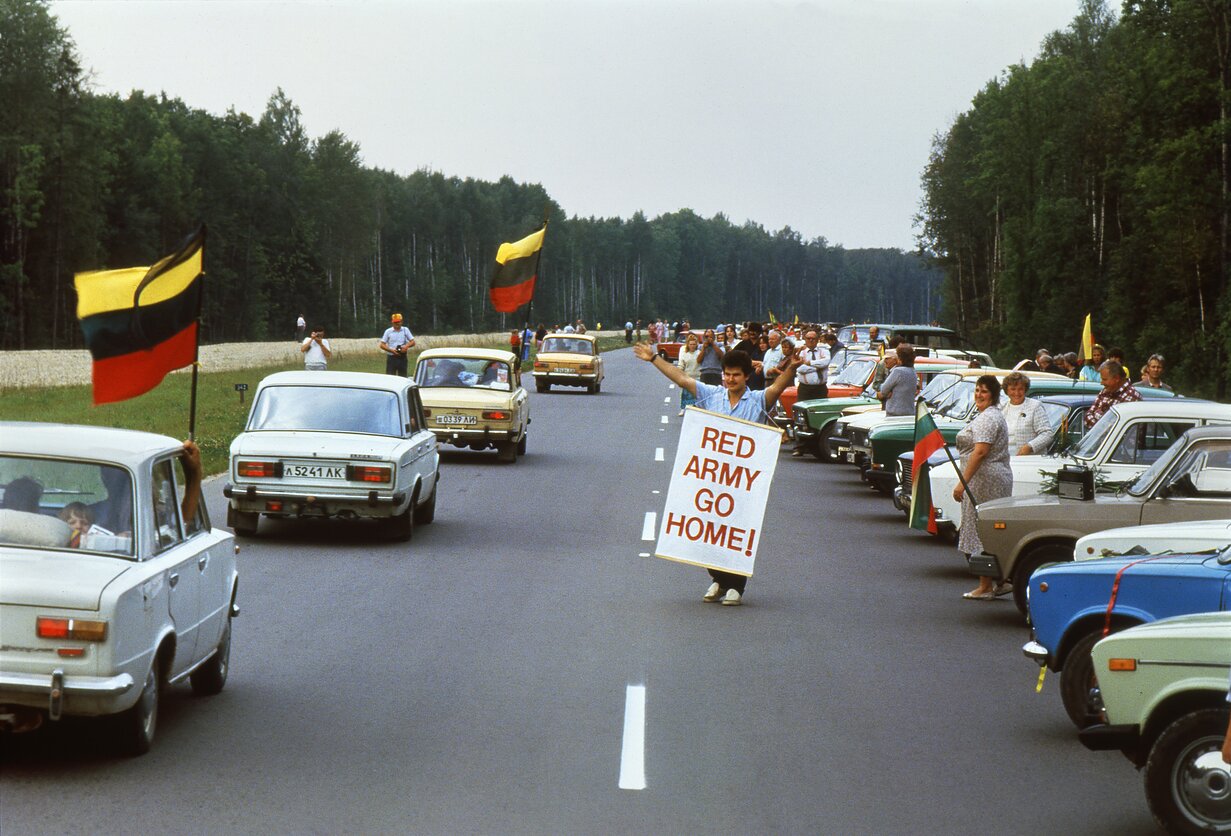
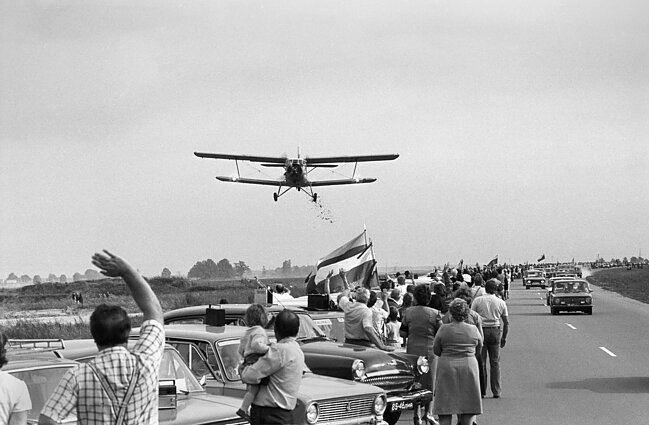
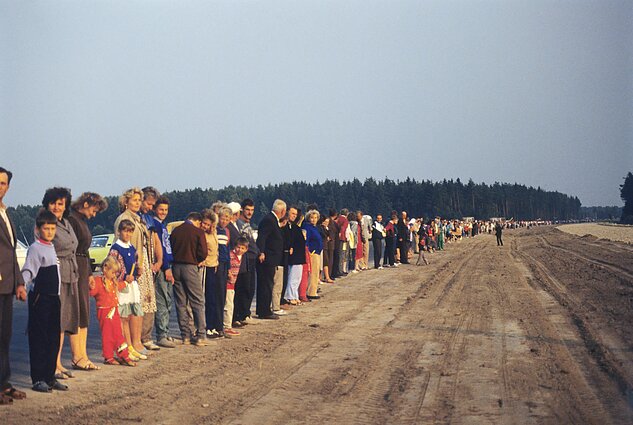
“There were so many cars. Driving towards Jonava I saw four lanes of traffic all heading in one direction. It seemed as if nothing else was happening in Kaunas that day – everyone was going to the Baltic Way. We moved slowly and worried we might be late. I remember that if anyone’s car broke down, others immediately jumped out to help push it aside, to check and repair. The atmosphere was extraordinary,” she recalls.
Her cousin remembered the patriotic songs that filled the day – music by Vytautas Kernagis, and Arvydas Vilčinskas’ Į Lietuvą (To Lithuania).
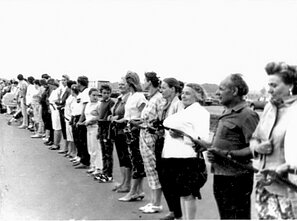
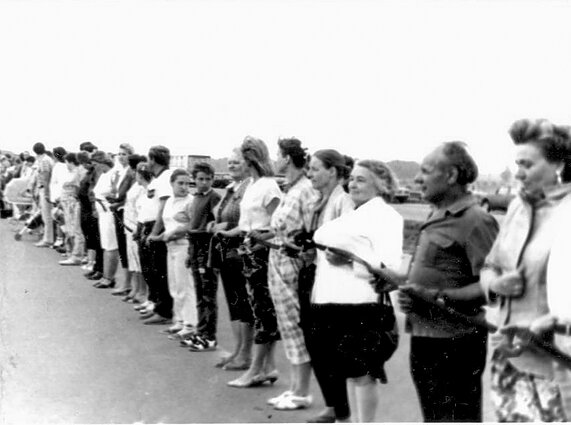
“We stopped on one side of the road, but the volunteers told us to cross over to the other. They were like 'stewards', helping, because of course there were no mobile phones at the time. Some of them had radios. They told us to stand calmly, so we stood, chatting to one another. It felt as though something was about to happen, though we did not yet know what, or how we would take each other’s hands and pass on that spirit. My uncle took a photograph of us, then joined in himself. He told us to hold hands and stand together. We stood for a very short time, no more than five minutes, and it felt as though it ought to have lasted longer – everything ended too quickly, and we did not want to let go,” Gineikienė told LRT.lt with a laugh.
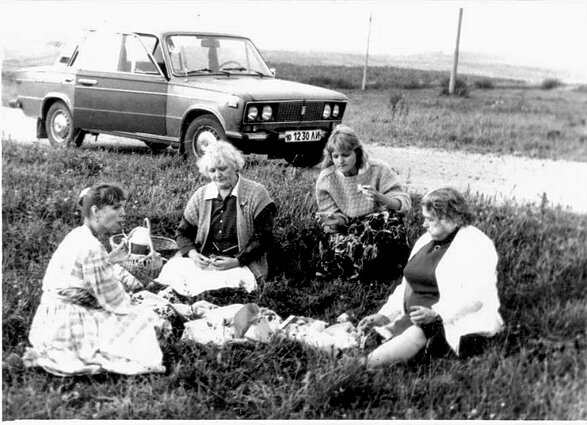
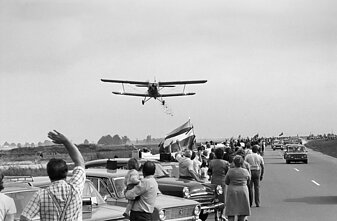
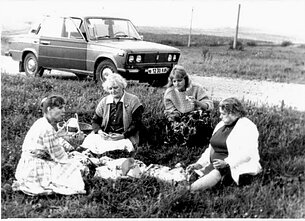
She recalls her uncle chatting with acquaintances before they all made their way down to a meadow, where small groups sat together to share food. Gineikienė also remembers a plane flying overhead, scattering flowers from the sky.
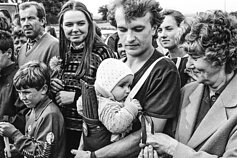
“It was a real summer, people held flags which seemed to bloom. They had come with babies, with prams, making sure even kids were included. It was very joyful,” she says.
A family story
The daughter of a political prisoner and an exile, Gineikienė remembers growing up with her family’s history.
“My mother returned to her village after deportation. She told me the family story – that she herself had been exiled, and that my father was a political prisoner who spent ten years in a labour camp. She said the land, by then belonging to a collective farm (kolkhoz), had once been our family’s. Though our family didn't feel any special attention from the authorities, my parents felt the stigma – for example, when they tried to settle in a larger town, near Vilnius or Kaunas, they would instantly get turned around upon showing their passports: ‘Back to the countryside, to the margins’ they were told,” she explains.

From childhood she knew that Lithuania had once been different, and its history and culture became precious to her.
“I remember working in the Trade Unions’ Palace. One day we were deciding on the lighting for a comedy evening. I told the technician to use warm colours – green, yellow and red. But the director told me to change one of the colours. At first, I didn’t understand why. Then, he suggested to replace one of the colours with blue. That's when I realised – and replied: ‘Well then you’d better remove the traffic lights from the city too’,” she laughs.
At school she found history lessons hardest to bear, knowing how false they were. But she says her relatives, despite exile and the camps, never held hatred in their hearts.
“People came back stronger, without resentment. I never heard anyone wish harm on their interrogators. They lived with faith and love, and that is what they passed on. My father, who spent ten years in a camp, was imprisoned alongside murderers, yet he never carried hatred. Despite being innocent, they were taken from their homes, their land, everything was confiscated. My mother was deported at 16, and in my father’s papers it said ‘no right of return’,” she says.
'I believed that we would be free'
On the day of the Baltic Way, she says, she felt no fear. That came later, on January 13, 1991, when Soviet troops used force against unarmed civilians protecting state institutions, including, famously, the TV tower.
“On January 12, my mother and I stood all day at the Supreme Council. There was a Mass, and thousands of people gathered. Later, at around eight in the evening, we thought to stay at my aunt's near the TV tower, but my mother said she was exhausted. So, we went home. At night, the sirens woke us. My mother, listening to the radio, said dead bodies were reported. My cousin and her husband had run to the tower, leaving their children with our aunt,” she recalls.
Gineikienė felt that she was living through a historic turning point.

“We really did sense it. Just the fact that people could walk with flags! I remember a rally in Vilnius in 1988. Guests from the Caucasus could not believe that Lithuanians were carrying their national flags openly. For me, it already felt natural. I believed we would be free,” she says.
At the time, she adds, no one knew exactly what freedom would look like, but she recalls that the West seemed like paradise: “I believed we could have that too, though I had no clear idea what that paradise was. But freedom is even the freedom to carry a flag, to listen to the song you want. We wanted a free country, so that we could decide for ourselves.”

Having studied art, Gineikienė became fascinated by folk traditions, and later worked as an art historian and ethnologist in one of Kaunas museums.
Asked what she would say to her younger self of 36 years ago, she replies: “That freedom would give me so much, so many opportunities. Freedom truly is wonderful.”

Newsletter
Every Friday morning.