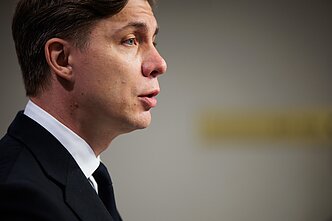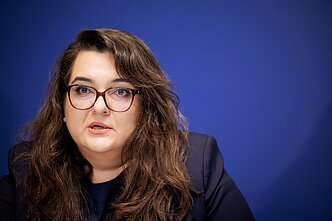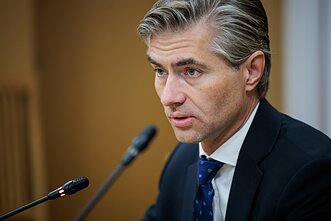














A senior Polish diplomat on Thursday condemned recent remarks by the head of Lithuania’s State Language Inspectorate, who called for the closure of schools that teach in Polish, labelling the comments discriminatory and harmful to ethnic minorities.
“I find it unacceptable that Audrius Valotka is calling for the closure of public schools that teach in the mother tongue of Lithuania’s Polish minority, while also spreading falsehoods about so-called ‘Šalčininkai ghettos’ or ‘linguistic ghettos’,” Poland’s chargé d’affaires in Vilnius, Grzegorz Poznański, wrote in an open letter to Lithuanian Culture Minister Šarūnas Birutis.
Poznański said stigmatising Lithuanian citizens based on their ethnicity or native language is morally reprehensible and incompatible with public service ethics. He warned that closing Polish-language schools would violate international law and bilateral agreements between Lithuania and Poland.
“Under those agreements, schools operate in both countries with Polish or Lithuanian as the language of instruction, alongside intensive teaching of the state language,” he noted.

Poznański urged the culture minister to respond to Valotka’s comments, stressing that “there is no place in the European Union for disrespect toward other nationalities”.
The diplomat acknowledged Polish admiration for Lithuania’s efforts to protect its language and noted growing concerns about the rising use of Russian. However, he said this could not justify offensive rhetoric toward minorities that have lived in Lithuania for generations.
He expressed disappointment that some Lithuanian politicians have echoed Valotka’s position and that certain media outlets contribute to the stigmatisation of national minorities.
Valotka, who heads the institution overseeing enforcement of Lithuania’s language laws, made the controversial remarks during a July 11 broadcast on Alfa TV. Commenting on the growing presence of the Russian language in Lithuania, he argued that all education should take place in Lithuanian – including in schools currently operating in Polish and Russian.

“Why should we maintain places like the ‘Šalčininkai ghettos’, why preserve these linguistic ghettos?” Valotka said.
Valotka has previously faced criticism for controversial comments. During a past government term, then-Culture Minister Simonas Kairys publicly called for his resignation.
In other instances, Valotka described some migrant rideshare drivers as speaking “strange čiurkų languages”, using a slur word for people of Asian origin. Valotka later said he meant “Turkic” (tiurkų) but had mispronounced the word.
He also compared the desire of Polish residents in the Vilnius region to display street signs in their native language to policies seen in Ukraine’s Russian-occupied Donbas region.
The State Language Inspectorate, in operation since 1990, monitors compliance with the State Language Law and provides guidance to individuals, institutions, and businesses on proper language usage. It also plays an educational and consultative role.
Valotka was reappointed as head of the inspectorate in May after winning a competitive selection for a second term.

Newsletter
Every Friday morning.