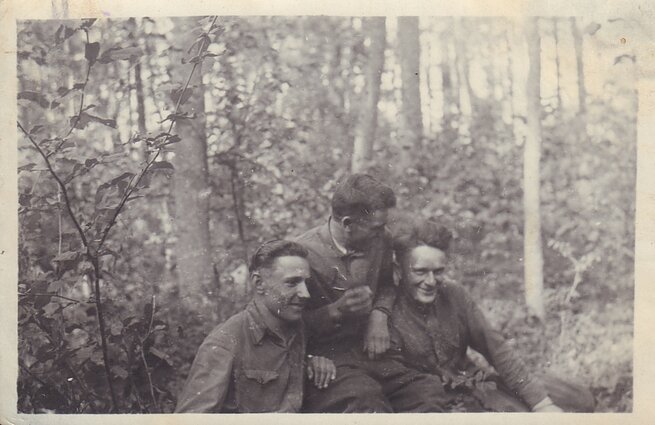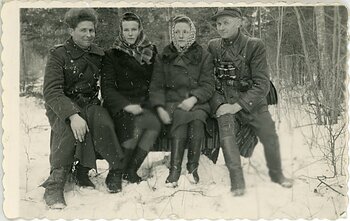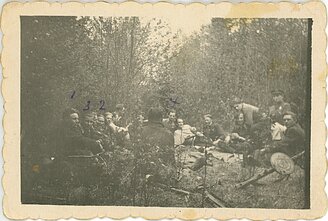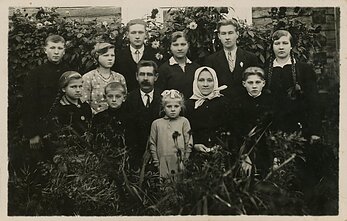







Behind the official records of Lithuania’s post-World War II partisan resistance lie untold personal stories – those of the children caught between a brutal guerrilla war and Soviet repression.
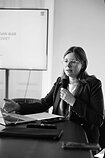
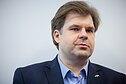
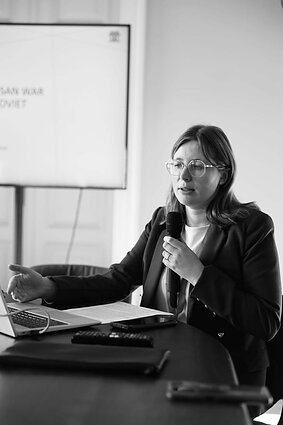
Historian Dr Giedrė Paskočiumaitė has uncovered these hidden narratives by speaking directly with the children of partisans, revealing the complex, often painful memories that have shaped Lithuania’s history far beyond the archives.
The Lithuanian partisan war was a bitter guerrilla struggle against Soviet occupation, lasting roughly from 1944 to the early 1950s. Fighters retreated to forests to resist Soviet control, often at great personal cost to themselves and their families.
Family secrets: children often suspected, but were too afraid to ask
Paskočiumaitė’s interviews reveal two distinct groups: children who witnessed the conflict first-hand and those born later, sometimes in exile, who only learned of their parents’ involvement decades later, often after Lithuania regained independence in 1990.
Feelings about the partisan struggle are complex for the first group. Some feel their family’s sacrifices were undervalued, while others question whether the cost was too high.
For the second group, those who grew up under Soviet rule during the 1950s and 60s, partisan history was often suppressed or portrayed negatively. It was only after independence that many discovered their family’s hidden past, sometimes amid sadness and regret for the silence they endured.
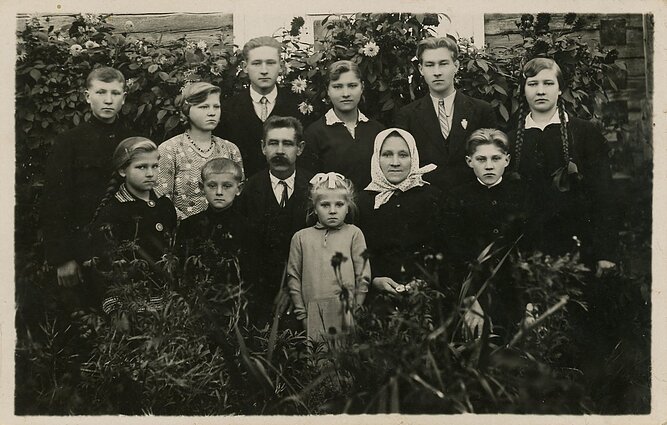
Though some children suspected that their family was different, many partisan parents withheld the truth to protect their children from Soviet reprisals or trauma, creating a “double life” where families outwardly conformed to Soviet norms while quietly nurturing resistance. Children often joined Soviet youth organisations at school, yet at home they were surrounded by stories of defiance.
Living under constant surveillance, families of partisans faced immense pressure. Neighbours who supported the Soviet regime could be informants, while local collaborators were known within communities.
“Teachers knew too, that a child in the class was from a family of deportees or former political prisoners. Sometimes they even warned the kids that it was pointless to try at school because the doors to the university were closed.”
Paskočiumaitė's interviewees recall that it was easier to enter technical studies, as these were politically less charged fields, while humanities were scrutinised closely.
Judging by documents from the partisan leadership alone, one might get the impression that partisans who retreated to the forests had to cut ties with their relatives – parents, wives, and children – but reality was different. The historian notes that often not one, but several family members contributed to the freedom struggle – some acted as couriers, others took up arms. Often, because they felt they had no other choice.
“Partisans were first and foremost fighting for their family, their farm, their land. Then came the bigger ideas – freedom, Lithuania. When you lose everything else, when you see that your farm is no longer there, taken by Soviet settlers, and your relatives are deported, your family becomes the people in the forest beside you,” the historian explained.
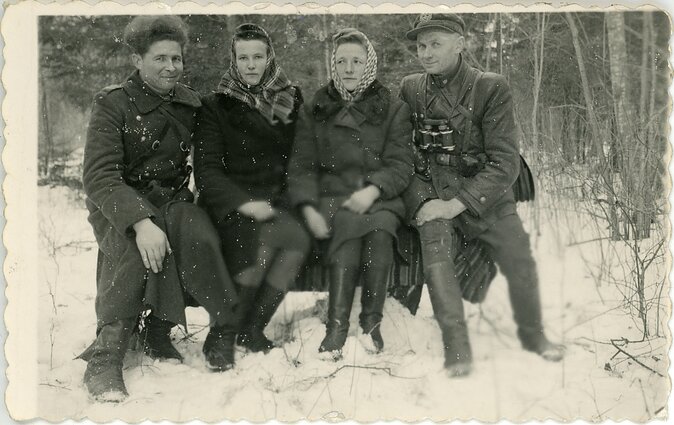
She recalls the account of partisan Juozas Albinas Lukša-Mykolaitis, whose mother gave her blessing – with tears in her eyes – as he and his brother left for the forest.
“Everyone understood it was for a higher cause, as Lukša said, for love of the homeland, human values, rights. In the Lukša family’s case, all four sons went into the forest and only one lived to see independent Lithuania.”
Partisan families could not live in peace
Asked how family life changed when a relative went to the forest, G. Paskočiumaitė explained that it brought upon the Soviet regime’s attention, making peaceful living impossible.
“Partisans were local fighters, known not only by kind, supportive people but also by those who believed in communist ideology or supported it for personal reasons. Likewise, local collaborators’ names were known in the community. When a man left, questions arose, attention turned to the wives and children, and attempts were made to extract information,” Paskočiumaitė explained.
Of course, losing the head of the family didn't help with daily life and household chores, added the historian.
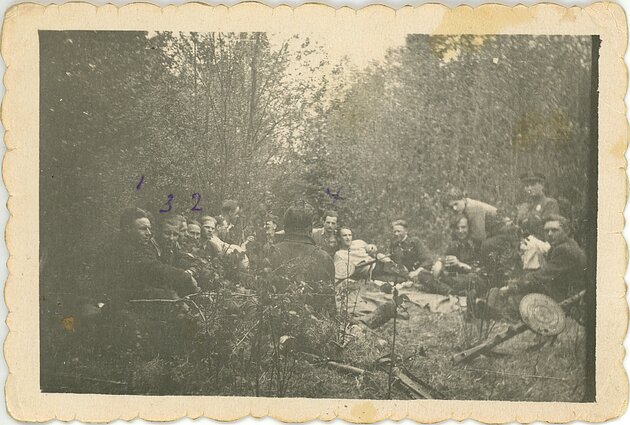
According to her, there were cases where men tried to protect their families before becoming partisans.
Paskočiumaitė cited the example of Alfonsas Vabalas, a lawyer who joined the partisans and helped shape the 1949 Lithuanian Freedom Fighters Movement declaration. Prior to the war, Vabalas had lived in France with his wife and children. He returned in 1940 and was later pressured to cooperate with Soviet authorities.
“Rumours spread in the city that Vabalas was having serious marital problems, but in fact he himself instigated public quarrels so the Soviets would not suspect that his wife knew his location,” Paskočiumaitė explained.
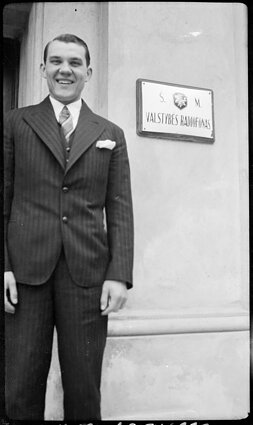
A two-year-old son taken by collaborators
Speaking about women in the partisan war, the historian said they were mostly relatives of fighters – sisters, wives, girlfriends, who played key roles in logistics and morale. Many families also had children.
One example is the family of Antanas Žilys-Žaibas, a partisan commander in Aukštaitija, who had experience fighting in anti-Nazi underground before joining anti-Soviet resistance, and his partner Zofija Striogaitė-Žilienė-Klajūnė. The couple had their first child in 1943 and joined the partisans soon after.
Their children – Petras, Algis, and Meilutė – lived separately, cared for by trusted families, just like other partisan children. They moved frequently, often waking up in one home after falling asleep in another. Parents visited when possible, and their eldest son, Algimantas, fondly remembers their efforts to maintain some normality.
Stilll, their lives were not without trauma. Paskočiumaitė recounts how their two-year-old son, Petras, was taken by collaborators in the hope that Zofija would surrender. The partisans restrained her – tying her to a tree – fearing she might turn herself in to save her son.
“Zofija later said she would not have survived hearing her child suffer,” the historian explained.
Antanas Žilys-Žaibas died in May 1949, reportedly betrayed. Zofija was arrested shortly afterwards and exiled. The children eventually joined her in exile. Though she remarried, she remained devoted to Antanas and wished to be buried beside him.
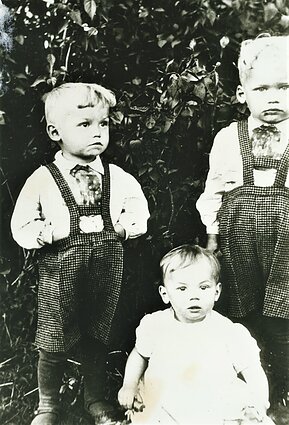
Paskočiumaitė emphasises that families often did not choose the partisan path but were drawn into it by the decisions of their loved ones.
“Partisan children today, with the passage of time, can best assess the price paid,” she said. “We want to hear heroic stories, but in truth, we should accept all kinds of narratives, understand their motivations, their view of the partisan war, and what the policy of memory commemoration should be.”
She added that families often felt unrecognised and underappreciated. In many cases, public acknowledgement only came years – even decades – after independence.
The fate of Jonas Žemaitis-Vytautas’s son
Jonas Žemaitis-Vytautas, the leader of Lithuania’s partisans, had a son, Laimutis, who was raised apart and unaware of his parents’ past.
Couriers would sometimes bring the child to the forest or deliver messages but Laimutis was raised by others.
Shortly before Žemaitis-Vytautas was executed, Soviet officers reportedly showed him a photo of his son wearing a Soviet Pioneer neckerchief – a subtle suggestion that the partisan struggle had been in vain if his own son became a collaborator.
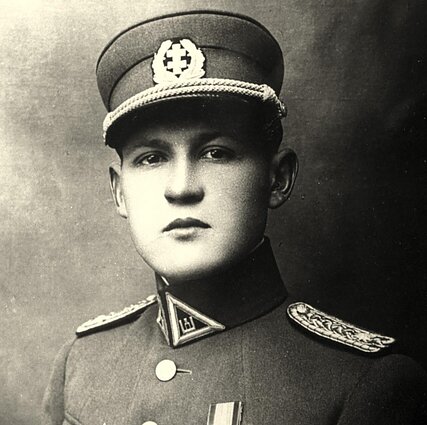
Laimutis only discovered his past after Lithuania regained independence. By then, many details of his father's life had been lost.
“When discussing partisan memory, we have documents, press, Soviet files – but first and foremost, there are relatives who care about remembrance and contribute details to the narrative. This was lacking in Žemaitis-Vytautas’s case,” said Paskočiumaitė.
Other partisan families were also fragmented. One example is Leonas Caporka and Aleksandra Radzevičiūtė, who married in the Šaukotas forest. After the wedding, they continued living with the partisans in the forest. Eventually, Leonas died and Aleksandra went into hiding, eventually reintegrating into civilian life.
Their son, Antanas, was raised by Aleksandra’s sister and given a different surname, fabricated history. Though his biological mother visited often, he only learned the truth in his teens, by accident.
“It leaves us wondering how many personal stories are still lost to history,” Paskočiumaitė concluded.

Newsletter
Every Friday morning.