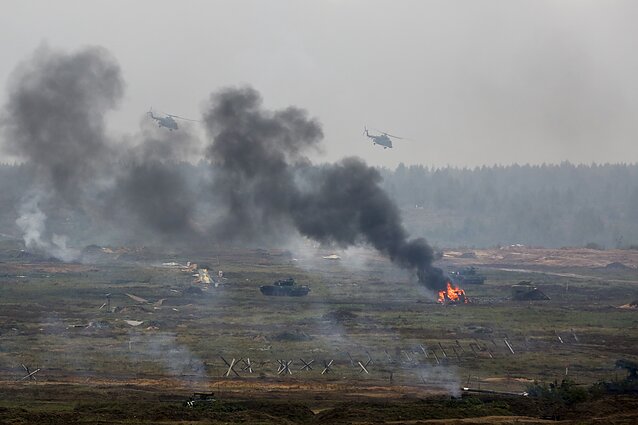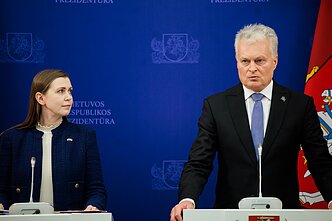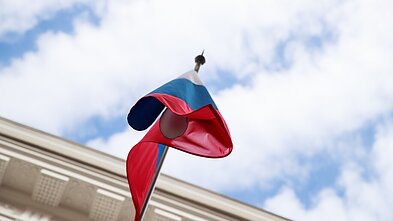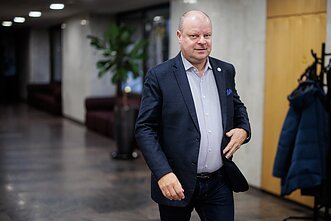















Russia's Zapad military drills in September will be up to three times smaller than when they were last held in 2021, Lithuanian President Gitanas Nauseda said after a meeting of the State Defence Council.
“The scale of the exercise itself, for obvious reasons, because of Russia's involvement in the war with Ukraine and the deployment of a large amount of equipment and manpower to the frontline, the exercise will be two or three times smaller in terms of quantitative measures than it was in 2021,” the president told reporters on Wednesday.
While Zapad’s format and nature remain largely unchanged, Nausėda stressed that Lithuania and its allies are ready for “any kind of surprises”.
Defence Minister Dovilė Šakalienė added that Lithuania would conduct both national and allied exercises in parallel with Zapad.
“We want to make it very clear that intensive and active work with a large number of allies and our troops will take place throughout this period, which greatly streamlines our readiness for any potential developments,” the minister said.

Zapad 2021 was one of the largest Russian-Belarusian drills in recent years, reportedly involving some 200,000 troops. The active phase of that exercise took place across nine training areas in Russia and five in Belarus.
This year’s Zapad exercise is scheduled for September. It has traditionally been held every two years since 2009, with the exception of 2023. According to British intelligence, the cancellation of the 2023 drills was likely due to Russia’s shortage of troops and equipment, as well as a desire to avoid international criticism for staging a show of force during its ongoing war in Ukraine.
Lithuania’s military has said that Russia currently has limited capacity to launch an attack during the upcoming exercise. However, it warned that the unpredictability of hostile states remains a concern.
The active phase of the 2025 exercise is expected to last for about a week in mid-September, with associated troop movements and logistical activities potentially taking place between August and October.
Officially, the drills are aimed at practising joint defensive and offensive operations, testing troop readiness and strengthening coordination between the armed forces. But neighbouring countries routinely raise concerns over the risk of incidents and the political signalling behind such exercises.
In practice, the army stressed, exercises aim to demonstrate their military power to the West.
In late May, Belarus said it would reduce the scope of its participation in the 2025 Zapad exercise by cutting the number of troops involved and moving activity further away from its western borders.
However, Lithuanian Chief of Defence Raimundas Vaikšnoras has previously said that such a move could be a bluff. The military has since pointed out that the official reduction in troop numbers from 13,000 to 7,000 “can mean something or nothing”.

Newsletter
Every Friday morning.