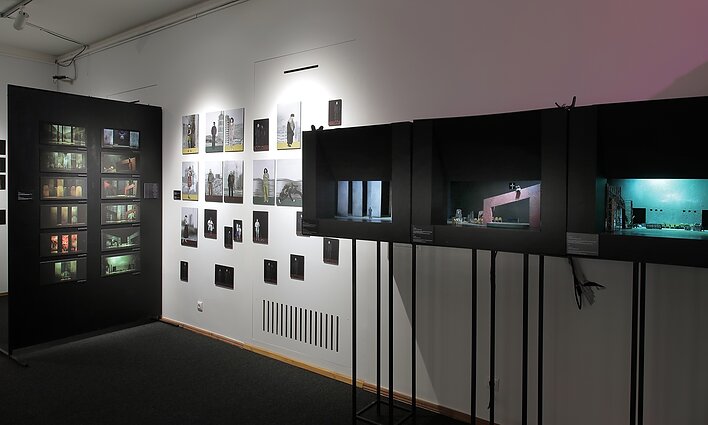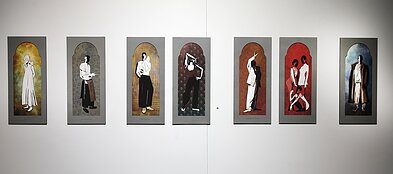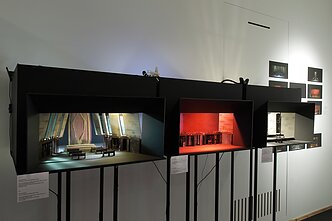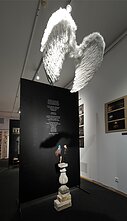










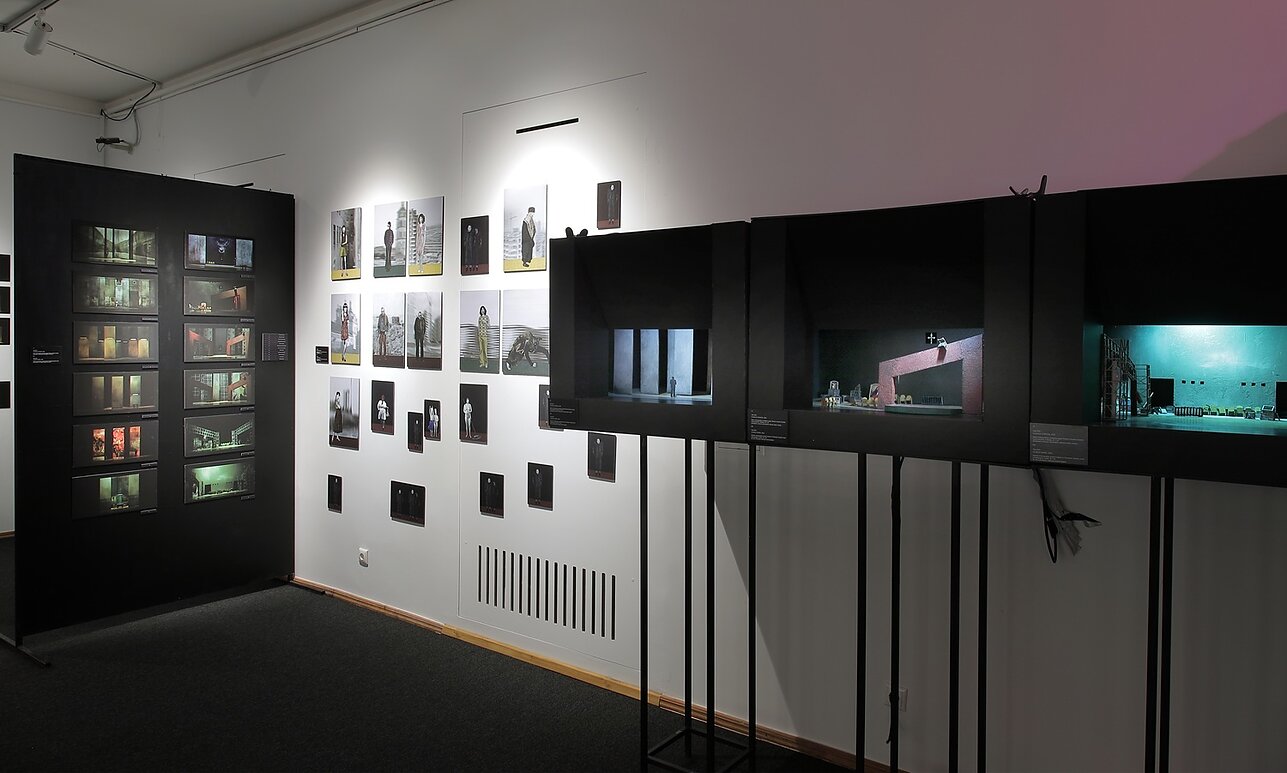
An exhibition titled Portalai’25 is currently on display at the Lithuanian Theatre, Music and Cinema Museum in Vilnius. The show presents final projects by undergraduate scenography students from the Vilnius Academy of Arts (VDA), featuring creative interpretations of literary works through original stage designs.
The exhibition includes work from six graduating students, encompassing theatre and film scenography. Each piece functions as an independent artistic study, exploring the interplay between space, objects, light, and the human presence in different contexts. The exhibition features set design sketches, scale models, costume drawings, and prop elements, according to a museum press release.
The projects reflect a synthesis of theoretical knowledge, creative process, and practical skills, inviting viewers to experience scenography as a distinct artistic language.
“It has become a tradition, and we are very grateful to the museum for providing a home and support. The students’ work is incredibly mature – their awareness is remarkable. It’s hard to say where they draw such strength and potential from. Every year, the creativity is different but never diminished. We believe we are doing meaningful work, and the museum helps us,” said VDA lecturer Associate Professor Jurgita Gerdvilaitė.
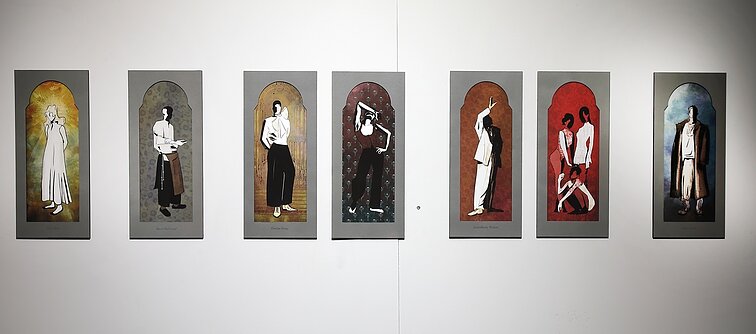
Among the works on display is a film scenography project by Unė Kormilcevaitė titled Vilnius Ghetto Diary, inspired by the stories of Holocaust victims from the Vilnius Jewish Ghetto and based on the memoirs of teenage diarist Icchokas Rudaševskis. The diary reveals hardship and the loss of human dignity. Kormilcevaitė invites “Vilnius residents (and others) to remember their city’s history – a past not so distant, played out in the very streets we walk today”.
Vita Ges presents a theatrical scenography project based on Ričardas Gavelis’ novel Vilnius Poker. Ges portrays the city of Vilnius as a separate character that manipulates the reality and experiences of its inhabitants. Her set design draws from locations mentioned in the novel and metaphors such as “Vilnius – a vast maze with no exit,” and “Vilnius – a dying beast”.
Inspired by Oscar Wilde’s The Picture of Dorian Gray, Rūta Strazdaitė exhibits scenography and costume designs. She centres the theme of the artist deifying his muse, relocating the narrative into a church setting, thus assigning characters symbolic spiritual roles. Her project examines questions of morality and invites reflection on the meaning of beauty and goodness.
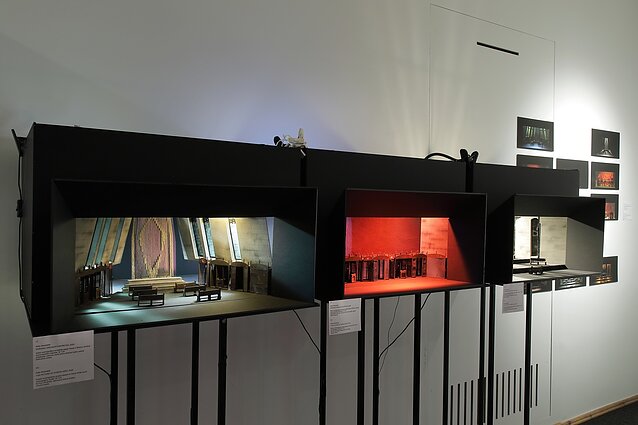
William Shakespeare's Romeo and Juliet is reimagined by Augustė Smaliukaitė in her creative project featuring models, scene visualisations, and costume sketches. Using Venice’s Rialto Bridge as a metaphor, Smaliukaitė prompts audiences to ask themselves how deeply they are entangled in their own illusions of love.
Domilė Kirstukaitė created a film scenography project titled Kaunas Grand Hotel – an interpretation of interwar Lithuanian hotel culture. Her work explores the theme of vanity, inspired by a performance of the poem In a Bar by Antanas Maceina. The project includes an original narrative, an architectural model based on Kaunas’ historic Metropolis Hotel, set visuals, character designs, and costume sketches.
Exploring aesthetics as a form of resistance to patriarchy, revealing a culture of girlhood Kotryna K. Rupainytė presents scenographic and costume work based on Jeffrey Eugenides’ novel The Virgin Suicides. “Through my artistic research, I aim to draw attention to how, despite being seemingly progressive, our society continues to undervalue femininity,” she said, adding “how symbols associated with femininity – pink hues, bows, lace, glitter, pop bands – are often dismissed as childish or culturally insignificant”.
This is the fifth consecutive year that the Lithuanian Theatre, Music and Cinema Museum has hosted scenography students’ work for a full month following the official VDA graduate exhibition.
“Each year, students surprise us with unexpected creativity. Their exhibitions attract considerable attention. We believe many of their future works will enter our museum’s collection. We wish them continued creative success and inner creativity freedom,” said museum director Nideta Jarockienė.
Portalai’25 runs until 29 June.

Newsletter
Every Friday morning.