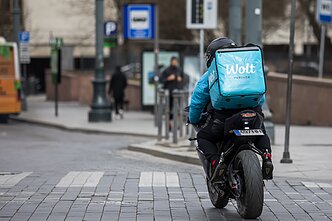
















Lithuania’s former conservative-led government bowed to pressure from employers and opened doors to labour immigration, LRT Investigation has found. Effects are already beginning to show – the country’s immigrant population is growing, while quasi-illegal work has flourished.
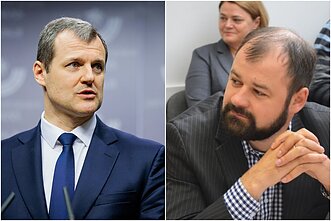
Vaidas Navickas, a former adviser to then Prime Minister Ingrida Šimonytė, tried to warn the government in 2022 about the risks posed by the easing of migration from outside the European Union, the so-called third countries. At the time, a working group – created informally by Šimonytė – was exploring options to loosen restrictions on employing foreigners.
The group included representatives of state institutions and the so-called Business Council , which brings together Lithuania’s four largest employer organisations – the Confederation of Industrialists, the Confederation of Employers, the Investors’ Forum, and the Lithuanian Chamber of Commerce, Industry and Crafts. It then assessed proposals submitted to the government by employers themselves.
“The working group decided to approve 20 out of 28 requests from the Business Council regarding the liberalisation of the immigration system. I wanted to make sure the prime minister really intended to go ahead with it. After I briefly explained where I saw the risks, the prime minister, as I recall, said, ‘I’m not scared,’” Navickas, who is currently based in the United States, told LRT.
Ingrida Šimonytė, now an MP in the opposition Homeland Union-Lithuanian Christian Democrats (TS-LKD) faction, did not deny that “certain aspects were not fully considered” when addressing labour migration issues. She stressed that once the gaps were identified, legislation began to be tightened last year.
Official statistics from the Migration Department show that in 2023 – the year government-initiated and parliament-approved labour migration relaxations came into effect – the number of foreigners in Lithuania nearly doubled, rising from 100,200 to almost 190,000 people.
Currently, foreign nations make up 7.5 percent of Lithuania’s population – nearly 220,000 individuals (compared to 3.6 percent in 2022). While the largest groups remain Ukrainians fleeing the war and arrivals from Belarus, the number of job-seekers from Central Asia is increasing, including from Uzbekistan, Tajikistan, Kyrgyzstan, Azerbaijan, Kazakhstan and Turkmenistan.
Laurynas Kasčiūnas, the newly elected chairman of TS-LKD, acknowledges that the government dominated by his party opened the doors wide to labour migrants a few years ago.
“At one point, we were simultaneously stopping illegal migrants – and doing so successfully. But on the other hand, we opened the green corridor too much for legal migration. I admit that. Without a doubt, we are learning from our mistakes, and from now on we will strongly oppose liberalisation of migration policy,” said the new conservative leader, who has promised to draft relevant legislative amendments.

How it began
The year 2021 was a turbulent one for Lithuania. That summer marked the end of a nationwide quarantine imposed due to the Covid pandemic. Around the same time, migrants began pouring into the country via routes opened by Belarus: during this crisis, nearly 24,000 people attempted to enter Lithuania illegally. Just months later in February 2022, Russia launched its full-scale invasion of Ukraine.
As businesses emerged from the grip of the pandemic, it went into overdrive. Soon, the private sector was calling for the need to bring in more workers from third countries, arguing that Lithuania was struggling to fill 54,000 job vacancies – despite its 112,000 unemployed residents.
In September 2021, the Business Council comprising the four biggest employer associations submitted 28 proposals to the government on how to simplify the labour immigration system.
Back in 2018, a previous government had approved a list of shortage occupations, which was later expanded. Companies could hire needed workers from third countries with virtually no restrictions. Politicians who had championed the initiative praised the project as a result of cooperation with employers represented by the Business Council.
However, Šimonytė’s government did not support such a quota system. Therefore, upon receiving the Business Council’s proposals to improve the immigration system, the prime minister instructed that a working group be assembled to examine them.
This group was formed on Šimonytė’s verbal instruction and included the very businesspeople who had submitted the proposals, along with representatives from some state institutions.
Šimonytė now says she cannot recall whether she issued a written directive to establish the group. “Sometimes these working groups are not highly formalised. In the end, the whole legislative process is public anyway,” the former prime minister said.
Business leaders insist they did not initiate the working group. “The Investors’ Forum was concerned with the content – the resolution of pressing issues in Lithuania – not with the form in which those issues were addressed,” said Vytautas Šilinskas, executive director of the Investors’ Forum, one of the organisations on the Business Council. At the time, Šilinskas was deputy minister for social security and labour.
Trade union representatives were not invited to take part in the informal working group. Trade unions, like business organisations, are social partners of the government and usually help address challenges through the Tripartite Council that includes the state and business reps.
However, according to Ričardas Garuolis, vice-chairman of the Lithuanian Trade Union Solidarumas, they only learned about the migration law reviews from the media.
At a government meeting in early May 2022, ministers approved legal amendments and several other legal acts without much discussion. The proposals had been drawn up by the Interior Ministry based on the working group’s recommendations.
Speaking to the LRT Investigation Team, Šimonytė said took no issue with the fact that the businesses who had made the requests also contributed to the drafting of the legislative amendments.
“If the proposals were rational, they would likely have been adopted regardless – whether through a working group or during the coordination process,” she said.
But Navickas, the then adviser of Šimonytė, had a different view.
According to him, the group initiated several changes requested by employers. After debate in parliament, the timeframes for processing documents were shortened, the requirement for visas issued by Lithuanian consulates was removed when hiring foreigners, and the process was shifted to temporary residence permits administered by a private external service provider.
The ban on temporary employment agencies hiring foreign workers was also lifted, allowing those workers to be leased to other companies. According to Navickas, lobbying around this particular request was especially intense.
“Out of the 28 points in the letter from business lobbyists to the Government Chancellery, some could be interpreted as more abstract. But what Aurelija Maldutytė, who was delegated by the Employers’ Confederation, requested was very specific – to amend one clause of one article in the Law on the Legal Status of Aliens,” Navickas said.
Maldutytė was then a presidium member of the Employers’ Confederation. She is now the organisation’s president.
She also was – and still is – the head of the Association of Employment Agencies, which unites the country’s major temporary employment firms. While taking part in the group set up on the prime minister’s instruction to review proposals for easing migration rules, she participated remotely – her name appeared alongside a Headex Group email address. Headex is an international employment company operating in Lithuania.
According to former prime ministerial adviser Navickas, it was Maldutytė who pushed for the removal of the legal ban on temporary employment agencies hiring foreign nationals.
Employers described the ban in place at the time as discriminatory because it did not apply to temporary employment agencies registered abroad. This, they claimed, encouraged companies to register in countries like Poland and bring in foreign workers from there, depriving Lithuania of tax revenue.
Other employer organisations told the LRT Investigative Team that temporary employment had not been “a key issue” for them.
“The Lithuanian Confederation of Industrialists (LPK) was not the initiator of this particular topic, but we did highlight the flaws in such regulation – namely, that companies able to bring in workers from third countries were being set up in neighbouring countries and paying taxes there. We supported the removal of this discriminatory provision,” said Aistė Rinkevičiūtė, head of communications at the LPK.

Not satisfied
At the time, prime minister’s adviser Navickas interpreted Maldutytė’s suggestions on specific legal amendments, on behalf of employment agencies, as lobbying activity.
He logged the perceived lobbying influence with the Chief Official Ethics Commission (VTEK). However, VTEK decided not to launch an investigation – the commission cited a legal exemption stating that participation in meetings at the invitation of a government institution, as an expert contributing to draft legislation, does not qualify as lobbying.
“Whenever business representatives or members of other interest groups are involved, there is always a conflict of interest. People always aim to advance their own interests. What is the government's job? The government's job is to identify the public interest amid a multitude of private interests,” Šimonytė said of the situation at the time.
Maldutytė, representing the Employers’ Confederation, said she had been “quite surprised” by the adviser’s report to VTEK.
“And the claim that ‘the proposed amendments are most beneficial to your association’ is completely unfounded, since decisions were made that were actually disadvantageous to Lithuanian temporary employment agencies,” she said.
The legal amendments adopted by the Seimas in June 2022, which opened the door for temporary employment agencies to hire foreign workers, came with safeguards – including a requirement to register with the State Labour Inspectorate and an obligation to pay such employees no less than the officially declared average monthly wage.
According to Investors’ Forum director Vytautas Šilinskas, although the proposal was not implemented exactly as the Business Council had suggested, their organisation did not oppose the restrictions.
Meanwhile, in a written response to the LRT Investigative Team, Maldutytė said the specific wording of the amendment had left her disappointed.
“The amendment introduced discrimination against temporary employment agencies without any real justification. In other words, Lithuanian temporary employment agencies were burdened with additional requirements not imposed on other Lithuanian companies or on foreign temporary agencies.
As a result, temporary employment companies from Poland and other neighbouring countries can successfully lease workers to our labour market without having to pay the average monthly wage, thus outcompeting their Lithuanian counterparts,” she said.
Headex Group’s CEO, Jūratė Nedzinskienė, told LRT in her written response that the legal amendments had partially addressed the problems faced by employment agencies.
“As a temporary employment company, our operations are restricted by additional requirements not applied to other employers. These include quota limits, wage compliance requirements, and other criteria, which make it particularly difficult to employ low-skilled workers from third countries. As a result, such services often become economically unviable,” she said.
Former MP jumps ship
The issue of temporary employment agencies resurfaced in early 2022 as part of the agenda of yet another parliamentary working group formed to tackle labour market problems.
After the Seimas approved government-initiated amendments to the Law on the Legal Status of Aliens in autumn 2022, leaders of the Business Council turned to the parliamentary working group chaired by Conservative MP Justas Džiugelis, as well as to the Government Chancellery and several ministers.
Thanking politicians for “taking business needs into account”, employer representatives urged further steps to ease the hiring of third-country nationals in Lithuania. Among their proposals was a call to revise provisions on temporary employment.
The working group led by Džiugelis ended its activities in controversy, amid suspicions of his close ties with business representatives.
“He did a decent job chairing the group until all those unpleasant things started coming to light – that he wasn’t acting independently and was representing the interests of associated business structures – in other words, employers,” Seimas Deputy Speaker and Social Democrat Rasa Budbergytė, a former member of the group, told the LRT Investigative Team.
Džiugelis told LRT that, while chairing the working group, he was guided not by employer preferences but by best practices, dismissing his colleagues’ suspicions as “manouevres of the [parliamentary] opposition”.
Earlier in May, it emerged that Džiugelis, who failed to win re-election to the Seimas last autumn, had found a new job – he became Director of Development at the Employers’ Confederation, headed by Maldutytė.
He confirmed to LRT that the offer to join the business organisation came from its president. However, the former MP claimed he had no previous contact with her.
“If you want to know whose initiative that working group was in the first place, and who raised most of the concerns about labour shortages, it was the Lithuanian Confederation of Industrialists. And I’d like to stress again that I still don’t fully understand the interests of temporary employment agencies, because that’s not within the scope of my work,” Džiugelis said.
Speaking about the former politician’s new role, Maldutytė said: “I don’t see any issue if a former MP proposed amendments, some of which happened to align with those of employers. It’s good to have people in the Seimas who understand that the state budget is funded by taxes paid by employers and employees, not printed by the Bank of Lithuania.”
According to Maldutytė, Džiugelis was offered the role at the Employers’ Confederation because of his competencies – namely, “a good understanding of how both the public and private sectors function”.
Seimas Deputy Speaker Budbergytė said she had no doubt that her former colleague possessed the necessary skills. “However, employers never forget those who stood up for their interests. So I would see this as a kind of reward for Džiugelis for his ‘advocacy’ of business interests,” the politician said.

Complaints from logistics sector
The decision to allow temporary employment agencies to hire foreign nationals came as a shock to Lithuanian hauliers – the business sector that imports the most foreign workers.
They were completely unaware of the working groups formed by the government or the decisions they had made, according to Vytas Bučinskas, president of the Šiauliai Hauliers’ Club and former Vice President of the Linava association that represents the country’s logistics sector.
Bučinskas said discussions on labour shortages did take place, particularly regarding the lack of construction workers. Firms argued that construction workers from third countries were being brought to Poland and then leased to Lithuania, saying they should be employed directly by businesses registered in the country.
“But we didn’t even know that the provision banning temporary employment agencies from hiring foreigners had been repealed. No one consulted the associated structures – at least not the associations representing the transport sector. The provision just disappeared, and that was it,” he said.
Bučinskas said that once hauliers discovered the ban had been lifted, they spent several years trying to address the issue. They demanded amendments to the recently revised Law on the Legal Status of Aliens to ensure that the permission for temporary employment agencies to hire foreign nationals would not apply to licensed road transport and passenger services.
They argued that the green light for hiring foreigners on temporary contracts gave free rein to so-called “letterbox companies” – firms that lease drivers to other countries.
Employers can bring in third-country workers by submitting mediation letters within state-imposed quotas. Last year, Lithuanian employers were permitted to bring in just over 40,000 foreign workers to fill labour shortages. This year, the quota has been cut to 24,800.
Foreign nationals are only allowed to work in Lithuania if the Migration Department, having assessed both the prospective employee and employer, grants a temporary residence permit.
However, unlike visas that tie migrant workers to a specific country, temporary residence permits open the door to other EU member states.
“We bring these workers over, and temporary employment agencies just take them off our hands for a few extra euros. A third-country national – say, a Belarusian or Kyrgyz – is offered 5 euros instead of 3 per hour. That’s 150 euros more in 30 days. For many of them, that’s a lot of money,” said Bučinskas, president of the Šiauliai Hauliers’ Club.
“And so they get lured away from a transport company that has already invested in them, incurred various costs. Then they rent the driver out to a company in Germany,” he added.
Workers from outside the EU must get permission from the Migration Department before changing employers. Official figures show that in 2023, 22,200 people had their temporary residence permits modified.
However, Lithuanian authorities do not keep track of how many of those ended up working for temporary employment agencies. The State Labour Inspectorate notes that 367 such agencies are currently registered in the country, employing nearly 19,500 people as of March.
Garuolis, deputy chair of the Solidarumas trade union, pointed to another issue.
One argument for easing the employment of foreign nationals was to reduce the administrative burden on state institutions. “But in reality, we’ve seen potential cases of human trafficking – where workers are brought in only to be sent off to live in Western Europe,” he said.
The business model of these agencies is to hire workers directly – since mid-2022, also foreign nationals – and then lease them to other employers. According to the Labour Inspectorate, Lithuanian law does not prohibit these workers from being posted to other countries.
“However, temporary employment firms must comply with the legal regulations of the country where the worker is posted,” the inspectorate told LRT.
According to Bučinskas, temporary agencies that poach staff from transport firms also consume the worker quotas allocated to those companies.
“This creates conditions for foreigners with Lithuanian documents to work in, say, Germany, in a semi-illegal way. Their paperwork is Lithuanian, but they drive a German-registered vehicle. Since the Germans don’t monitor their own firms that closely, the risk of getting caught is low. Often, the driver doesn’t even realise they’re breaking the law,” he said.

He claims to have collected data showing that German companies now pay “mailbox firms” between 130 and 140 euros per day per leased driver.
“Lithuanian firms pay around 85 euros, maybe 90 euros with bonuses. That means the mailbox firm makes about 20 euros a day per driver. Multiply that by 30 days – that’s 600 euros per month per person. With 300 such drivers, the company is making 180,000 euros a month in almost pure profit,” said the hauliers’ representative.
According to him, the overheads for these firms are minimal – “a desk, a phone, maybe not even an office”.
“This is astronomical money, monstrous amounts. And the mailbox firm takes no responsibility whatsoever,” said Bučinskas.
Maldutytė, president of the Employers’ Confederation and representative of the Employment Agencies Association, claims that their members do not employ temporary workers from third countries in Lithuania due to “discriminatory legal provisions” and therefore cannot poach staff from the transport sector.
“It’s odd to comment on this, as different economic sectors can have different interests. Besides, according to the Labour Inspectorate, many transport firms are registered as temporary employment agencies themselves. Perhaps transport representatives should look within their own sector to see who is hiring whom,” she stated in a written response.
However, Jurgita Nedzinskienė, head of Headex Group – a member of the association led by Maldutytė – does not deny that their company hires foreigners who are already in Lithuania.
“Hiring such workers is often more efficient – they already have permits to live and work in Lithuania, and are familiar with the labour market, language, and culture. This allows us to respond more quickly to client needs and reduces administrative burdens,” she wrote.
Data collected by LRT’s Investigative Team suggests that the claim about the association’s members not bringing in foreign workers is not entirely accurate.
Headex Group, the association’s largest agency – previously represented by Maldutytė herself – issued 25 sponsorship letters this year to bring in foreign workers. The firm employs over 2,000 people. It is not known how many of them are foreign nationals.
“Companies engaged in temporary employment are subject to higher standards than regular employers, even though the aim is the same – to provide a lawful and safe job,” said the company’s director.
“For example, we are required not only to declare all temporary workers but also to prove that each of them has work for every period,” she said. “If a worker – as is often the case in this field – is temporarily not assigned to a client, we risk being deemed non-compliant, even if the situation is objectively normal. Such an approach removes the flexibility that the temporary work model needs.”
Another member of the Employment Agencies Association, ERS Auto – part of the GT Labor group – submitted over 400 sponsorship letters for foreign workers in recent years.
According to the Migration Department, 58 letters were used this year, of which 42 were approved. The company says it owns 180 vehicles and employs the same number of staff.
ERS Auto, along with six other firms in Lithuania, is owned by a single individual through a company registered in the United Kingdom. His businesses are involved in various sectors, including car parts sales, repair services, and rentals. However, the company owner could not be reached: neither he nor the firm answered publicly listed phone numbers, nor did they respond to questions sent by email.
The number of temporary employment agencies – most of which do not belong to the association representing major staffing firms – began to grow in 2023 after politicians opened the door for them to hire foreign workers.
The LRT Investigative Team identified at least ten of these newcomers to the industry that have already faced sanctions from the Migration Department. Due to identified violations, these companies have been temporarily banned from bringing in foreign workers.
One such company is Unnovative Sustainability. It claims to be a recruitment agency that helps people quickly obtain work permits in Lithuania. Its website does not specify what types of jobs are offered or which sectors it cooperates with.
However, one of the company's promotional videos is titled Lithuania – the Only Country Selling Work Permits. In the video, an AI-generated image of a person explains how to contact the company and what services it provides.
The company lists its director as Lukas Kuklys – a real individual who manages several other recruitment agencies. But the LRT Investigative Team found that the image displayed as his photo on the now-defunct company website was actually a stock photo taken from the Shutterstock image library.
This recruitment agency has been banned from bringing in foreign workers because it had not been operating for the previous six months. According to data from the Centre of Registers, it has never had any employees or generated any income. Nevertheless, its website claimed it had successfully submitted nearly 400 mediation letters.
Another company linked to Unnovative Sustainability and Lukas Kuklys – through shareholder Daumantas Obelienius – is Daulux Group. It also presents itself as a recruitment firm that not only handles the documentation required for work permits in Lithuania but also promises to “connect employers and employees”.
This company had also been listed among violators by the Migration Department, which temporarily banned it from hiring foreign workers. That ban is no longer in effect.
On its website, the company states that it is constantly seeking new employees. However, since its establishment in November 2023, it has had no more than three employees at any given time.
Both Lukas Kuklys and Daumantas Obelienius are involved in several other employment-related companies, none of which have any employees or revenue.
Attempts to contact them were unsuccessful: the phone numbers listed for Kuklys are switched off. When calling the number on Obelienius’s website, a staff member who answered promised he would return the call – but he never did.

Newsletter
Every Friday morning.